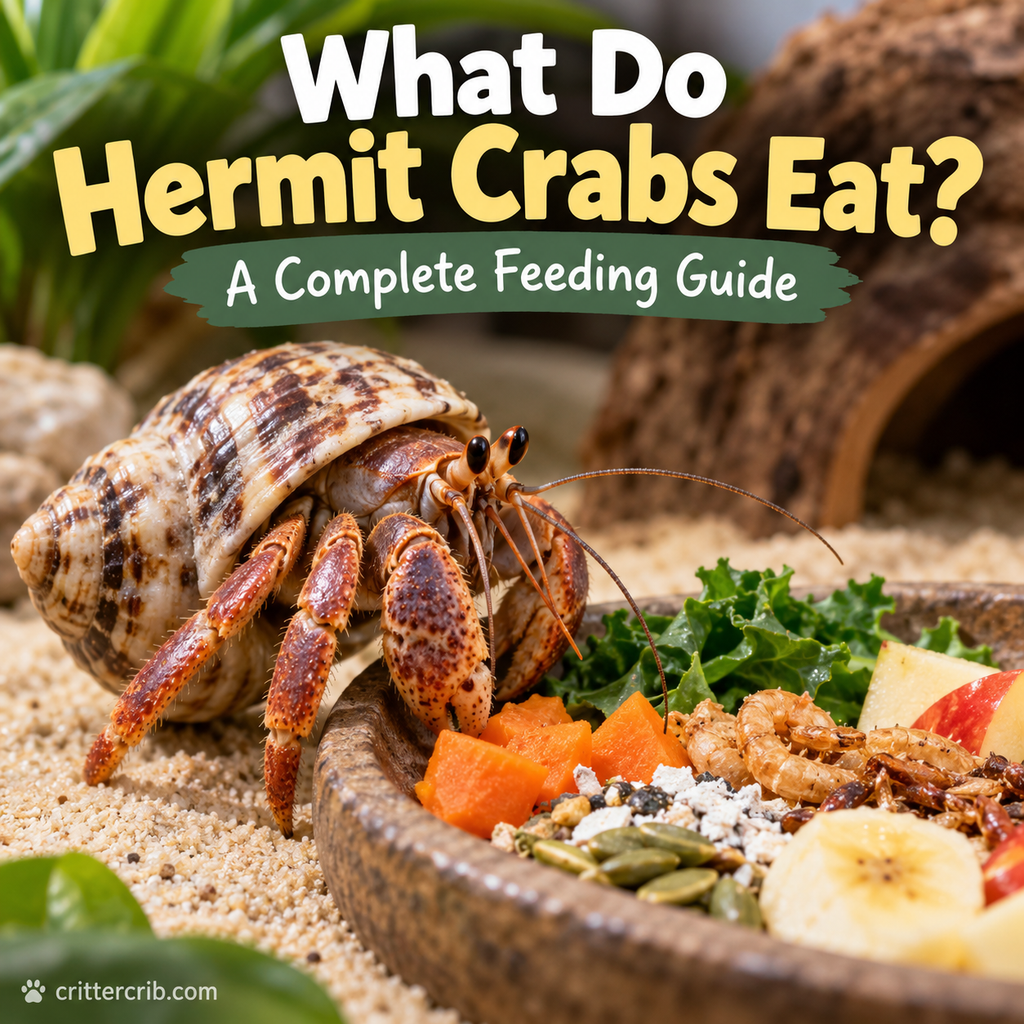
What Do Hermit Crabs Eat? A Complete Feeding Guide

Hermit crab beside a variety of fruits, vegetables, seeds, and protein foods in a natural enclosure.
A varied diet of protein, vegetables, fruit, seeds, and calcium helps provide pet hermit crabs with balanced nutrition.

Hermit crabs may be tiny, but feeding them well involves more than dropping a few pellets into their enclosure. In the wild, these curious scavengers eat an incredibly varied diet, picking through plant material, fallen fruit, animal matter, and just about anything nutritious they encounter.

Pet hermit crabs benefit from that same kind of variety.

A good hermit crab diet combines protein, plant foods, healthy fats, calcium, and other nutrient-rich ingredients. You don’t need to prepare elaborate meals every night, but understanding what hermit crabs actually need can make it much easier to keep them healthy.

This guide covers what hermit crabs eat, which foods you can safely offer, what to avoid, how often to feed them, and a simple way to create balanced meals.

Continue reading “What Do Hermit Crabs Eat? A Complete Feeding Guide”
Are Land Snails Good Pets? What Beginners Should Know

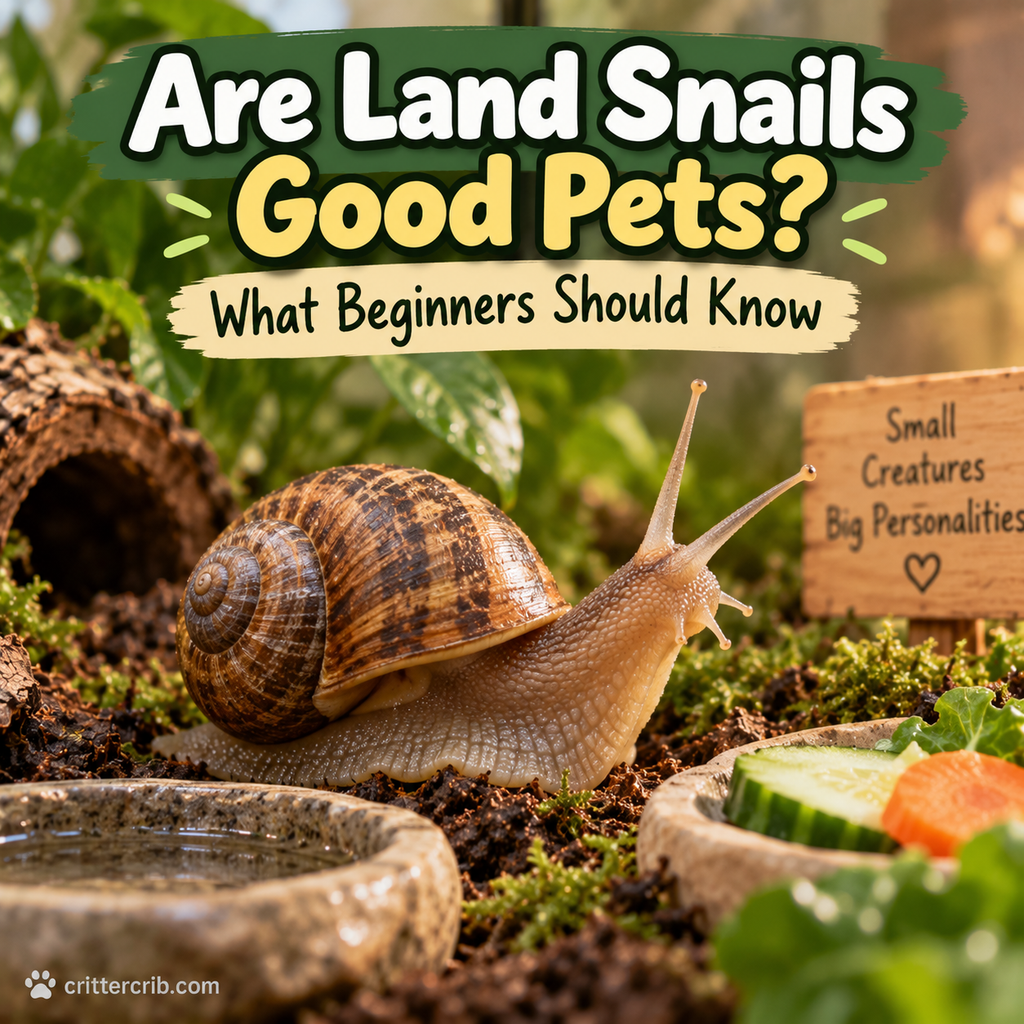
Pet land snail in a natural terrarium with moss, soil, fresh vegetables, and water
Land snails can make fascinating, quiet pets when provided with proper humidity, nutritious food, calcium, and a safe enclosure.

Land snails probably aren’t the first animals that come to mind when someone mentions pets. They’re quiet, slow, small, and unlikely to greet you when you walk through the door.

That’s also part of their appeal.

A land snail can be fascinating to observe as it explores its enclosure, climbs glass, searches for food, and uses its surprisingly expressive-looking tentacles to investigate its surroundings. They don’t need walks, they don’t make noise, and a thoughtfully designed habitat can fit into a relatively small space.

But snails aren’t maintenance-free decorations.

They need appropriate humidity, ventilation, nutritious food, a reliable calcium source, and an enclosure that protects their delicate shells. There are also important legal and environmental considerations because some land snail species are invasive and may be restricted where you live.

If you’re considering your first pet snail, here’s what you should know before bringing one home.

Continue reading “Are Land Snails Good Pets? What Beginners Should Know”

Stick Insects Habitat Setup Guide: Everything You Need

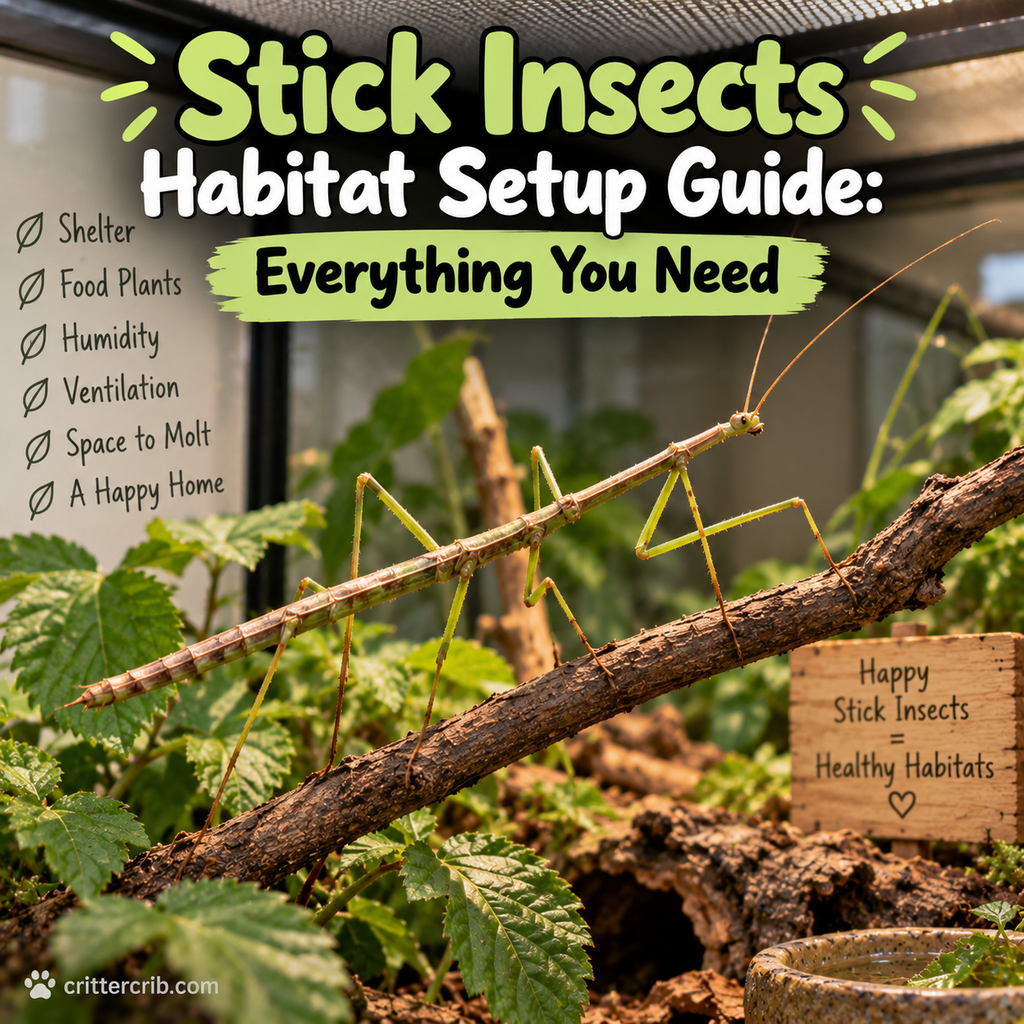
Stick insect climbing a branch in a natural enclosure with plants and proper habitat features
A well-designed stick insect habitat provides plenty of climbing surfaces, fresh food plants, ventilation, and vertical space for safe molting.

Stick insects are masters of disguise. Put one among a few branches and leaves, look away for a moment, and you may have trouble finding it again.

That natural camouflage is part of what makes them such interesting pets. They’re quiet, don’t require much space compared with traditional pets, and watching them climb, feed, and molt can be surprisingly fascinating.

Their enclosure isn’t difficult to set up, either—but there are a few details you really need to get right.

Vertical space is especially important because stick insects hang upside down while molting. Ventilation, humidity, temperature, and access to fresh food plants also play major roles in keeping them healthy.

If you’re setting up your first stick insect habitat, this guide covers the essentials from choosing an enclosure to maintaining it over the long term.

Continue reading “Stick Insects Habitat Setup Guide: Everything You Need”

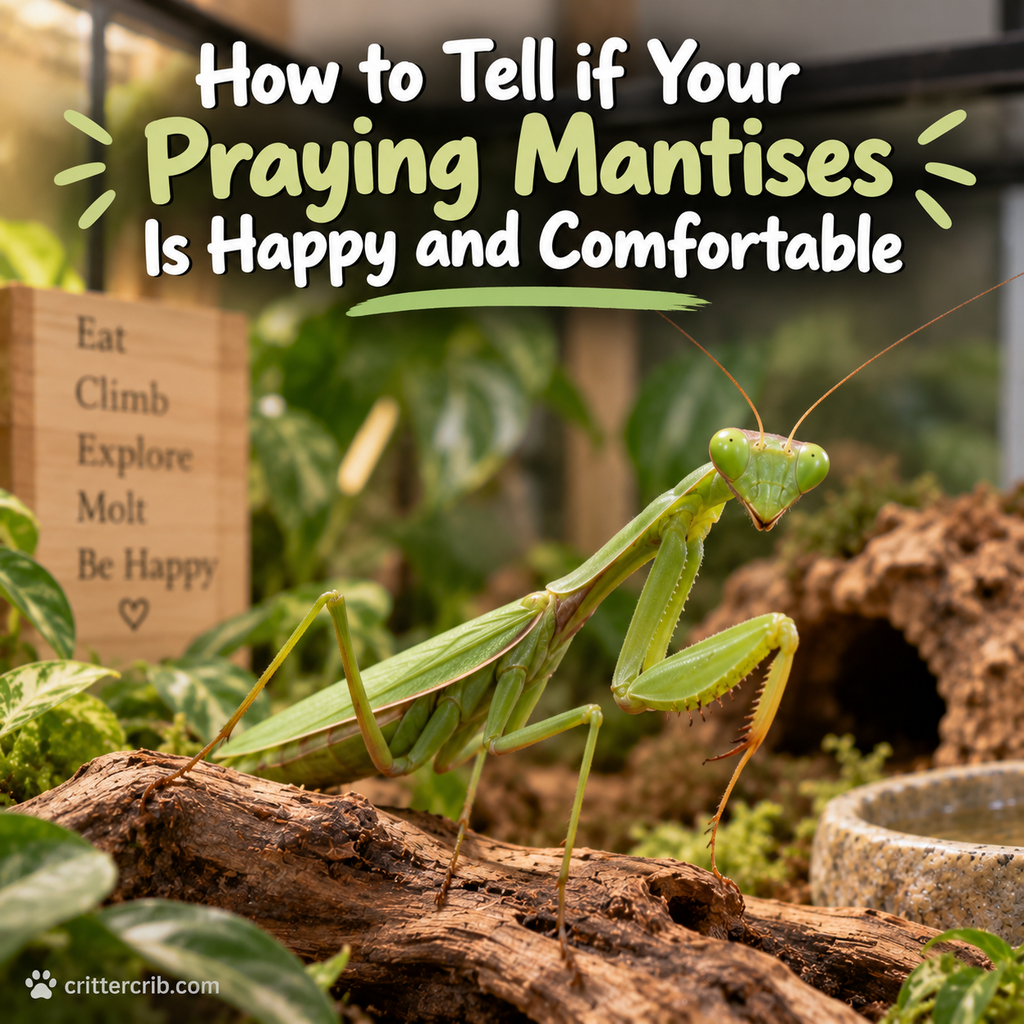
How to Tell if Your Praying Mantis Is Happy and Comfortable

Healthy praying mantis perched on a branch in a natural pet enclosure
A healthy, comfortable praying mantis should show normal behaviors such as climbing, hunting, resting, and exploring its enclosure.

Praying mantises aren’t exactly expressive pets. They won’t wag a tail when they’re excited or come running when you enter the room. Much of their day may be spent sitting perfectly still, watching their surroundings and waiting for prey.

So how can you tell if your praying mantis is happy?

“Happiness” is difficult to measure in an insect the way we might think about it in a dog or cat. A better goal is to look for signs that your mantis is healthy, comfortable, and behaving normally.

A comfortable praying mantis should generally be alert, able to move and climb normally, interested in food when hungry, and capable of resting without constantly trying to escape its enclosure. Its habitat should also give it enough room to molt safely.

Once you learn your mantis’s normal behavior, subtle changes become much easier to spot.

Continue reading “How to Tell if Your Praying Mantis Is Happy and Comfortable”

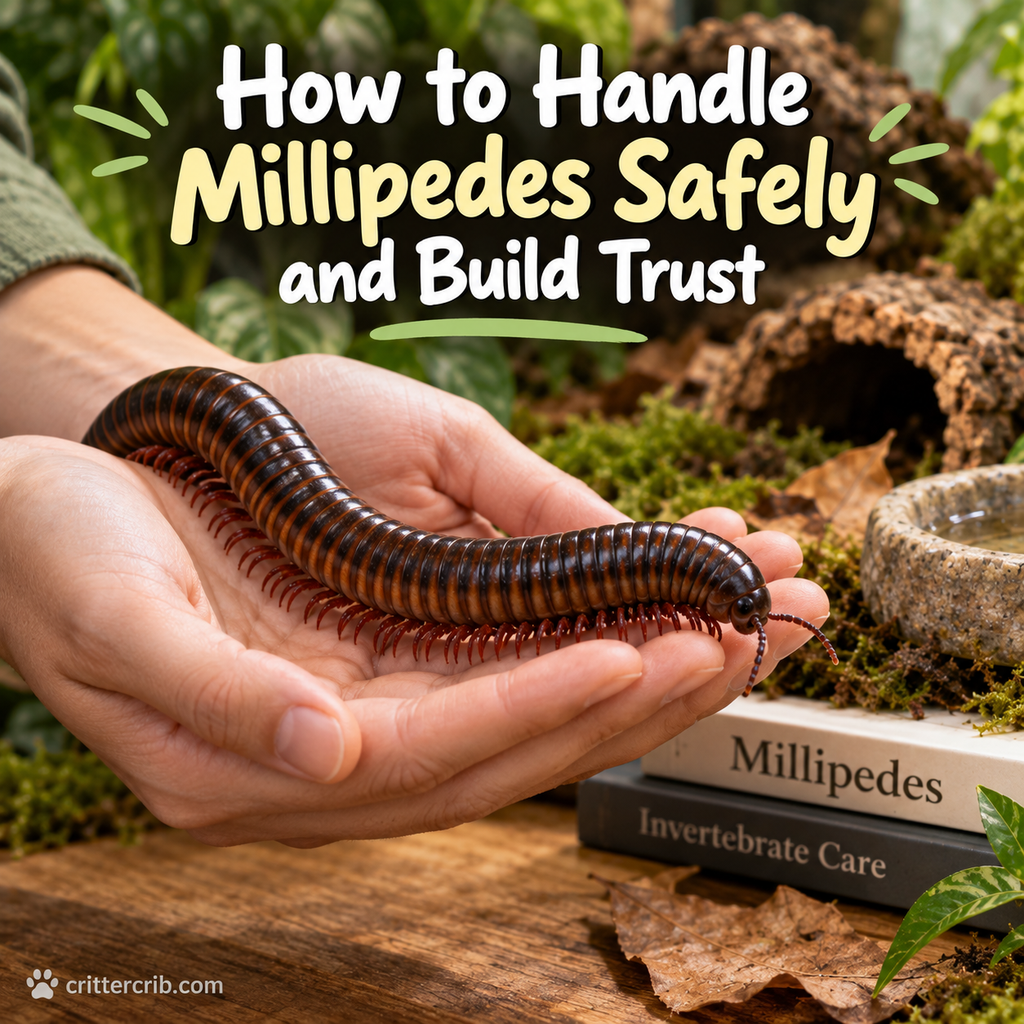
How to Handle Millipedes Safely and Build Trust

Pet millipede being gently supported in two hands during safe handling
Gentle, well-supported handling can help a pet millipede become accustomed to calm human interaction while minimizing stress.

Millipedes are slow-moving, gentle creatures, which is one reason they’ve become popular with people who enjoy unusual pets. Watching dozens—or sometimes hundreds—of tiny legs move in coordinated waves is fascinating, and many commonly kept species can tolerate occasional handling.

But handling a millipede isn’t quite the same as picking up a hamster or letting a gecko climb onto your hand.

Millipedes are delicate invertebrates. They can become stressed, they may release defensive chemicals when frightened, and a fall from your hands can cause a serious injury. Safe handling is less about teaching your millipede to enjoy being held and more about helping it become accustomed to calm, predictable interactions.

If you want to handle your pet millipede, here’s how to do it safely while keeping stress to a minimum.

Continue reading “How to Handle Millipedes Safely and Build Trust”

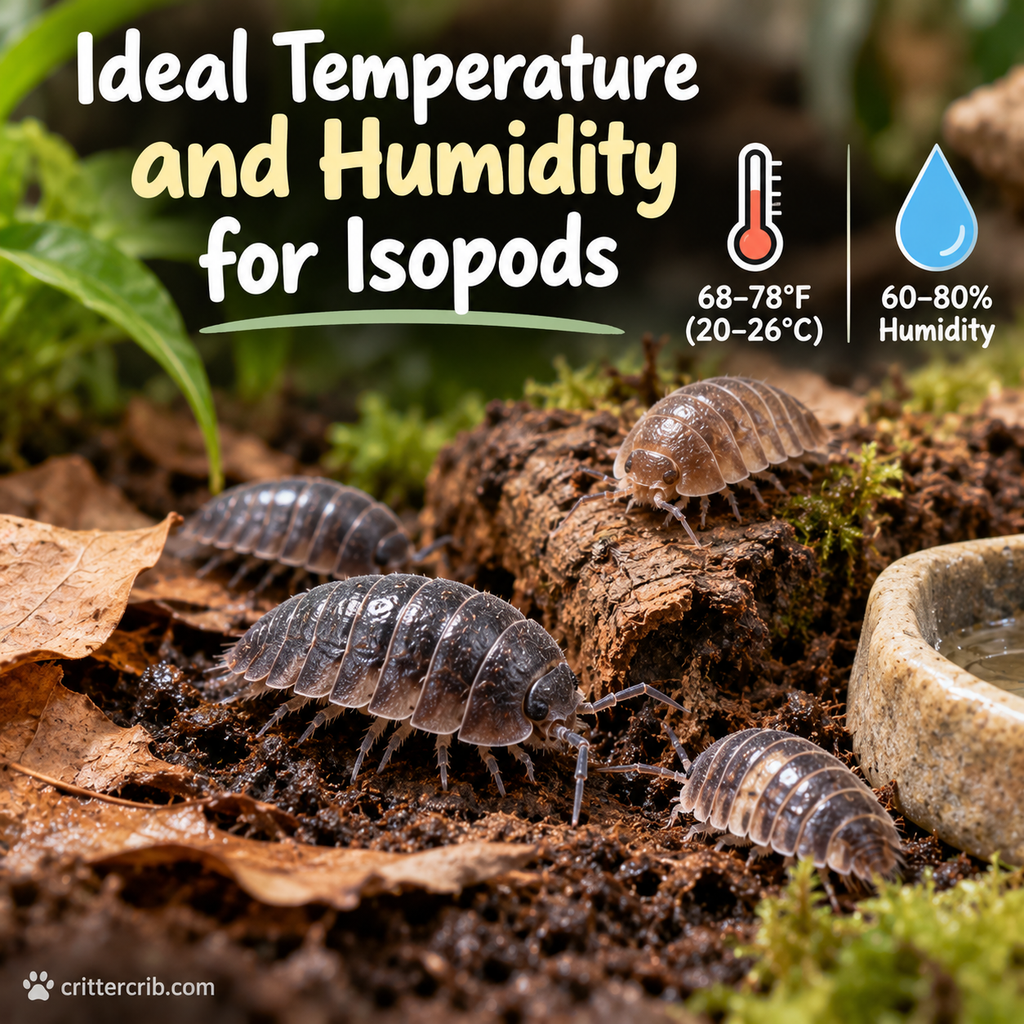
Ideal Temperature and Humidity for Isopods

Isopods in a moist natural terrarium showing ideal temperature and humidity conditions
Proper temperature, moisture, and ventilation help create a healthy environment for pet isopods.

Isopods may be tiny, but getting their environment right makes a big difference in how well a colony does. Temperature and humidity affect everything from activity and feeding to reproduction and molting.

The tricky part is that there isn’t one perfect temperature or humidity level for every isopod species.

Some species tolerate relatively dry conditions, while others need consistently moist areas. And when people talk about “humidity,” they’re sometimes focusing on the wrong thing. For most isopod setups, maintaining appropriate moisture in the substrate and providing a moisture gradient are just as important as the humidity percentage shown on a gauge.

Whether you’re keeping isopods as pets, raising a cleanup crew for a bioactive enclosure, or starting your first colony, here’s how to create conditions that keep them comfortable and thriving.

Continue reading “Ideal Temperature and Humidity for Isopods”

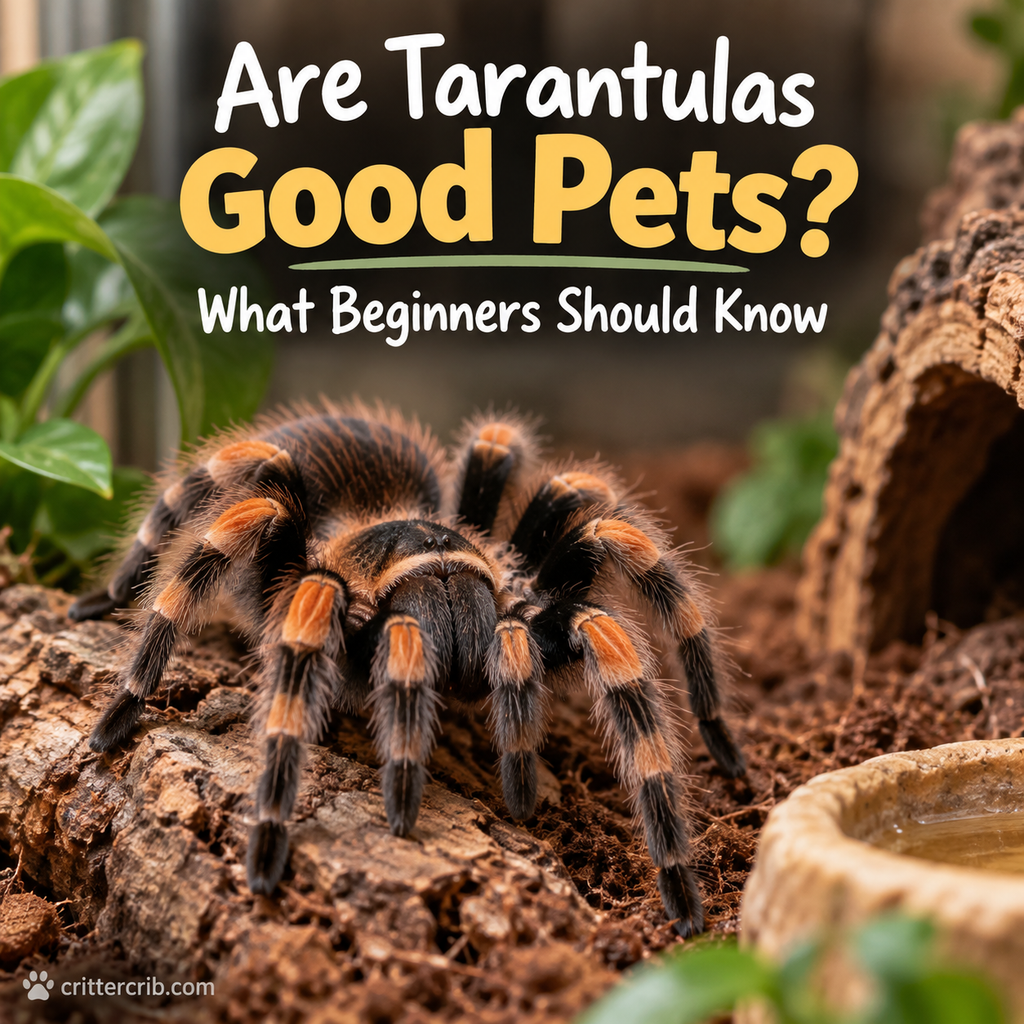
Are Tarantulas Good Pets? What Beginners Should Know

Pet tarantula in a natural terrarium for a beginner tarantula care guide
Tarantulas can make fascinating, low-maintenance pets for beginners who understand their unique care needs.

Tarantulas have a reputation for being intimidating, but as pets, they’re often much calmer and easier to care for than people expect. They don’t need daily walks, they don’t make noise, and they require far less space than most traditional pets.

That doesn’t automatically mean a tarantula is the right pet for everyone.

These large spiders have very specific needs, and the experience of keeping one is quite different from owning a hamster, reptile, or other small pet. Tarantulas are primarily animals to observe rather than handle, and even a seemingly calm spider needs to be treated with care.

If you’re thinking about getting your first tarantula, here’s what you should know before bringing one home.

Continue reading “Are Tarantulas Good Pets? What Beginners Should Know”

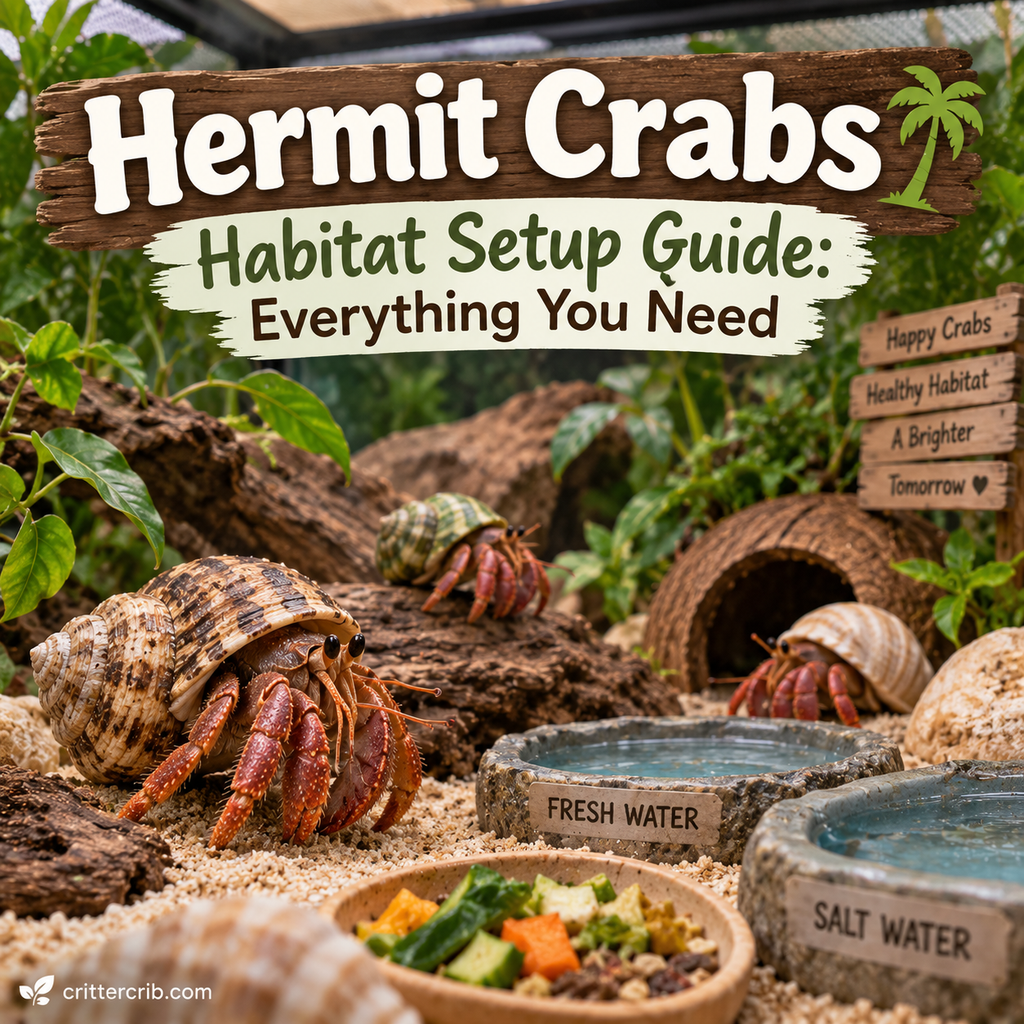
Hermit Crab Habitat Setup Guide: Everything You Need

Hermit crab habitat setup with deep substrate, fresh and salt water pools, hides, climbing areas, and spare shells
A proper hermit crab habitat includes deep substrate, warm humid conditions, fresh and salt water pools, natural shells, hides, and plenty of climbing enrichment.

Setting up a hermit crab habitat takes more planning than putting sand in a tank and adding a water dish.

Land hermit crabs have some unusual needs. They breathe through modified gills, so humidity matters. They dig deep underground to molt, which means substrate depth matters. They need access to both fresh and marine-strength salt water, appropriately sized spare shells, warmth, hiding places, and enough room to explore.

Get those basics right and the habitat becomes much easier to maintain.

This guide walks through everything you need to set up a land hermit crab enclosure from the ground up, whether you’re preparing for your first crabs or improving an existing habitat.

Continue reading “Hermit Crab Habitat Setup Guide: Everything You Need”

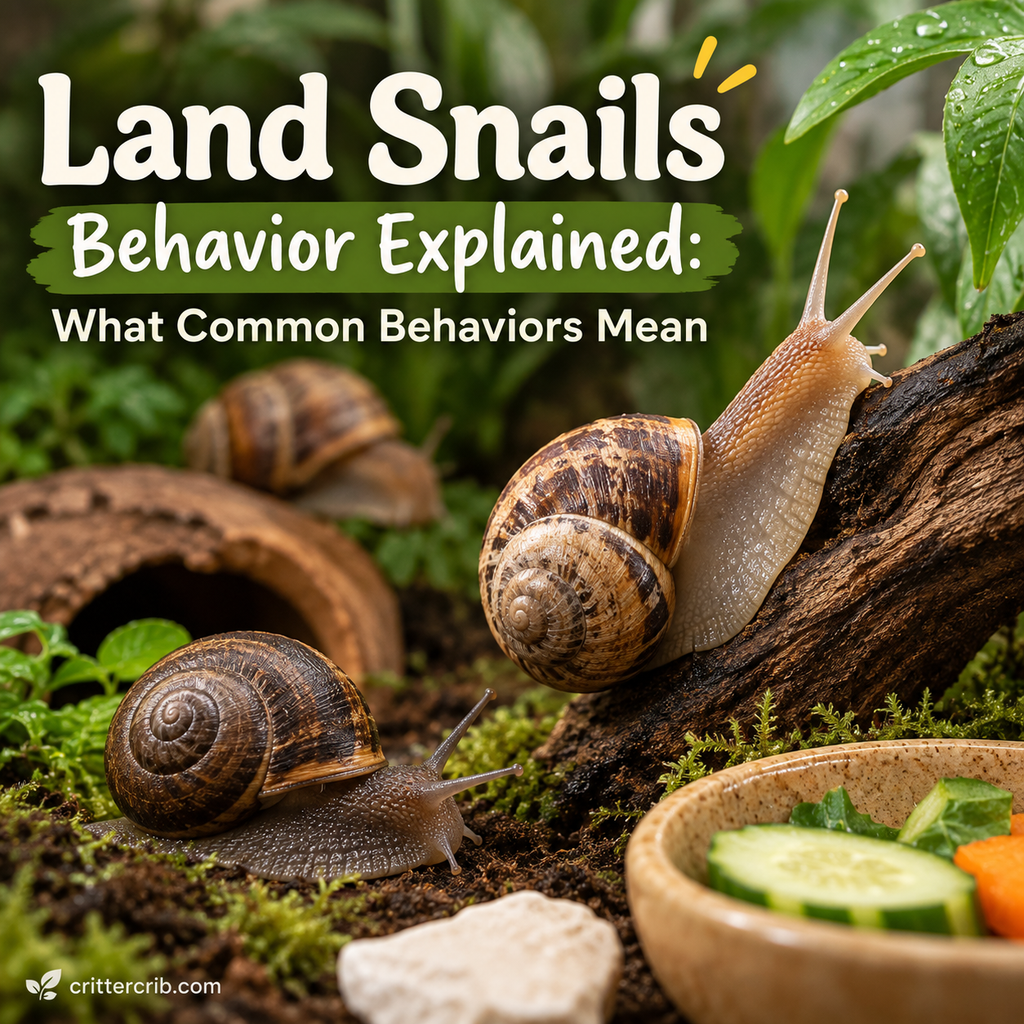
Land Snail Behavior Explained: What Common Behaviors Mean

Land snails exploring a natural enclosure illustrating common snail behaviors
Land snails display a range of natural behaviors, including climbing, burrowing, resting, feeding, exploring, and becoming more active in moist conditions.

Land snails aren’t exactly known for dramatic behavior. They move slowly, spend plenty of time hiding, and can seemingly disappear into their shells for hours.

But once you start keeping snails, you’ll notice there’s actually quite a lot going on.

One night your snail may spend hours exploring every inch of the enclosure. The next day it’s buried beneath the substrate. You might find it hanging upside down from the lid, sitting motionless on the wall, eating something unexpected, or interacting closely with another snail.

Most of these behaviors are perfectly normal.

Learning what common land snail behaviors mean can help you understand when your snail is simply being a snail—and when its behavior might be telling you to check the enclosure more closely.

Continue reading “Land Snail Behavior Explained: What Common Behaviors Mean”

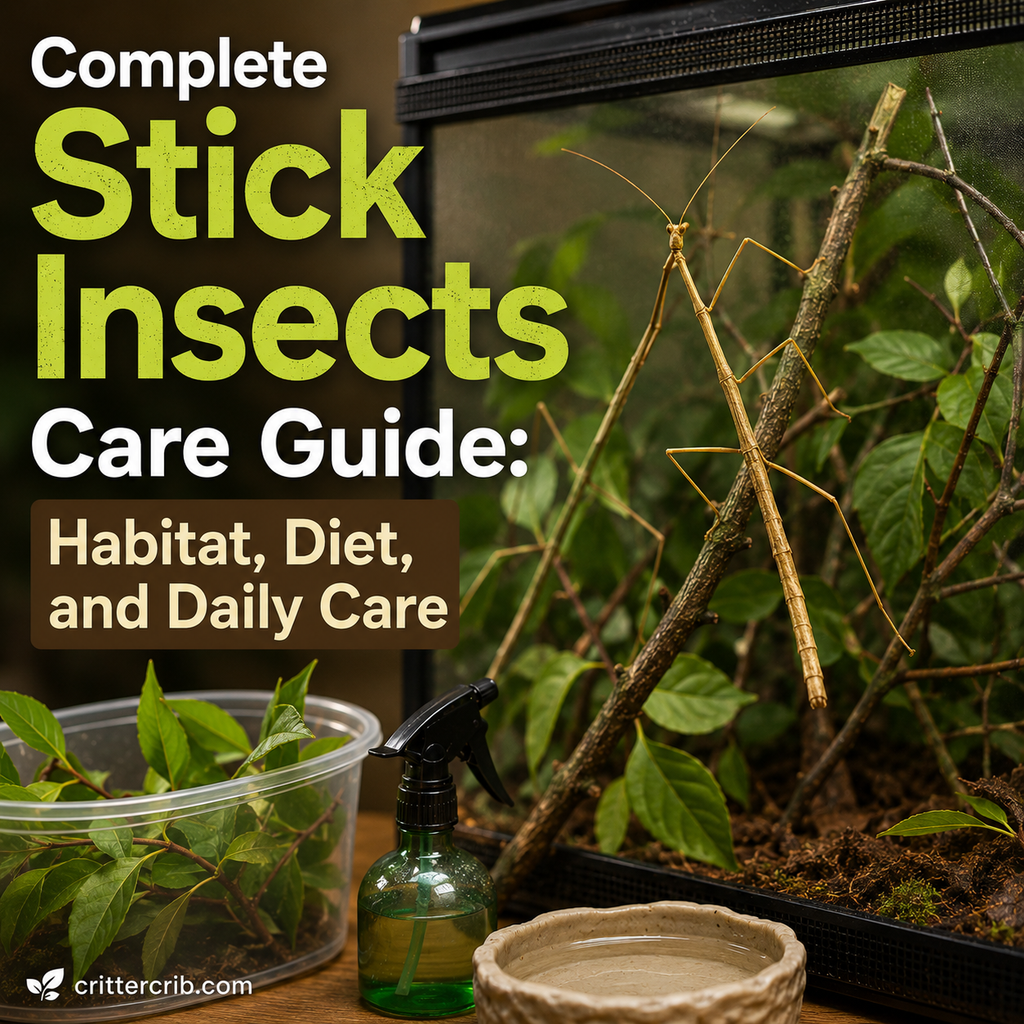
Complete Stick Insect Care Guide: Habitat, Diet, and Daily Care

Stick insect in a natural enclosure for a complete guide to habitat, diet, and daily care
Proper stick insect care includes a tall ventilated enclosure, fresh host plants, suitable humidity, climbing surfaces, and plenty of room for safe molting.

Stick insects are masters of disguise. Sitting perfectly still among leaves and branches, they can look so much like twigs that it’s easy to overlook them even when you know exactly where they are.

That unusual appearance is a big part of their appeal as pets. They’re quiet, don’t require a huge enclosure, and can be fascinating to observe as they climb, feed, molt, and blend into their surroundings.

Stick insect care isn’t difficult once you understand their basic needs, but there are a few things you need to get right. They require plenty of vertical space for molting, fresh leaves from safe plants, appropriate humidity and ventilation, and an enclosure designed around climbing rather than floor space.

There are also thousands of stick insect species, or phasmids, around the world. Their exact care requirements can vary considerably.

This guide covers the fundamentals of keeping commonly maintained pet stick insects while highlighting where species-specific research matters.

Continue reading “Complete Stick Insect Care Guide: Habitat, Diet, and Daily Care”