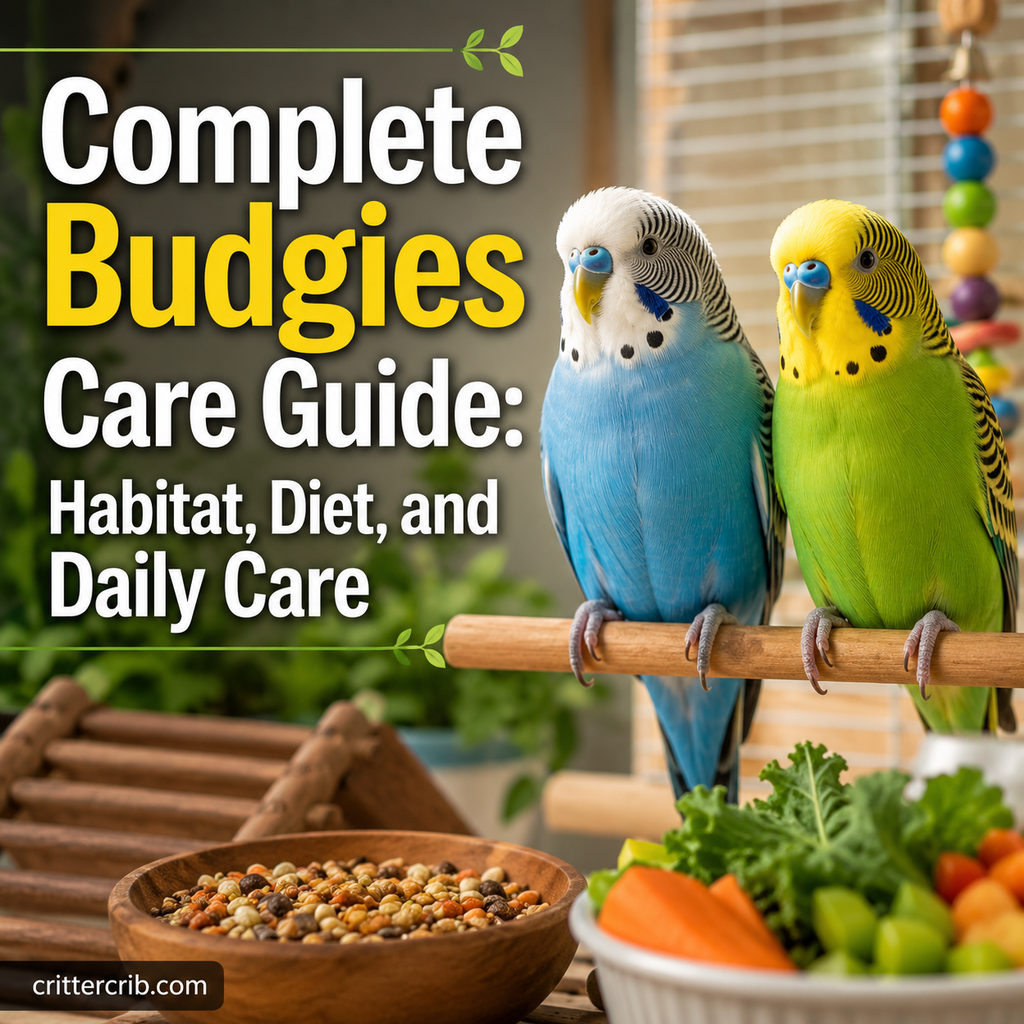
Budgies are small, colorful, social birds with personalities that can seem much bigger than their size. Also known as budgerigars or parakeets, these lively birds can learn routines, interact closely with their owners, mimic sounds, and become affectionate companions when given the right care.
Their small size sometimes gives people the impression that budgies are easy, low-maintenance pets. They certainly don’t need as much space as a large parrot, but they still require daily attention, a nutritious diet, room to exercise, mental stimulation, and a clean, thoughtfully arranged habitat.
A healthy budgie can live for many years, so bringing one home should be treated as a long-term commitment rather than an impulse purchase.
This complete budgie care guide covers the essentials, including cage setup, diet, exercise, enrichment, cleaning, handling, sleep, and everyday care.
Budgies at a Glance
Budgies (Melopsittacus undulatus) are small parrots native to Australia. Wild budgies live in social flocks and travel in search of food and water, which helps explain why pet budgies are naturally active and social.
Here are a few basic facts to know:
- Common names: Budgie, budgerigar, parakeet
- Scientific name: Melopsittacus undulatus
- Adult size: Around 7 inches long
- Typical weight: Roughly 30–40 grams
- Diet: Primarily plant-based, including seeds, grasses, vegetation, and other foods
- Activity level: High
- Social needs: High
- Care level: Beginner-friendly with proper research and daily involvement
- Lifespan: Often around 7–15 years, with individual lifespan varying considerably
Budgies come in many colors and patterns due to generations of selective breeding. Green and yellow are closest to their wild coloration, while captive birds may be blue, white, gray, violet, pied, or combinations of several colors.
Regardless of appearance, their basic care needs are similar.
Choosing the Right Budgie Habitat
Your budgie’s cage is more than a place to keep the bird contained. It’s where your budgie will eat, drink, sleep, climb, play, and spend a significant part of the day.
The goal should be to create a secure home base with enough room for natural movement.
If you’re preparing a cage from scratch, our budgie habitat setup guide goes deeper into cage size, bar spacing, perches, toys, food and water placement, enrichment, and choosing a safe location in your home.
Choosing a Budgie Cage
When it comes to bird cages, bigger is generally better.
Budgies move horizontally when flying, so cage width is particularly important. A wide cage that allows short flights is usually more useful than a narrow cage that is simply very tall.
For a single budgie, aim for a cage that’s at least approximately:
- 18 inches wide
- 18 inches deep
- 18 inches high
However, this should be considered a starting point rather than an ideal target. If space and budget allow, choose something larger.
Two budgies require additional room.
Cage bars should be spaced closely enough that your budgie cannot squeeze its head through them. Around 1/2 inch spacing is generally appropriate for budgies.
Look for a cage with:
- Secure doors
- Bird-safe materials and finishes
- Horizontal bars in at least some areas for climbing
- Removable trays for easier cleaning
- Enough room for multiple perches and toys
- Convenient access to food and water dishes
Avoid overcrowding the cage with accessories. Your bird should still have open space to stretch, flap, hop, and move comfortably.
Where to Put a Budgie Cage
Budgies are social animals, so they generally enjoy being in an area where household activity happens.
A living room or similar space can work well, provided the cage isn’t exposed to environmental hazards.
Choose a location that is:
- Away from strong drafts
- Protected from direct blasts from heating or air-conditioning vents
- Away from cooking fumes
- Away from cigarette or vape smoke
- Protected from prolonged intense direct sunlight
- Away from loud speakers or constantly noisy appliances
Having one side of the cage near a wall can also give a budgie a greater sense of security.
Kitchens are generally poor locations for bird cages. Cooking fumes, smoke, aerosols, hot surfaces, and certain overheated cookware can be extremely dangerous to birds.
Setting Up the Cage
A good cage setup encourages movement rather than simply filling every available space.
Your budgie should be able to travel between perches, food, water, and toys while still having open areas.
Provide Several Types of Perches
Uniform dowel perches may be convenient, but they shouldn’t be the only surfaces your budgie stands on.
Natural bird-safe branches and perches of different diameters encourage the feet to grip in different positions.
A good setup may include:
- Natural wood perches
- A comfortable sleeping perch
- Perches of varying thicknesses
- A platform perch if your bird enjoys using one
Avoid placing perches directly over food and water containers, where droppings can contaminate them.
Also be cautious with rough abrasive perch covers marketed as a way to trim nails. Constant contact with overly abrasive surfaces can irritate a bird’s feet.
Add Toys and Enrichment
Budgies are curious animals that benefit from having things to investigate and manipulate.
Useful enrichment can include:
- Shreddable paper toys
- Bird-safe wooden toys
- Foraging toys
- Swings
- Bells designed specifically for birds
- Climbing toys
- Chewable materials
You don’t need to pack every toy you own into the cage at once.
Instead, provide a manageable selection and rotate toys periodically. Rotation can make familiar items interesting again while preserving open space inside the cage.
Check toys regularly for loose threads, broken pieces, sharp edges, or openings where feet, toes, or heads could become trapped.
What Should Go on the Cage Bottom?
Disposable paper is one of the simplest cage liners.
Plain paper or paper towels make it easy to see droppings and notice unusual changes.
Replace soiled cage liners frequently rather than allowing waste and discarded food to accumulate.
What Should Budgies Eat?
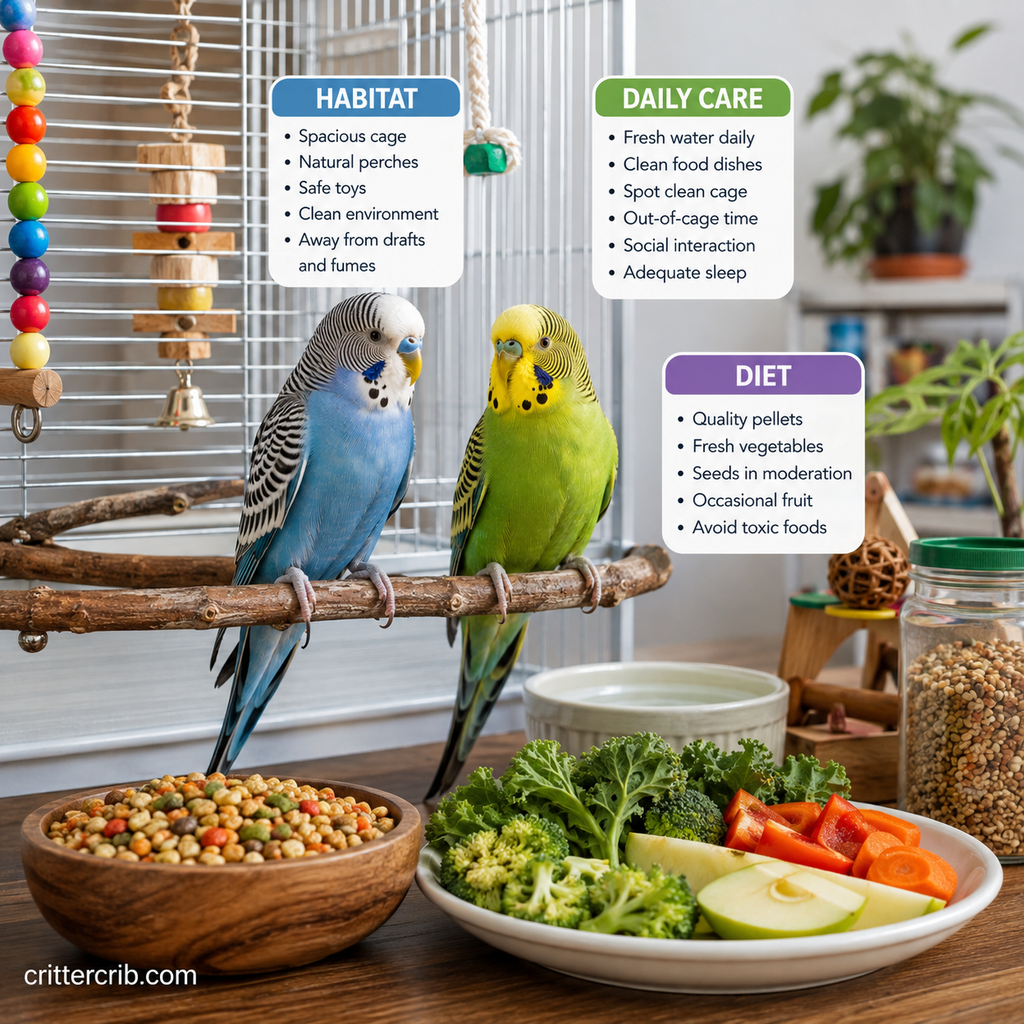
Diet is one of the most important parts of long-term budgie care.
The traditional image of a budgie happily eating from a bowl full of seeds can be misleading. Budgies certainly enjoy seeds, but an all-seed diet isn’t an ideal nutritional plan for a pet bird.
A more varied diet provides a broader range of nutrients.
Pellets
A nutritionally balanced pellet formulated for small parrots can serve as a major component of a budgie’s diet.
If your budgie currently eats only seeds, don’t abruptly remove its familiar food and assume it will eat pellets when hungry.
Birds may not immediately recognize unfamiliar foods as edible.
Diet conversions should be gradual, with careful monitoring to ensure the bird continues eating and maintaining an appropriate weight. An avian veterinarian can provide individualized guidance, particularly for birds with health concerns.
Seeds
Seeds can still have a place in a budgie’s diet.
They are highly appealing and can be useful for:
- Training
- Foraging
- Occasional treats
- Adding variety
The problem is relying on seeds as the sole or overwhelming source of nutrition.
Budgies can become selective and pick out their favorite seeds while ignoring everything else.
Fresh Vegetables and Greens
Fresh produce can add variety and valuable nutrients to your budgie’s diet.
Suitable options can include:
- Broccoli
- Carrots
- Bell peppers
- Peas
- Romaine lettuce
- Kale
- Bok choy
- Cilantro
- Parsley in moderation
- Squash
Wash produce thoroughly before serving it.
You can experiment with presentation, too. Some budgies prefer finely chopped vegetables, while others enjoy tearing pieces from leafy greens.
Remove uneaten fresh foods before they spoil.
Can Budgies Eat Fruit?
Budgies can eat certain fruits, but fruit should generally be offered in smaller amounts than vegetables because of its sugar content.
Options include:
- Berries
- Melon
- Mango
- Banana
- Pear
- Apple with the seeds removed
Treat fruit as one part of a varied diet rather than an unlimited food.
Foods Budgies Should Avoid
Not everything humans eat is safe for birds.
Foods and substances to avoid include:
- Avocado
- Chocolate
- Alcohol
- Caffeine
- Apple seeds
- Fruit pits
- Foods containing excessive salt, sugar, or fat
- Moldy or spoiled foods
Don’t assume a food is safe simply because it is a fruit, vegetable, nut, or other natural ingredient. When you’re unsure about a specific food, check with an avian veterinarian before offering it.
Fresh Water Is Essential
Your budgie should have access to fresh, clean drinking water every day.
Change the water at least daily and sooner whenever it becomes contaminated with food, droppings, or debris.
Wash the water container regularly rather than continually topping off old water.
Some budgies have an impressive talent for turning a clean water dish into a soup of seed husks, vegetables, and miscellaneous cage debris within hours. Positioning the bowl carefully can help, but checking it throughout the day is still worthwhile.
How Much Exercise Does a Budgie Need?
Budgies are built to fly.
Even a generously sized cage doesn’t completely replace opportunities for safe exercise outside the cage.
Whenever possible, allow your budgie supervised out-of-cage time in a bird-safe room.
Before opening the cage, secure the environment.
Check for:
- Open doors
- Open or unscreened windows
- Ceiling fans
- Hot surfaces
- Mirrors and large windows the bird could fly into
- Other pets
- Toxic plants
- Open toilets
- Containers of water
- Electrical cords
- Small gaps where a bird could become trapped
Turn ceiling fans off completely whenever a bird is loose in the room.
Flight isn’t simply exercise. It also provides stimulation and allows budgies to express one of their most fundamental natural behaviors.
Budgies Need Social Interaction
Wild budgies are flock animals, and that social nature doesn’t disappear in captivity.
A single budgie can form a strong relationship with its human caregiver, but that means regular interaction becomes especially important.
Spend time near the cage, talk to your bird, offer treats, practice gentle training, and provide opportunities for supervised play.
Don’t force physical contact.
Some budgies become comfortable stepping onto a person’s hand fairly quickly. Others need considerably more time.
Should You Keep One Budgie or Two?
Both arrangements can work, but they come with different considerations.
A single budgie may become particularly focused on interacting with its owner, provided the person has enough time to meet the bird’s social needs.
Keeping compatible budgies together gives them another bird to communicate and interact with.
However, getting a second bird doesn’t mean you can ignore them. Both birds still need proper care, enrichment, observation, and a suitably sized habitat.
New birds should also be introduced thoughtfully rather than immediately placed together.
How to Tame a Budgie
Trust is more effective than force.
When you first bring a budgie home, give the bird time to become familiar with its surroundings.
Then begin interacting gradually.
A simple approach is:
- Spend time sitting near the cage.
- Speak softly so the bird becomes accustomed to your voice.
- Move slowly around the cage.
- Offer a favorite treat through the bars.
- Progress to offering treats from your hand.
- Begin teaching a “step up” behavior once the bird is comfortable.
- Keep training sessions short and positive.
If your budgie retreats, panics, or repeatedly tries to escape your hand, you’ve probably progressed too quickly.
Move back to a stage where the bird feels comfortable.
Patience during the first few weeks can make handling much easier later.
Do Budgies Talk?
Some budgies are remarkably talented mimics.
They may learn:
- Words
- Short phrases
- Whistles
- Household sounds
- Repeated tones
Not every budgie will talk, and speech shouldn’t be treated as a requirement for a successful relationship.
If you want to encourage vocal mimicry, repeat simple words in a cheerful, consistent tone during everyday interactions.
Even budgies that never speak human words are highly vocal. Chirping, chattering, singing, and flock calls are all normal forms of communication.
Vocalizations are only part of the picture. Learning what common budgie behaviors mean can help you better understand head bobbing, beak grinding, fluffing, preening, biting, screaming, body posture, and other ways your bird communicates.
How Much Sleep Do Budgies Need?
Budgies benefit from a consistent sleep schedule with roughly 10–12 hours of quiet, darkness, and uninterrupted rest each night.
A bird living in a room where televisions, lights, and conversations continue late into the night may struggle to get adequate rest.
Establish a predictable bedtime.
Some owners cover the cage at night. This can work if the cover is breathable, safely positioned, and doesn’t cause the cage to overheat.
A cage cover isn’t mandatory if the room is already quiet and dark enough.
Bathing Your Budgie
Many budgies enjoy bathing, although individual preferences vary.
You can offer:
- A shallow bird bath
- A shallow dish of clean water
- Wet leafy greens
- A gentle mist if your bird enjoys it
Never force a frightened bird into water.
Let your budgie decide whether to participate.
Use plain water unless a veterinarian specifically recommends something else. Birds generally don’t need shampoos, soaps, or scented bathing products.
Cleaning a Budgie Cage
Regular cleaning prevents food debris, feathers, and droppings from building up.
Small maintenance tasks each day make deeper cleaning much easier.
Daily Cleaning
Your routine should include:
- Replacing dirty cage liner
- Providing fresh drinking water
- Washing visibly dirty food and water dishes
- Removing spoiled fresh food
- Cleaning obvious droppings from surfaces
- Checking toys and perches for contamination
Weekly Cleaning
Depending on the cage and number of birds, perform a more thorough cleaning regularly.
This can include:
- Move your budgie to a secure location.
- Remove toys, dishes, and removable perches.
- Discard the cage liner.
- Wash dirty cage components.
- Scrub dried-on debris.
- Rinse surfaces thoroughly.
- Allow everything to dry.
- Replace the liner.
- Return clean accessories to the cage.
Use bird-safe cleaning practices and avoid leaving chemical residues or exposing your bird to strong fumes.
Keeping a Budgie Mentally Stimulated
A cage with food and water technically meets only a fraction of a budgie’s needs.
These birds need opportunities to explore and make choices.
Try Foraging Activities
Foraging encourages your budgie to work for food rather than simply eating everything from an open bowl.
Begin with easy activities.
For example, you can hide a small favorite treat inside a bird-safe piece of paper or use a simple foraging toy designed for small parrots.
As your bird understands the game, gradually make the challenge more interesting.
Rotate Toys
Instead of buying dozens of toys and permanently leaving them in the cage, rotate a smaller collection.
This has several benefits:
- Prevents excessive cage clutter
- Creates novelty
- Allows damaged toys to be inspected
- Gives you an opportunity to learn which materials your bird prefers
A budgie that loves shredding paper may not care much about a hard plastic toy. Pay attention to your individual bird rather than assuming every popular toy will be a hit.
Training Is Enrichment Too
Training isn’t just about teaching tricks.
Short sessions give a budgie an opportunity to think, interact, and earn rewards.
Useful behaviors include:
- Step up
- Step down
- Target training
- Coming when called
- Entering a carrier
Training can also make routine care less stressful.
Creating a Bird-Safe Home
Birds have sensitive respiratory systems, and household air quality deserves particular attention.
Avoid exposing your budgie to:
- Cigarette smoke
- Vape aerosols
- Scented candles
- Incense
- Strong cleaning fumes
- Aerosol sprays
- Paint fumes
- Air fresheners
Overheated nonstick cookware and appliances containing certain fluoropolymer coatings can release fumes that are extremely dangerous to birds.
It’s safest to keep your budgie well away from the kitchen and carefully evaluate cookware, appliances, heaters, and other household products that may produce fumes when heated.
Budgies and Other Pets
Never assume that a dog or cat is safe around a budgie simply because the larger animal appears calm.
Predatory instincts can surface suddenly.
Even playful interaction can seriously injure a small bird.
Keep budgies physically separated from cats and dogs during out-of-cage time and supervise interactions around the cage.
Other birds also require careful introductions. Individual temperament, species, cage size, and health status all matter.
Monitoring Your Budgie’s Health
Birds can hide signs of illness, so owners should become familiar with what is normal for their individual budgie. Understanding your budgie’s normal behavior and body language can make unusual changes easier to recognize.
Pay attention to everyday patterns involving:
- Appetite
- Water intake
- Droppings
- Activity
- Vocalization
- Breathing
- Posture
- Feather condition
- Body weight
A small gram scale can be useful for monitoring weight because changes may be difficult to notice visually beneath feathers.
Signs That May Require Veterinary Attention
Contact an avian veterinarian if you notice concerning changes such as:
- Significant appetite changes
- Unexplained weight loss
- Persistent changes in droppings
- Difficulty breathing
- Tail bobbing associated with breathing
- Discharge around the eyes or nostrils
- Vomiting
- Unusual weakness
- Spending excessive time on the cage floor
- Persistent puffing combined with lethargy
- Loss of balance
- Sudden major behavioral changes
A bird showing serious breathing difficulty, collapse, heavy bleeding, seizures, or other severe symptoms may require emergency veterinary care.
When possible, establish a relationship with an avian veterinarian before an emergency occurs.
A Simple Daily Budgie Care Routine
Consistency makes budgie care much easier.
A typical routine might look like this:
Morning
- Uncover or greet your budgie
- Replace drinking water
- Provide fresh food
- Remove heavily soiled cage liner
- Observe appetite, droppings, and behavior
- Spend a few minutes interacting
During the Day
- Provide social interaction
- Offer supervised exercise
- Practice a short training session
- Offer appropriate fresh vegetables
- Check drinking water
- Provide enrichment or foraging opportunities
Evening
- Remove leftover perishable food
- Check the cage for hazards
- Spend some calm time interacting
- Dim household activity as bedtime approaches
- Provide a quiet, dark environment for sleep
The exact schedule can vary. Consistency and attention to your bird’s behavior matter more than following a rigid timetable.
Common Budgie Care Mistakes
Many budgie care problems come from outdated assumptions about small birds.
Keeping the Cage Too Small
Budgies may be inexpensive compared with larger parrots, but that doesn’t mean they belong in tiny cages.
Give your bird as much safe movement space as reasonably possible.
Feeding Only Seeds
A bowl of seed shouldn’t automatically be considered a complete diet.
Work toward a balanced feeding plan appropriate for your bird.
Using Too Few Perch Types
Standing on identical dowels all day doesn’t provide much variation for the feet.
Offer safe perches with different shapes and diameters.
Providing No Out-of-Cage Exercise
Budgies need movement.
Safe opportunities to fly and explore can significantly improve their daily environment.
Ignoring Social Needs
A lone budgie shouldn’t spend every day sitting in a cage without meaningful interaction.
Make social time part of the daily routine.
Overcrowding the Cage
More accessories aren’t always better.
Leave enough open space for movement.
Forcing Handling
Chasing a frightened budgie around the cage with your hand can damage trust.
Use gradual, reward-based interaction instead.
Assuming Silence Means Something Is Wrong
Budgies naturally have quieter periods, particularly when resting.
The important thing is knowing your bird’s normal behavior and noticing meaningful changes.
Budgie Care Checklist
Before bringing a budgie home, make sure you’re prepared with the basics.
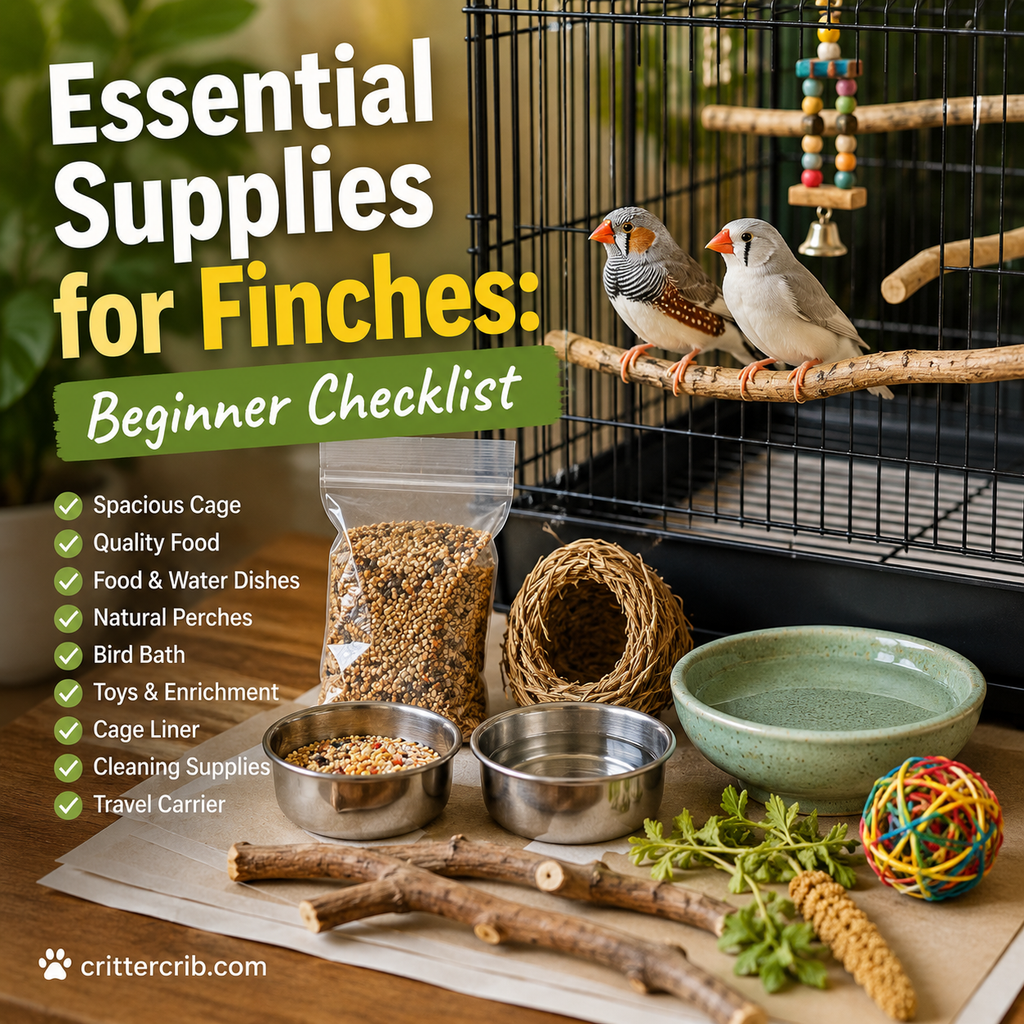
You’ll typically need:
- Appropriately sized bird cage
- Several bird-safe perches
- Food dishes
- Water dish or appropriate water system
- Balanced budgie food
- Fresh vegetables
- Bird-safe toys
- Foraging opportunities
- Cage liner
- Bird-safe cleaning supplies
- Secure carrier
- Access to an avian veterinarian
- Safe area for supervised exercise
It’s also worth identifying the nearest veterinary clinic that handles avian emergencies before you actually need one.
Are Budgies Good Pets for Beginners?
Budgies can be excellent first birds for people who understand what caring for a parrot involves.
They’re small, intelligent, playful, relatively easy to house compared with larger parrots, and capable of forming strong relationships with their caregivers.
However, “beginner-friendly” shouldn’t be confused with disposable or maintenance-free.
Budgies still require:
- Daily feeding and fresh water
- Regular cage cleaning
- Social interaction
- Mental stimulation
- Exercise
- Veterinary care
- A safe household environment
- A commitment that may last well over a decade
For someone willing to provide those things, a budgie can be a highly engaging companion.
Frequently Asked Questions About Budgie Care
How long do budgies live?
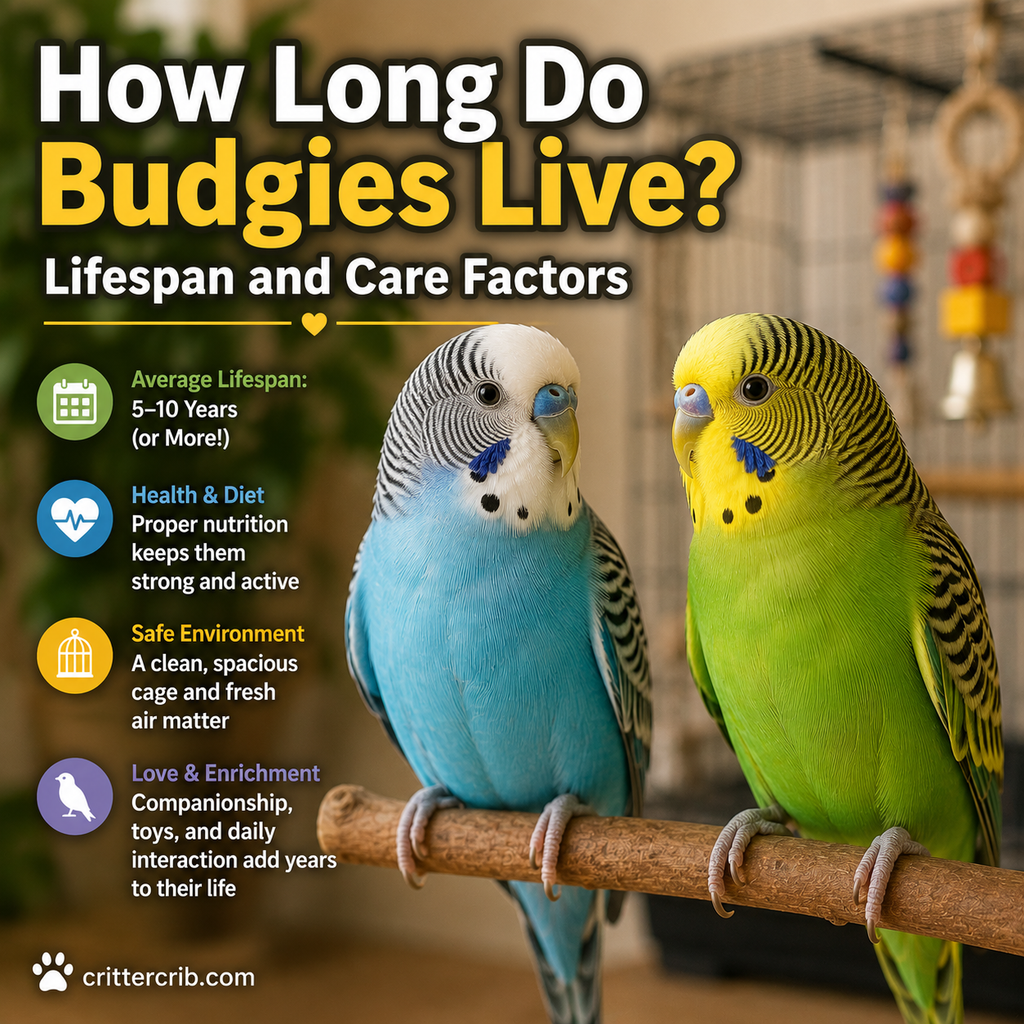
Pet budgies commonly live around 7–15 years, although lifespan varies with genetics, nutrition, veterinary care, environment, and other factors. Our guide to how long budgies live and the factors that affect their lifespan takes a closer look at what can influence longevity.
Buying or adopting a budgie should therefore be viewed as a long-term commitment.
Can a budgie live alone?
Yes, a single budgie can live successfully without another budgie if it receives sufficient social interaction, stimulation, and attention from its caregiver.
If you’re frequently away for long periods, however, the bird’s social needs deserve additional consideration.
Do budgies need to leave their cage every day?
Regular opportunities for safe out-of-cage exercise are highly beneficial.
The room should be secured first, and your budgie should always be supervised appropriately.
How often should I clean my budgie’s cage?
Handle obvious messes and contaminated food or water every day. Perform more thorough cleaning regularly based on how quickly the cage becomes dirty.
A clean cage is easier to maintain when small tasks are handled consistently instead of waiting for debris to accumulate.
What is the best food for a budgie?
A balanced budgie diet generally includes a nutritionally appropriate formulated food along with suitable vegetables and controlled amounts of other foods such as seeds and fruit.
The ideal diet can vary for individual birds, so an avian veterinarian can help establish an appropriate feeding plan.
Do budgies need baths?
Budgies should have regular opportunities to bathe, but they don’t need to be forced into water.
Offer a shallow bath or another safe bathing option and allow the bird to choose whether to use it.
Do budgies need sunlight?
Budgies benefit from a healthy day-and-night cycle, but placing a cage in intense direct sunlight can cause overheating.
Natural daylight can be useful while still giving the bird access to shade and a comfortable temperature. Questions about UV exposure or specialized bird lighting are best discussed with an avian veterinarian.
Are budgies noisy?
Budgies are vocal, but they’re generally quieter than many larger parrot species.
Expect regular chirping, singing, chatter, flock calls, and occasional louder bursts of sound during the day.
Final Thoughts on Caring for a Budgie
Budgies may be tiny parrots, but their care needs shouldn’t be underestimated.
A spacious and thoughtfully arranged habitat, balanced nutrition, clean water, regular exercise, enrichment, adequate sleep, and daily social interaction form the foundation of good budgie care.
Just as importantly, pay attention to the individual bird in front of you.
Some budgies immediately investigate every new toy. Others cautiously study something new for several days. Some become enthusiastic talkers, while others prefer whistles and chirps. Some quickly learn to step onto a hand, while shy birds may need weeks or months to build that level of trust.
Good budgie care isn’t about forcing every bird into the same routine. It’s about providing the essentials, maintaining a safe environment, and learning what helps your particular budgie feel secure, active, and engaged.
With consistent care and plenty of interaction, these little birds can become entertaining and rewarding companions for many years.