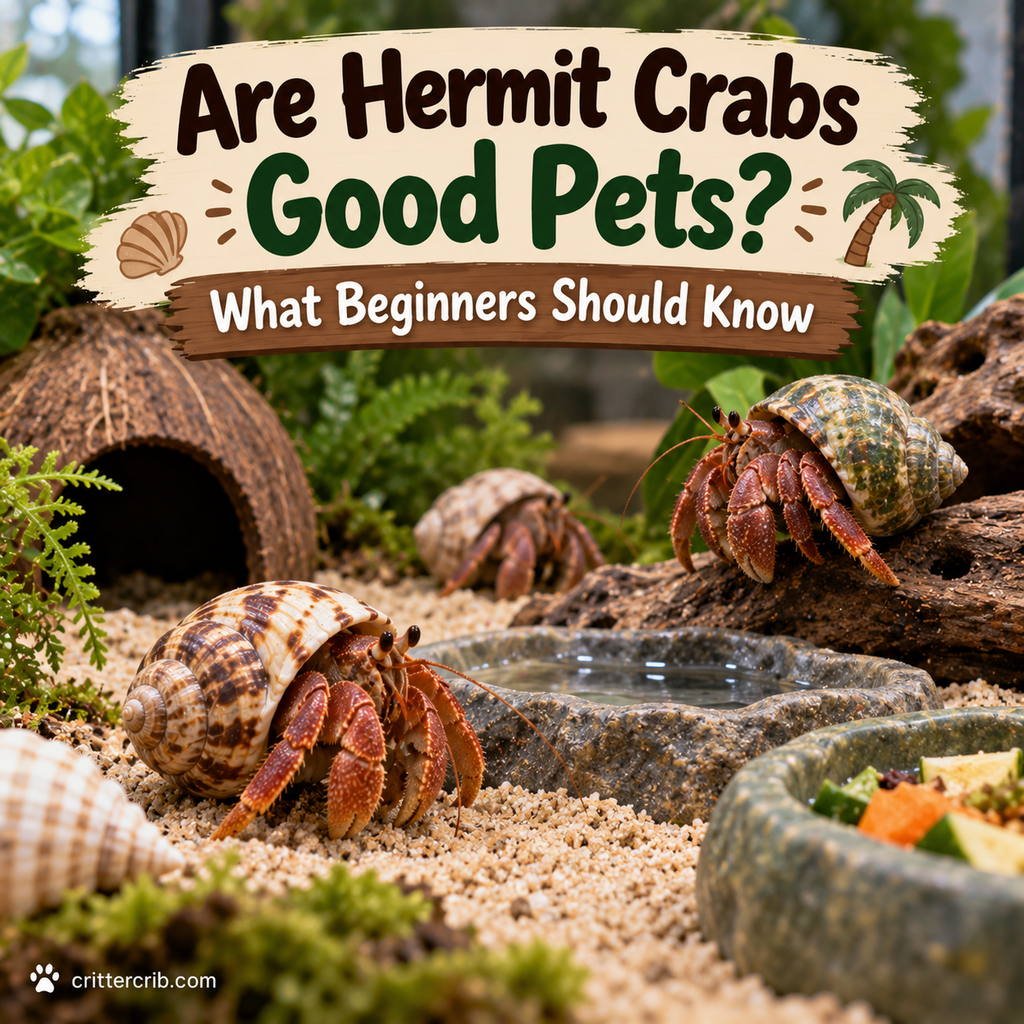
Hermit crabs are often sold as easy, inexpensive pets. You may see them in a small plastic container with colorful shells and assume they need little more than food, water, and somewhere to crawl.
A properly cared-for hermit crab is a very different pet.
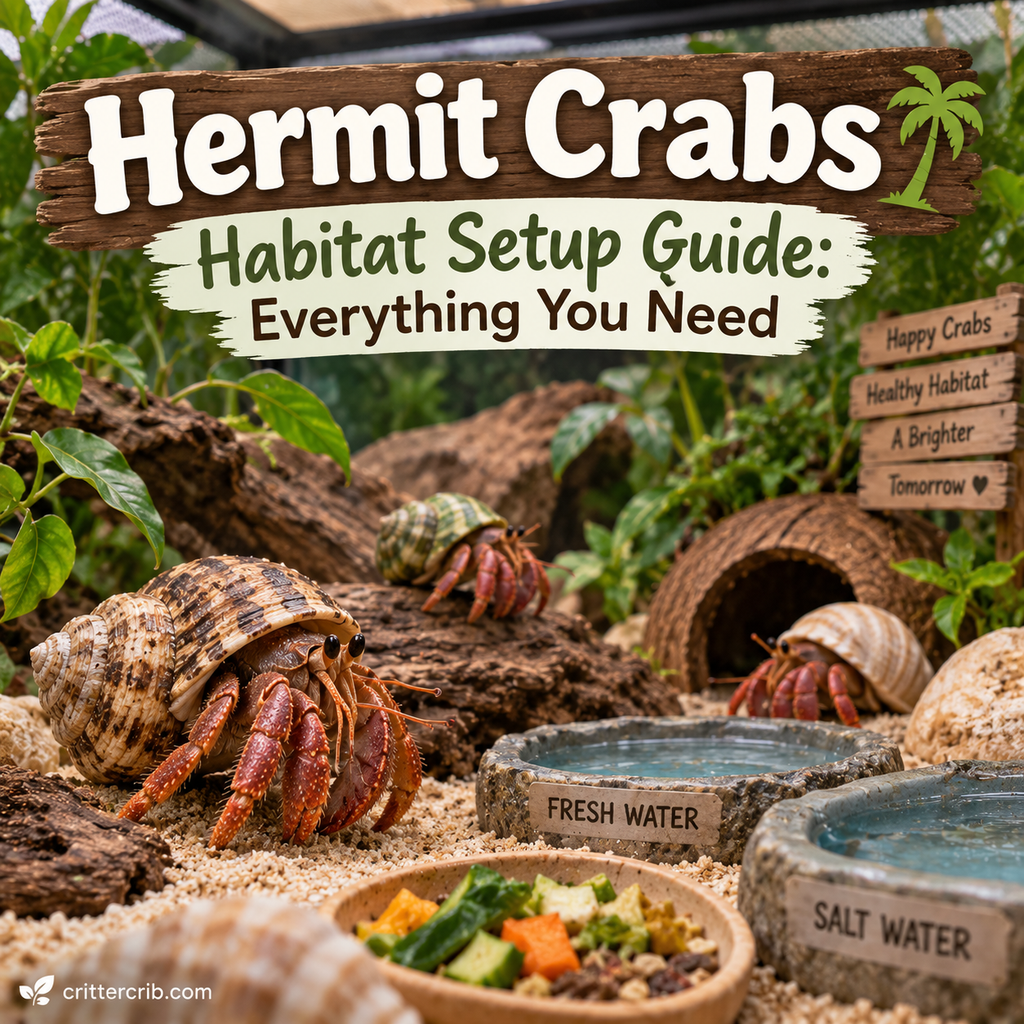
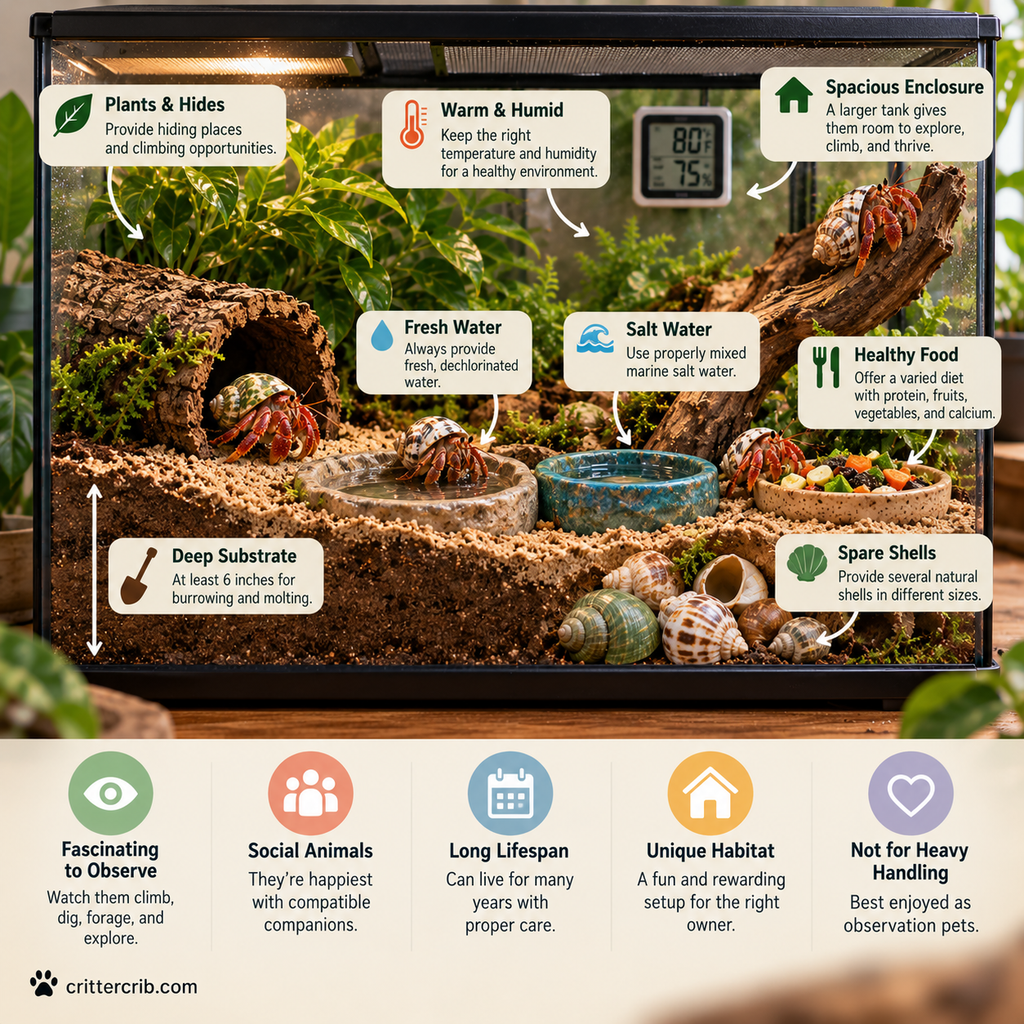
Land hermit crabs need a warm, humid enclosure, deep substrate for molting, access to both fresh and salt water, appropriate food, several suitable spare shells, and enough room to live with other hermit crabs.
They can also live much longer than many beginners expect.
So, are hermit crabs good pets?
They absolutely can be—but they’re best for someone who enjoys observing natural behavior and creating a carefully maintained habitat. They’re not the best choice if you want a pet that’s highly interactive, enjoys frequent handling, or can live comfortably in a tiny starter kit.
Here’s what you should know before bringing hermit crabs home.
Are Hermit Crabs Easy Pets?
Hermit crabs aren’t necessarily difficult once their habitat is established correctly, but calling them “easy” can be misleading.
The biggest challenge is getting the setup right.
Hermit crabs depend heavily on their environment. Temperature, humidity, substrate, water, shells, and enclosure security all matter.
A beginner needs to understand:
- Proper enclosure size
- Heat and humidity
- Deep molting substrate
- Fresh and salt water
- Appropriate food
- Spare natural shells
- Social housing
- Safe climbing opportunities
- Molting behavior
- Routine enclosure maintenance
Once you’ve built a stable habitat, daily care can be relatively manageable.
Setting up that habitat is the part that requires research and preparation.
Hermit Crabs Are Better Observation Pets Than Handling Pets
If you’re looking for an animal you can regularly pick up, cuddle, or carry around the house, hermit crabs probably aren’t the right choice.
They’re much better suited to observation.
A well-designed enclosure gives you opportunities to watch them:
- Climb
- Dig
- Forage
- Explore
- Interact with other crabs
- Change shells
- Rearrange their surroundings
- Visit food and water areas
Hermit crabs can be surprisingly busy, especially after dark.
Their appeal comes from watching them behave naturally rather than constantly interacting with them physically.
Do Hermit Crabs Like Being Handled?
Hermit crabs don’t need handling for social enrichment.
Being picked up can be stressful, and there’s also the obvious possibility of being pinched.
A frightened crab may retreat deeply into its shell or use its claw defensively.
Handling should generally be limited to situations where it’s necessary.
If you do need to move a hermit crab, keep it close to a safe surface in case it falls.
Never pull a crab from its shell.
The crab’s abdomen is adapted to remain protected inside that shell, and forcibly removing it can cause severe injury or death.
Do Hermit Crabs Pinch?
Yes.
Hermit crabs have claws, and they can pinch when frightened or trying to hold onto something.
A pinch from a larger crab can hurt.
This doesn’t mean the crab is aggressive in the way people sometimes imagine. It may simply be defending itself or trying to avoid falling.
Children should always be supervised around hermit crabs.
They’re delicate animals despite their tough-looking claws and shells.
Do Hermit Crabs Need Friends?
Commonly kept land hermit crabs are social animals and are generally better housed with compatible members of their own species or other appropriately compatible land hermit crabs.
In nature, they may gather in large groups.
That means planning for hermit crabs often means planning for more than one.
This affects:
- Enclosure size
- Number of spare shells
- Feeding space
- Water access
- Hiding areas
- Overall cost
Don’t overcrowd the enclosure simply because they’re social.
Each crab still needs adequate resources and room.
How Much Space Do Hermit Crabs Need?
Hermit crabs need considerably more space than the tiny plastic carriers commonly associated with them.
For a small group, many keepers start with an aquarium around the 20-gallon range or larger, with additional space needed as the number and size of the crabs increase.
Bigger is generally easier to work with because it provides more room for:
- Deep substrate
- Two water pools
- Shells
- Food dishes
- Climbing structures
- Hides
- Different activity areas
Floor space is particularly useful.
Remember that the substrate itself takes up significant vertical room.
Hermit Crabs Need Deep Substrate
One of the biggest surprises for new owners is just how much substrate hermit crabs need.
They don’t simply walk across the surface.
Hermit crabs dig and may disappear underground for extended periods while molting.
A commonly used guideline is to provide at least around 6 inches of substrate or enough to accommodate the largest crab, with deeper substrate needed for larger animals.
The substrate needs to hold burrows without collapsing.
Many keepers use a mixture based on sand and coconut fiber.
Why Molting Space Matters
Hermit crabs grow by shedding their exoskeleton.
Unlike animals that molt openly, land hermit crabs commonly bury themselves.
A crab may remain underground for weeks or, in some cases, considerably longer depending on its size and circumstances.
During that time, don’t dig it up just because you’re worried.
Disturbing a molting crab can be dangerous.
This is one of the most important lessons for beginners: sometimes the best thing you can do is leave the crab alone.
Hermit Crabs Need Warm Temperatures
Land hermit crabs commonly kept as pets are tropical animals.
They need a warm environment rather than whatever temperature happens to be comfortable in your home.
Exact requirements vary by species, but many setups are maintained in roughly the upper 70s to low 80s °F.
Use a thermometer.
If supplemental heat is needed, it should be controlled and positioned so that the habitat remains safe.
Avoid guessing based on how the enclosure feels.
Humidity Is Essential for Hermit Crabs
Hermit crabs breathe using modified gills.
Those gills need humid conditions to function properly.
For commonly kept species, enclosure humidity is often maintained around 70–80% or somewhat higher, depending on species and conditions.
This is why an open wire cage isn’t appropriate housing.
The enclosure needs to retain humidity while still maintaining a healthy environment.
A digital hygrometer can help you monitor conditions.
Don’t Constantly Spray Without Understanding the Setup
Humidity isn’t simply a matter of spraying the enclosure all day.
A properly designed habitat should naturally retain appropriate humidity through its substrate, water pools, enclosure design, and heating.
Constant heavy misting can eventually contribute to overly wet substrate or flooding.
Build the enclosure to maintain the environment rather than relying entirely on a spray bottle.
Hermit Crabs Need Fresh Water and Salt Water
Land hermit crabs should have access to both:
- Fresh water
- Properly prepared marine salt water
These should be separate pools.
For many commonly kept hermit crabs, pools should be deep enough for the crab to submerge while still providing an easy way to climb back out.
Safe ramps, rocks, or other textured exits can help prevent animals from becoming trapped.
Use appropriately treated water rather than assuming untreated tap water is safe.
For the saltwater pool, use a proper marine aquarium salt mix rather than ordinary table salt.
What Do Hermit Crabs Eat?
Hermit crabs are omnivorous scavengers and benefit from a varied diet.
Their diet can include appropriate sources of:
- Protein
- Vegetables
- Fruit
- Seeds and grains
- Calcium
- Other natural foods
Variety matters.
A diet consisting entirely of generic commercial pellets isn’t the best way to approach hermit crab nutrition.
Offer different foods and observe what your crabs eat.
Remove perishable leftovers before they spoil excessively.
Hermit Crabs Need Calcium
Calcium supports exoskeleton health and is particularly important around molting.
Suitable calcium sources can be made available as part of a varied diet.
Depending on the setup, keepers may use options such as:
- Cuttlebone
- Crushed oyster shell from an appropriate source
- Other safe calcium-rich foods
Make sure anything offered is free from inappropriate additives.
Hermit Crabs Need Spare Shells
Hermit crabs don’t grow their own protective shell.
They occupy empty gastropod shells and change shells as they grow or when they find one they prefer.
A pet hermit crab therefore needs choices.
Provide multiple natural shells in appropriate sizes and shapes for each crab.
Don’t provide just one “next size up.”
Crabs can be surprisingly particular.
Avoid Painted Shells
Those brightly painted souvenir shells may look fun to us, but natural, unpainted shells are the better choice.
Paint can chip, and decorative coatings or adhesives introduce unnecessary materials into the habitat.
Offer a variety of suitable natural shells instead.
Watching a crab inspect and eventually switch into a new shell is much more interesting anyway.
Hermit Crabs Like to Climb
A good hermit crab enclosure isn’t just sand and water dishes.
These animals are active climbers.
You can provide:
- Cork bark
- Cholla wood
- Safe branches
- Climbing nets
- Artificial or safe live plants
- Natural hides
Make sure everything is stable.
Hermit crabs can move decorations around surprisingly well.
Leave enough open space that the enclosure doesn’t become overcrowded.
Hermit Crabs Are Often Active at Night
Don’t be disappointed if your crabs spend much of the day hiding.
Hermit crabs are often considerably more active after dark.
At night, you may hear:
- Climbing
- Digging
- Shells tapping against glass
- Food dishes being moved
- General crab-related interior decorating
You may wake up to discover that an object you carefully positioned the previous evening has been moved somewhere else entirely.
That’s part of the fun.
How Long Do Hermit Crabs Live?
This is one of the biggest things beginners underestimate.
Hermit crabs aren’t necessarily short-lived pets.
With appropriate care, some commonly kept land hermit crabs can live for decades.
Wild individuals can also reach surprisingly advanced ages.
That means adopting hermit crabs should be considered a potentially long-term commitment.
The unfortunate reputation for short lifespans often comes from inadequate captive conditions rather than an inherently brief natural lifespan.
A crab kept in a tiny dry container is very different from one living in a properly maintained habitat.
How Much Daily Care Do Hermit Crabs Need?
Once the enclosure is established and stable, everyday maintenance isn’t especially time-consuming.
A typical check might involve:
- Checking temperature
- Checking humidity
- Looking at water levels
- Checking food
- Removing spoiled leftovers
- Making sure equipment is functioning
- Observing the crabs without disturbing buried individuals
Water pools need routine maintenance, and the habitat needs periodic cleaning.
You’ll also need to replenish food, calcium, shells, and other resources over time.
The goal is stability rather than constant rearranging.
Do Hermit Crabs Smell?
A properly maintained hermit crab enclosure shouldn’t smell strongly unpleasant.
Bad odors can indicate:
- Spoiled food
- Dirty water
- Dead organisms
- Excessive waste
- Poor enclosure conditions
Hermit crab habitats are warm and humid, so leftover fresh food can deteriorate quickly.
Regular spot cleaning helps.
Avoid scented cleaners and fragrances around the habitat.
Are Hermit Crabs Expensive?
The crab itself may be inexpensive.
The habitat is where the real cost comes in.
A proper setup may require:
- Large aquarium or enclosure
- Secure lid
- Deep substrate
- Heating equipment
- Thermometer
- Hygrometer
- Freshwater pool
- Saltwater pool
- Water treatment
- Marine salt mix
- Food dishes
- Varied foods
- Natural spare shells
- Hides
- Climbing structures
This makes hermit crabs a good example of a pet where the purchase price tells you almost nothing about the actual cost of responsible ownership.
Once the habitat is established, ongoing expenses can be more manageable.
Are Hermit Crabs Good Pets for Children?
They can be interesting animals for children to observe, but adults should be responsible for their care.
Hermit crabs aren’t ideal “starter pets” if that means handing the enclosure to a child and expecting minimal maintenance.
Their environmental needs are too important.
Children also need to understand:
- Don’t dig up buried crabs
- Don’t force a crab from its shell
- Don’t repeatedly handle the animals
- Don’t tap on the enclosure
- Don’t use painted shells
- Don’t release unwanted crabs outdoors
With adult involvement, a hermit crab habitat can be a fascinating way for children to learn about animal behavior and responsible pet care.
Pros of Keeping Hermit Crabs
Hermit crabs have plenty going for them.
They’re Fascinating to Observe
Shell changing, climbing, digging, foraging, and social interactions can make an established colony surprisingly entertaining.
They Don’t Need Walks
There are no rainy 6 a.m. bathroom trips.
All of their care happens within the enclosure.
They Can Live in Groups
A properly sized habitat can house compatible hermit crabs together.
This creates more opportunities to observe natural social behavior.
They’re Quiet
Hermit crabs aren’t going to wake your neighbors.
You may hear shells tapping against the enclosure at night, but they’re generally quiet pets.
They Don’t Require Constant Attention
Once the habitat is properly established, hermit crabs don’t need continuous human interaction.
That’s ideal for people who prefer observational pets.
They Can Be Long-Lived
Properly cared-for hermit crabs can potentially be with you for many years.
For the right owner, that’s a major positive.
Cons of Keeping Hermit Crabs
They’re not the right pet for everyone.
The Initial Setup Is Bigger Than Expected
Forget the tiny plastic carrier.
A proper habitat requires substantial space and equipment.
They Aren’t Cuddly
If frequent physical interaction is important to you, choose another pet.
They May Disappear for Long Periods
Molting crabs can remain underground for weeks or longer.
You need to resist the urge to check on them.
They Require Live Environmental Management
Temperature and humidity need to stay within appropriate ranges.
They Need Multiple Water Sources
Maintaining both fresh and marine saltwater pools adds another step to care.
They’re Often Most Active When You’re Sleeping
If you want a pet that’s constantly performing during the afternoon, a nocturnal crab may disappoint you.
They Can Be a Long Commitment
A pet capable of living for decades shouldn’t be an impulse purchase.
Common Beginner Hermit Crab Mistakes
Many hermit crab problems start with outdated care advice.
Avoid these common mistakes.
Keeping Them in Tiny Plastic Containers
Those containers may work for temporary transport.
They’re not appropriate permanent homes.
Using Shallow Substrate
Hermit crabs need to bury themselves deeply for molting.
Keeping the Habitat Too Dry
Humidity is essential to their respiratory system.
Providing Only Fresh Water
They need access to both appropriately prepared fresh and marine salt water.
Providing One Spare Shell
Give each crab several appropriate choices.
Buying Painted Shells
Natural shells are preferable.
Digging Up a Buried Crab
A buried crab may be molting.
Leave it alone.
Handling Them Constantly
Hermit crabs are observation pets.
Frequent handling isn’t necessary.
Assuming They’re Disposable Pets
With proper care, hermit crabs can be a significant long-term commitment.
What You Need Before Getting Hermit Crabs
Set up the habitat before bringing the animals home.
Your beginner checklist should include:
- Appropriately sized enclosure
- Secure lid
- Deep molting substrate
- Reliable heating
- Thermometer
- Hygrometer
- Freshwater pool
- Saltwater pool
- Safe pool exits
- Water conditioner
- Marine salt mix
- Varied food
- Calcium source
- Multiple natural spare shells
- Hides
- Climbing structures
Run the enclosure long enough to make sure temperature and humidity remain stable.
It’s much easier to troubleshoot an empty habitat than one containing animals.
Frequently Asked Questions About Hermit Crabs as Pets
Are hermit crabs good beginner pets?
They can be, provided the beginner researches their needs and builds the correct habitat first.
They’re easier to maintain after the enclosure is established than their reputation might suggest, but they’re not ultra-low-maintenance pets.
Are hermit crabs friendly?
Hermit crabs aren’t domesticated companion animals.
They may become less reactive to routine activity around their enclosure, but they don’t need human affection or frequent handling.
Do hermit crabs get lonely?
Commonly kept land hermit crabs are social and are generally housed with compatible companions when adequate space and resources are available.
Do hermit crabs recognize their owners?
They can respond to environmental cues and may become accustomed to regular activity, but it’s best not to interpret their behavior as owner recognition in the same sense as a dog or other highly social companion animal.
Do hermit crabs need a heat lamp?
Not necessarily.
Supplemental heat may be required if the enclosure doesn’t remain warm enough, but the method should be safe, controlled, and appropriate for the habitat.
Can hermit crabs live in a plastic cage?
Plastic itself isn’t necessarily the problem.
The classic tiny ventilated carrier is.
A suitable enclosure needs enough space, substrate depth, humidity retention, heat, pools, shells, and climbing areas.
How many hermit crabs should beginners get?
Because commonly kept land hermit crabs are social, keeping more than one is generally recommended when you can provide sufficient space and resources.
Don’t buy a large group simply because they’re social. Start with a manageable number and build the habitat around their adult size.
So, Are Hermit Crabs Good Pets?
For the right person, yes.
Hermit crabs are especially rewarding if you enjoy building naturalistic habitats and watching animals behave on their own terms.
They’re quiet, fascinating, relatively hands-off, and capable of displaying far more interesting behavior than their reputation as souvenir pets suggests.
But they aren’t disposable starter pets.
A healthy hermit crab setup takes space. It needs deep substrate, warm and humid conditions, fresh and salt water, natural shells, climbing opportunities, good food, and compatible companions.
You also need patience.
Sometimes your crab will be climbing everything in sight. Sometimes it will rearrange the enclosure overnight. And sometimes it will disappear underground and leave you staring at a tank of sand for weeks.
If that sounds interesting rather than disappointing, hermit crabs may be a very good fit.
Build the habitat correctly from the beginning, and you’ll get to see what these animals are actually like when they’re given the chance to behave naturally.