Rabbits may come with a warm coat built in, but that doesn’t mean they’re comfortable in every temperature.
In fact, rabbits generally handle cool conditions better than excessive heat. Their dense fur makes it difficult to release body heat efficiently, and temperatures that feel merely warm to us can become uncomfortable—or potentially dangerous—for a rabbit.
Humidity matters too. High humidity can make hot conditions harder to tolerate, while damp environments can create additional problems with bedding, ventilation, and overall comfort.
Whether your rabbits live indoors or in a properly designed outdoor setup, keeping their environment within a comfortable range should be part of everyday care.
Here’s what rabbit owners should know about temperature, humidity, ventilation, seasonal changes, and recognizing when a rabbit may be getting too hot or cold.
What Is the Ideal Temperature for Rabbits?
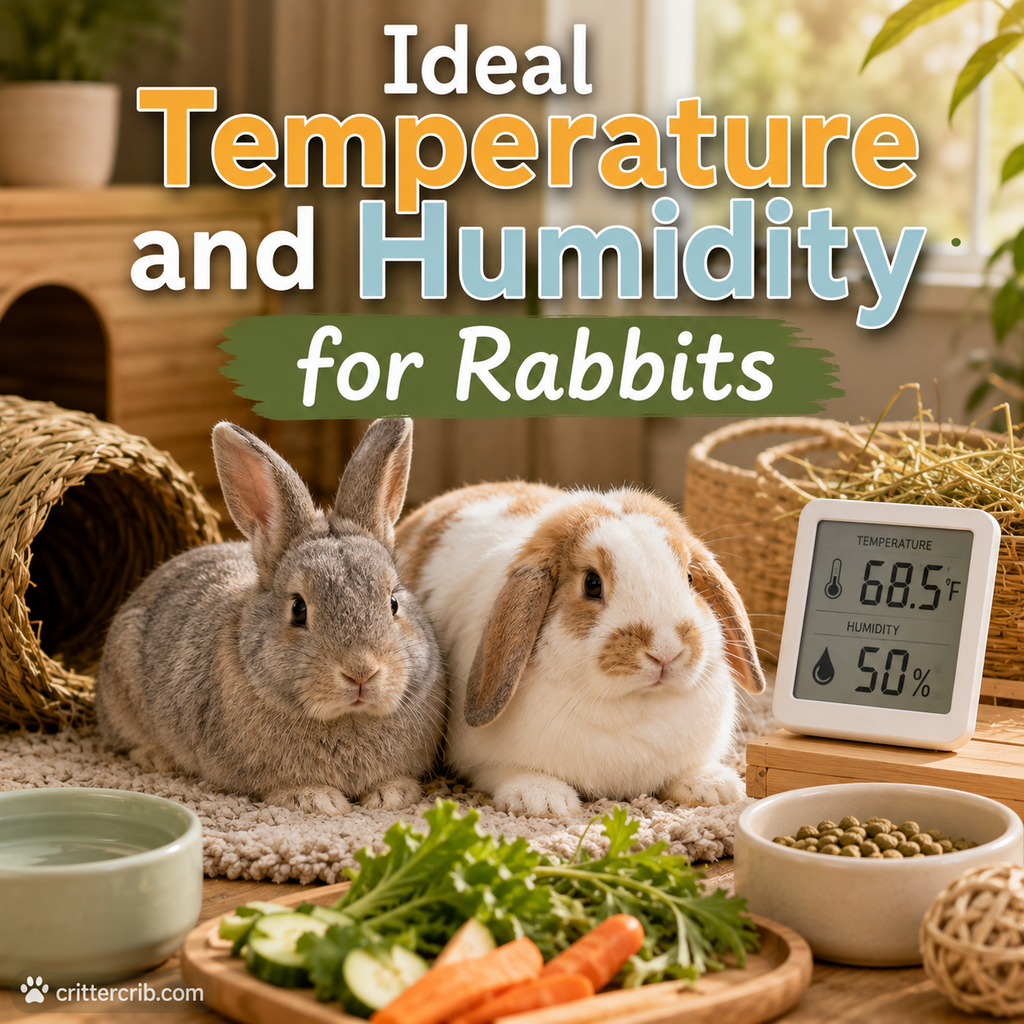
A comfortable household temperature for rabbits is generally around 60°F to 70°F (16°C to 21°C).
That doesn’t mean a rabbit suddenly becomes uncomfortable the moment the temperature moves outside this range. Healthy rabbits can tolerate cooler conditions when they’re properly acclimated and have suitable shelter.
Heat is usually the bigger concern.
Once temperatures begin climbing into the upper 70s Fahrenheit, it’s worth paying closer attention to your rabbit’s environment. Around 80°F (27°C) and above, the risk of heat-related problems becomes increasingly important, particularly when humidity is high, ventilation is poor, or the rabbit has other risk factors.
Think of 60°F to 70°F as a practical comfort zone rather than an absolute boundary.
Why Rabbits Are Sensitive to Heat
Rabbits don’t cool themselves the same way people do.
They don’t sweat effectively across their bodies, and that thick fur coat provides excellent insulation—which isn’t particularly helpful during a heat wave.
Their ears play an important role in regulating body temperature. Blood vessels in the ears can help release heat into the surrounding environment.
But there’s a limit to how much cooling this can accomplish.
When the surrounding air is already hot and humid, getting rid of excess body heat becomes much more difficult.
Which Rabbits Are Most Vulnerable to Heat?
Any rabbit can develop heat-related problems, but some may be particularly vulnerable.
These can include:
- Older rabbits
- Very young rabbits
- Overweight rabbits
- Long-haired or heavily coated breeds
- Rabbits with existing health problems
- Rabbits housed in poorly ventilated areas
- Rabbits without access to shade
- Rabbits suddenly exposed to temperatures they’re not accustomed to
If your rabbit falls into one of these groups, be especially cautious during warm weather.
What Is the Ideal Humidity for Rabbits?
For indoor rabbits, a moderate household relative humidity of roughly 40% to 60% is a reasonable target.
Humidity shouldn’t be considered separately from temperature, though.
A warm room at moderate humidity may be manageable, while the same temperature combined with very high humidity can feel considerably more oppressive.
High humidity can reduce the effectiveness of heat loss and make an already warm environment more stressful.
Extremely damp conditions can also contribute to:
- Moist bedding
- Mold growth
- Poor air quality
- Increased odors
- Uncomfortable living conditions
On the other end of the spectrum, extremely dry indoor air can irritate sensitive respiratory tissues and dry out the environment unnecessarily.
You don’t need to obsess over maintaining one exact humidity percentage. Aim for a comfortable, well-ventilated environment without persistent dampness or extreme dryness.
Temperature and Humidity Work Together
Looking at the thermometer alone doesn’t tell the whole story.
Imagine two rabbit rooms that are both 78°F.
One has moderate humidity and good air circulation. The other is humid, stuffy, and poorly ventilated.
Those environments aren’t equivalent.
High humidity makes it more difficult for animals to lose heat, while poor ventilation allows heat and moisture to accumulate.
This is why rabbit comfort should be evaluated using several factors:
- Temperature
- Relative humidity
- Air circulation
- Direct sunlight
- Shade
- Bedding conditions
- Access to water
- The rabbit’s health and coat
- Whether the rabbit is acclimated to the conditions
The combination matters more than chasing one perfect number.
How to Monitor Your Rabbit’s Environment
You don’t need expensive equipment to keep track of temperature and humidity.
A basic digital thermometer and hygrometer can display both measurements and is inexpensive enough to keep near the enclosure.
Placement matters.
Don’t put the sensor directly beside a heater, air-conditioning vent, humidifier, sunny window, or another location that doesn’t represent the conditions where your rabbit actually spends time.
Instead, position it close to the rabbit’s normal living area.
Monitor Different Parts of Large Enclosures
If your rabbit has a large room, pen, or outdoor enclosure, conditions may vary from one location to another.
Sunlight can heat one section dramatically while another remains shaded.
Check the places where your rabbit actually rests.
For outdoor housing, it’s particularly important to monitor temperatures inside enclosed sleeping areas. A structure that looks shaded from the outside can still trap heat.
Signs a Rabbit May Be Too Hot
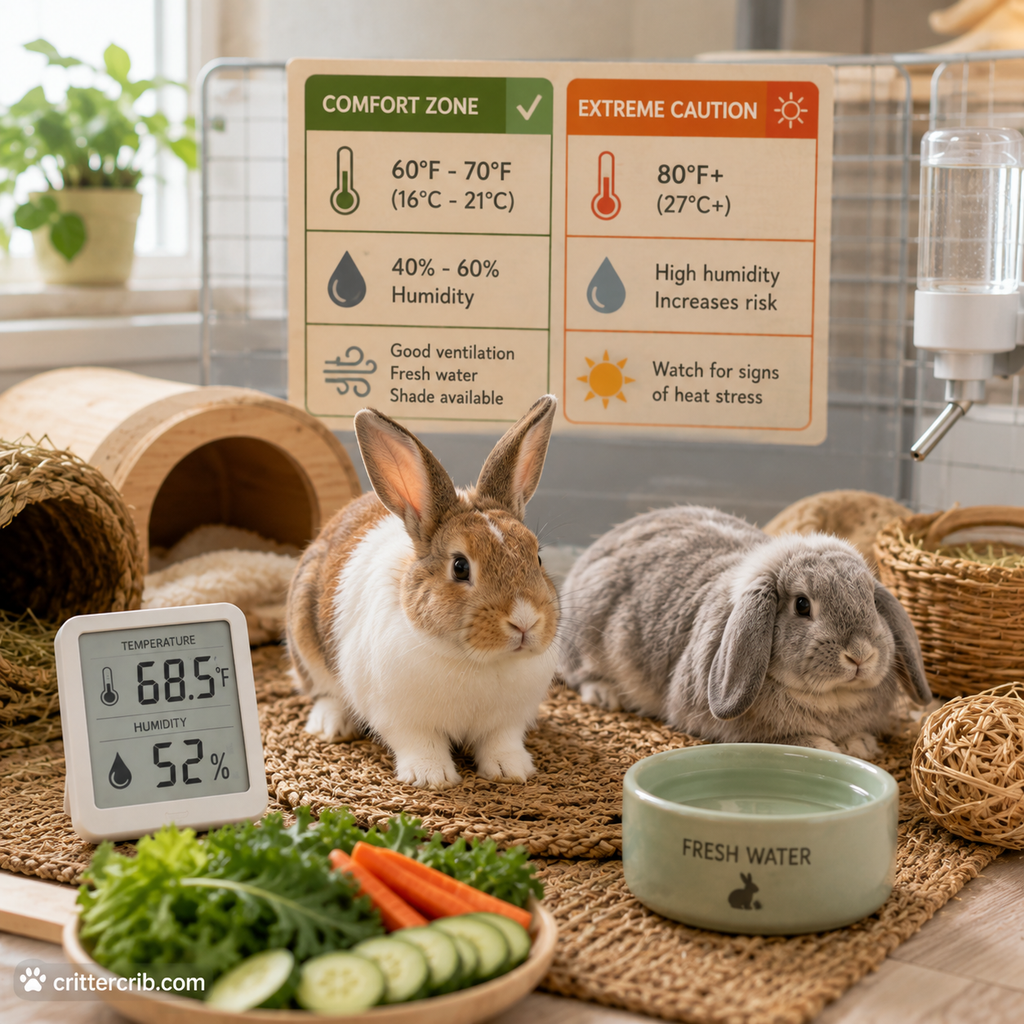
Knowing your rabbit’s normal behavior makes it easier to recognize when something has changed.
A warm rabbit may stretch out and seek cooler surfaces. That alone doesn’t necessarily indicate an emergency.
More concerning signs can include:
- Rapid or labored breathing
- Unusual lethargy
- Weakness
- Very warm or reddened ears
- Drooling or wetness around the mouth
- Confusion or poor coordination
- Reluctance to move
- Collapse
- Seizures
Severe overheating and heatstroke are emergencies.
If your rabbit appears distressed, weak, confused, collapses, or is having difficulty breathing during hot conditions, contact a veterinarian immediately.
What to Do If Your Rabbit Is Overheating
If you suspect serious heat stress, move the rabbit into a cooler environment and contact a veterinarian promptly.
Cooling should be gradual and controlled.
You can help by:
- Moving the rabbit out of direct heat or sunlight.
- Providing a cooler, well-ventilated environment.
- Offering fresh, cool drinking water.
- Using cool—not ice-cold—materials around the rabbit.
- Contacting a veterinarian for guidance.
Avoid plunging an overheated rabbit into ice water.
Extremely rapid cooling can create additional problems, and a severely overheated rabbit needs professional veterinary assessment even if it appears to improve.
How to Keep Rabbits Cool in Summer
Summer requires more planning, particularly if your home doesn’t have air conditioning.
The first priority is preventing the rabbit’s living area from heating up in the first place.
Keep the Habitat Out of Direct Sunlight
Sunlight coming through a window can raise the temperature around an indoor enclosure surprisingly quickly.
Move the pen away from strong direct sunlight or use appropriate curtains or blinds during the hottest part of the day.
Outdoor rabbits must always have reliable shade throughout the day.
Remember that shade moves as the sun moves.
A location shaded at 9 a.m. may be completely exposed by mid-afternoon.
Use Air Conditioning When Necessary
Air conditioning is one of the most effective ways to maintain a safe indoor temperature during extreme heat.
Avoid placing your rabbit directly in front of a strong cold vent. The goal is to cool the room rather than blast the animal with cold air.
If you’re relying on air conditioning during a heat wave, consider what you’ll do if the power goes out.
Having a backup plan can be important in areas where extreme heat and power interruptions occur together.
Use Fans for Air Circulation
Fans can improve air movement within a room, but they don’t actually lower the room’s temperature.
They’re most useful alongside other cooling measures.
Position fans so they improve circulation without forcing your rabbit to sit directly in a strong draft.
Always protect electrical cords from chewing.
Provide Cool Surfaces
Many rabbits naturally seek cool flooring when they’re warm.
Ceramic tiles or other rabbit-safe cool surfaces can provide a comfortable resting spot.
Some rabbits will immediately stretch across them.
Others will completely ignore the carefully prepared cooling area and lie somewhere else.
That’s fairly typical rabbit behavior.
Try Frozen Water Bottles
A frozen water bottle wrapped appropriately to prevent uncomfortable direct contact can provide a cool object near which a rabbit can rest.
Make sure your rabbit has enough space to move away from it.
You can rotate several bottles during hot weather so a replacement is available as one thaws.
Keep Fresh Water Available
Hydration is especially important during warm conditions.
Provide clean water at all times and check it frequently.
Many rabbits drink readily from a sturdy water bowl, although whatever method you use should remain clean and accessible.
During hot weather, check water more often than usual.
Can Rabbits Handle Cold Temperatures?
Healthy rabbits generally tolerate cool temperatures better than hot ones, particularly when they’re gradually acclimated.
Their coats provide considerable insulation.
However, being able to tolerate cold weather doesn’t mean rabbits should be exposed to freezing, wet, windy conditions without protection.
Cold becomes more concerning when combined with:
- Wet fur
- Damp bedding
- Wind
- Sudden temperature changes
- Illness
- Poor nutrition
- Inadequate shelter
- Very young or advanced age
A dry rabbit protected from wind is in a very different situation from a wet rabbit sitting in a draft.
Signs a Rabbit May Be Too Cold
Watch for changes in behavior and physical condition.
Possible signs that a rabbit is struggling with cold conditions can include:
- Persistent huddling
- Unusual inactivity
- Weakness
- Cold extremities
- Reduced responsiveness
- Reluctance to eat or move
Severe cold exposure can lead to hypothermia and requires veterinary attention.
Don’t assume a rabbit is comfortable simply because it has thick fur.
Keeping Indoor Rabbits Comfortable in Winter
Indoor rabbits usually don’t require elaborate winter preparations if your home remains at a normal household temperature.
Avoid placing the enclosure directly beside:
- Exterior doors
- Drafty windows
- Heating vents
- Fireplaces
- Portable heaters
Give your rabbit comfortable resting areas and plenty of hay.
If the room becomes unusually cold, measure the temperature at enclosure level rather than relying solely on a thermostat elsewhere in the house.
Floor-level conditions can sometimes be noticeably different.
Outdoor Rabbits Need Extra Weather Protection
Outdoor rabbit housing requires considerably more attention to temperature and weather.
An outdoor enclosure should protect rabbits from:
- Direct sunlight
- Rain
- Wind
- Dampness
- Predators
- Temperature extremes
It should also provide appropriate ventilation.
A shelter that’s sealed too tightly can trap heat and moisture, while one that’s too exposed may offer little protection from cold wind or rain.
Never Rely on Shade Alone During Extreme Heat
A shaded outdoor enclosure can still become dangerously hot when the surrounding air temperature rises.
If extreme heat is forecast, moving rabbits into a climate-controlled indoor environment may be the safest option.
Have that space prepared before temperatures become dangerous.
Waiting until a rabbit is already showing signs of heat stress makes the situation much more difficult.
Avoid Sudden Temperature Changes
Rabbits can adapt to seasonal conditions when changes happen gradually.
Abrupt transitions are different.
For example, moving a rabbit directly from a very cold outdoor environment into an extremely warm room creates a dramatic temperature change.
Similarly, an indoor rabbit accustomed to air conditioning shouldn’t suddenly spend hours outside during a hot afternoon.
Whenever possible, make environmental changes gradually and pay attention to your rabbit’s behavior.
Why Ventilation Matters
Good ventilation helps control more than temperature.
It also helps remove moisture, odors, dust, and ammonia that can accumulate around soiled litter and bedding.
A rabbit enclosure shouldn’t feel stuffy or smell strongly of urine.
Regular cleaning and appropriate ventilation work together to maintain good air quality.
However, ventilation doesn’t mean placing rabbits in a constant draft.
The goal is gentle air exchange throughout the room or enclosure.
Does Bedding Affect Temperature and Humidity?
Yes.
Bedding can influence both warmth and moisture levels around a rabbit.
Wet bedding is particularly problematic because it creates an uncomfortable environment and can contribute to skin and hygiene problems.
Check areas where your rabbit:
- Urinates
- Sleeps
- Drinks
- Eats hay
- Spends long periods resting
Remove wet or heavily soiled material promptly.
In humid weather, bedding may take longer to dry, making regular checks even more important.
Should You Use a Humidifier Around Rabbits?
Most rabbit households don’t need a humidifier specifically for the rabbit.
If indoor air becomes extremely dry, a household humidifier may help maintain a more comfortable environment. However, it should be used carefully.
Keep the unit clean and monitor actual humidity with a hygrometer.
Adding too much moisture can create its own problems.
Avoid directing mist straight into your rabbit’s enclosure or allowing nearby bedding to become damp.
Should You Use a Dehumidifier?
A dehumidifier can be useful in persistently humid environments, particularly during warm weather.
Again, measure before making adjustments.
If humidity consistently remains high, reducing moisture may improve comfort and help prevent damp bedding or mold.
Keep electrical cords completely inaccessible to rabbits.
That’s worth emphasizing for almost every powered device used near a rabbit enclosure. Rabbits can turn an exposed electrical cable into a veterinary emergency remarkably quickly.
Where Should You Put a Rabbit Enclosure Indoors?
Choose a stable part of your home where temperature and humidity don’t fluctuate dramatically throughout the day.
A good location generally has:
- Comfortable household temperatures
- Good ventilation
- No strong drafts
- No prolonged direct sunlight
- Protection from other pets
- Easy access to fresh water
- Enough space for exercise
- Regular household interaction without constant disturbance
Basements, garages, sunrooms, and enclosed porches deserve additional attention because their temperatures and humidity can differ significantly from the main living areas.
Don’t assume they’re suitable just because they’re technically indoors.
Measure the conditions first.
Summer Rabbit Temperature Checklist
When warm weather arrives, check your setup before the first major heat wave.
Make sure you have:
- A thermometer and hygrometer
- Reliable shade
- Good ventilation
- Plenty of fresh water
- Cool resting surfaces
- Frozen water bottles ready if needed
- Curtains or blinds for sunny windows
- Air conditioning or another safe cooling strategy
- A plan for power outages
- An indoor backup location for outdoor rabbits
- Contact information for a rabbit-experienced veterinarian
Preparing beforehand is much easier than improvising when the room is already too hot.
Winter Rabbit Temperature Checklist
Cold-weather preparation is equally important for rabbits living in environments where temperatures drop significantly.
Check for:
- Dry bedding
- Protection from rain and snow
- Protection from wind
- Draft-free sleeping areas
- Reliable drinking water that isn’t frozen
- Adequate hay
- Dry resting surfaces
- Secure weatherproof shelter
- A backup indoor location during severe weather
Continue checking the actual temperature rather than relying on how cold it feels to you.
Common Temperature and Humidity Mistakes
Many environmental problems are preventable.
Common mistakes include:
- Leaving an enclosure in direct sunlight
- Assuming rabbits can’t overheat because they’re indoors
- Relying only on a fan during extreme heat
- Ignoring high humidity
- Allowing bedding to remain damp
- Keeping outdoor rabbits in poorly ventilated shelters
- Exposing rabbits to sudden temperature changes
- Putting an enclosure directly beside a heater
- Aiming an air-conditioning vent directly at the rabbit
- Assuming thick fur makes rabbits immune to cold
- Failing to monitor conditions during heat waves
- Leaving electrical cooling equipment within chewing reach
The simplest improvement is often just knowing what’s happening in the environment.
A small thermometer and hygrometer remove a lot of guesswork.
Frequently Asked Questions About Rabbit Temperature and Humidity
Is 75°F Too Hot for a Rabbit?
A healthy rabbit may tolerate 75°F (24°C), particularly with moderate humidity, good ventilation, shade, and access to water.
However, it’s warmer than the typical comfort range, so monitor the environment and your rabbit closely.
Individual tolerance varies.
Is 80°F Too Hot for Rabbits?
Around 80°F (27°C), heat becomes a more significant concern for rabbits.
High humidity, direct sunlight, poor ventilation, heavy coats, age, and health conditions can increase the risk.
Take active steps to cool the environment rather than waiting for signs of distress.
What Temperature Is Dangerous for Rabbits?
There isn’t one temperature at which every rabbit suddenly develops heatstroke.
Risk increases as temperatures rise, particularly around and above 80°F, and environmental factors such as humidity, ventilation, sunlight, hydration, health, and acclimation all matter.
Treat signs of severe overheating as an emergency regardless of the thermometer reading.
What Humidity Is Best for Rabbits?
A moderate indoor relative humidity of roughly 40% to 60% is a practical target for many rabbit households.
Avoid persistent dampness and excessive humidity, especially during warm weather.
Can Rabbits Have a Fan?
Yes, a fan can help improve air circulation.
Don’t force your rabbit to sit directly in a strong airflow, and remember that a fan doesn’t actually reduce room temperature.
Keep the cord completely inaccessible.
Do Rabbits Need Air Conditioning?
Not necessarily during mild weather.
During very hot conditions, however, air conditioning can be one of the safest and most reliable ways to maintain a comfortable indoor environment.
If your home regularly becomes hot during summer, plan your cooling strategy before bringing rabbits home.
Can Rabbits Live Outside in Winter?
Some healthy, appropriately acclimated rabbits can tolerate cool outdoor conditions when provided with suitable housing, dry bedding, weather protection, companionship, nutrition, and unfrozen water.
Extreme cold, wet conditions, wind, illness, and sudden temperature changes increase the risks.
Local climate matters considerably, so outdoor housing should be planned around actual conditions rather than a universal temperature rule.
How Can I Tell If My Rabbit Is Comfortable?
Look at the whole picture.
A comfortable rabbit should behave normally for that individual—eating, drinking, resting, exploring, grooming, and producing normal droppings.
Changes in appetite, breathing, activity, posture, or responsiveness can indicate that something is wrong, whether environmental or medical.
Creating a Comfortable Environment Year-Round
Keeping rabbits comfortable doesn’t require maintaining an identical temperature every minute of the year.
What matters is providing a stable environment and protecting them from extremes.
For indoor rabbits, around 60°F to 70°F with moderate humidity is a useful target. As temperatures approach 80°F, heat deserves increasing attention, especially when humidity is high.
Cooler conditions are often easier for healthy rabbits to tolerate, but protection from dampness, wind, freezing conditions, and abrupt temperature changes remains important.
A digital thermometer and hygrometer can make monitoring simple. Add good ventilation, fresh water, dry living areas, shade, and an appropriate seasonal plan, and you’ll eliminate much of the guesswork.
Most importantly, pay attention to the rabbit in front of you.
Numbers provide useful guidelines, but changes in your rabbit’s breathing, appetite, activity, or behavior can tell you when environmental conditions—or something else—need attention.