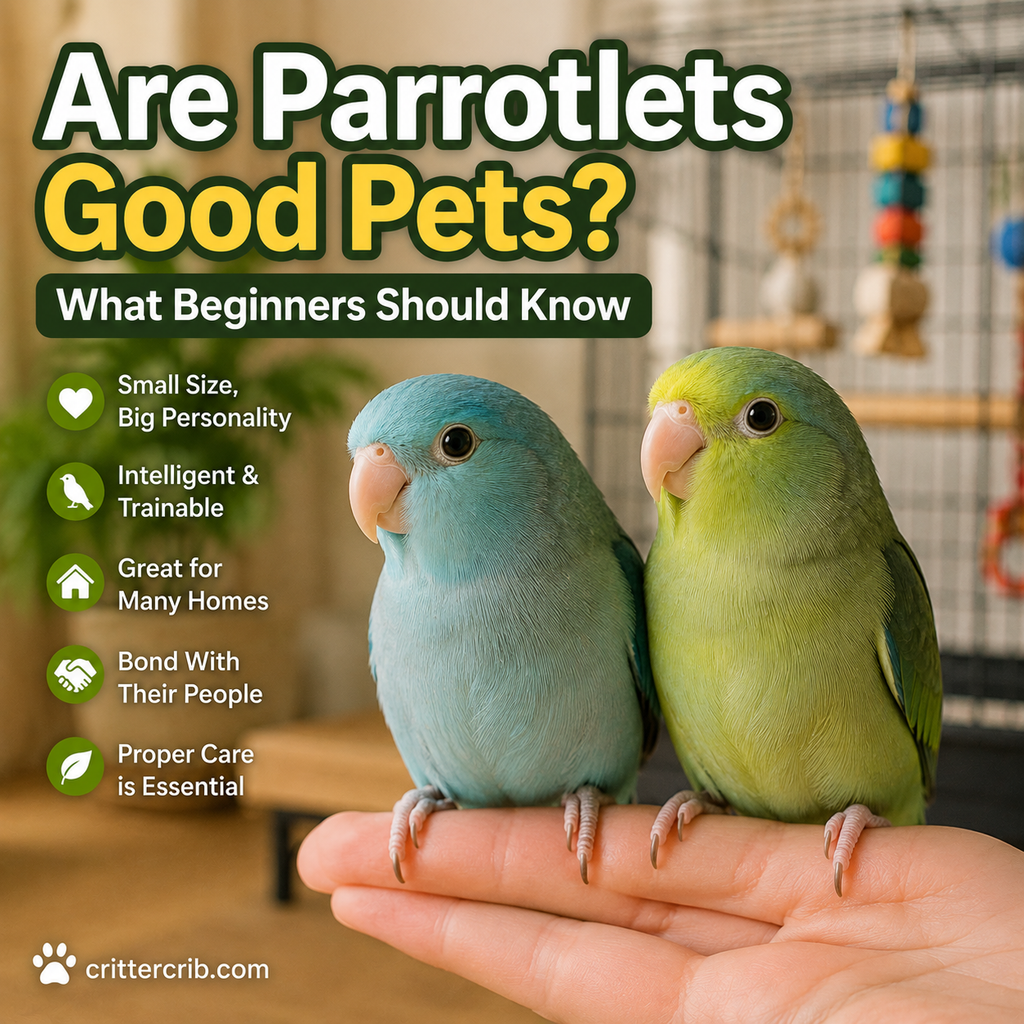
Parrotlets are tiny parrots with personalities that seem far too big for their bodies. They’re playful, curious, intelligent, and capable of forming close relationships with their owners. Their small size also makes them appealing to people who love parrots but don’t have room for a much larger bird.
So, are parrotlets good pets?
They certainly can be. For the right owner, a parrotlet can be an entertaining and affectionate companion. But they’re not necessarily the effortless “beginner parrot” their size might suggest.
Parrotlets can be feisty, territorial, stubborn, and surprisingly bold. They need daily interaction, enrichment, proper nutrition, training, exercise, and veterinary care just like larger parrots do.
If you’re considering bringing one home, here’s what you should know about living with a parrotlet.
What Is a Parrotlet?
Parrotlets are small parrots native to parts of Central and South America.
Several species exist, but the Pacific parrotlet is one of the most commonly kept as a pet.
They’re among the smallest parrots commonly found in companion bird homes, typically measuring only a few inches long and weighing roughly around an ounce, depending on the individual and species.
Don’t let that tiny package fool you.
Parrotlets are genuine parrots, complete with the intelligence, curiosity, chewing habits, social needs, and occasional attitude associated with much larger birds.
Are Parrotlets Good Pets for Beginners?
Parrotlets can be good pets for beginners who are willing to learn about parrot behavior and provide consistent care.
They’re not necessarily the easiest pet bird for everyone.
A first-time owner should be prepared for:
- Daily social interaction
- Regular training
- A proper cage setup
- Supervised exercise
- Chewing and mess
- Occasional biting
- Territorial behavior
- Fresh food preparation
- Routine cleaning
- Avian veterinary care
- A long-term commitment
Someone who wants a small, interactive parrot may find a parrotlet extremely rewarding.
Someone looking for a quiet bird that can simply sit in a cage with minimal attention will probably be disappointed.
What Are Parrotlets Like as Pets?
Parrotlets are often described as big parrots in tiny bodies.
That’s a cliché, but there’s some truth to it.
Many parrotlets are:
- Curious
- Confident
- Playful
- Intelligent
- Energetic
- Territorial
- Affectionate with trusted people
- Independent
- Bold
Individual personalities vary considerably.
One parrotlet might eagerly climb onto your hand and investigate everything you’re doing. Another may be more cautious or prefer interacting on its own terms.
Their personality is one of their biggest attractions, but it’s also why owners shouldn’t treat them like passive cage birds.
Are Parrotlets Affectionate?
Parrotlets can become very attached to their owners.
A well-socialized bird may enjoy sitting on your hand or shoulder, playing with you, following you around during supervised out-of-cage time, or simply staying close while you’re doing something else.
Some enjoy gentle head scratches.
Others prefer companionship without much touching.
It’s important to respect the bird’s preferences rather than assuming every parrotlet wants constant physical affection.
A bird that chooses to spend time with you is showing trust even if it doesn’t want to be petted.
Do Parrotlets Bond With One Person?
They can.
Some parrotlets develop a particularly strong attachment to one person and may become less tolerant of other household members.
That isn’t inevitable.
Regular positive interaction with multiple people can help prevent the bird’s social world from becoming too narrow.
If everyone in the household wants a relationship with the parrotlet, encourage different people to participate in:
- Offering treats
- Training
- Talking to the bird
- Providing enrichment
- Calm social interaction
Don’t force the bird to interact with someone it’s afraid of.
Build positive associations gradually.
Are Parrotlets Easy to Tame?
Many parrotlets can become very comfortable with people, especially with patient, consistent training.
The process should be based on trust rather than force.
A new parrotlet may need time to adjust before it’s ready for close interaction.
Start slowly:
- Spend time near the cage.
- Talk calmly to the bird.
- Offer favorite treats.
- Introduce your hand gradually.
- Reward voluntary approaches.
- Teach simple behaviors such as stepping up.
- Keep training sessions short and positive.
Avoid chasing the bird around the cage with your hand.
You’ll make faster long-term progress by giving the bird choices.
Do Parrotlets Bite?
Yes.
Any parrot can bite, and parrotlets are no exception.
Their beaks are tiny compared with those of larger parrots, but a determined parrotlet can still deliver a painful bite.
Common reasons for biting include:
- Fear
- Territorial behavior
- Overstimulation
- Hormonal behavior
- Protecting a favorite object
- Not wanting to be touched
- Frustration
- Poor socialization
- Ignored body language
Biting shouldn’t automatically be treated as aggression.
Often, the bird has already communicated discomfort before using its beak.
Learning to recognize those earlier signals can prevent many bites.
Don’t Punish a Parrotlet for Biting
Yelling, hitting, tapping the beak, or frightening the bird can damage trust and may make biting worse.
Instead, consider what triggered the behavior.
Did you reach into the cage? Try to touch the bird when it wanted space? Ignore attempts to move away?
Changing the situation is usually more productive than punishing the bite.
Are Parrotlets Territorial?
They can be surprisingly territorial.
Some parrotlets become defensive around:
- Their cage
- Food dishes
- Favorite toys
- Sleeping areas
- A favorite person
A bird that happily steps onto your finger outside the cage might suddenly become much more defensive when your hand enters its territory.
Training can help.
It’s also useful to recognize that the cage is your bird’s primary safe space. Whenever possible, encourage voluntary movement rather than repeatedly reaching in and grabbing the bird.
Are Parrotlets Noisy?
Parrotlets are generally quieter than many larger parrots, which can make them appealing for apartments and smaller homes.
But “quieter” doesn’t mean silent.
A parrotlet may:
- Chirp
- Chatter
- Call
- Squeak
- Whistle
- Make contact calls
- Become louder when excited
Individual birds vary.
Compared with a cockatoo, macaw, or conure, the overall volume is usually much more manageable.
Still, someone who requires a nearly silent home may not enjoy living with any parrot.
Can Parrotlets Talk?
Some parrotlets can learn words and short phrases.
Their voices may be small or somewhat difficult to understand, but individual birds can become surprisingly good mimics.
Talking ability varies widely.
One bird might learn numerous words while another never says anything recognizable.
If talking is important to you, don’t choose a parrotlet based on the assumption that it will definitely speak.
Consider speech a bonus rather than a guarantee.
How Much Attention Do Parrotlets Need?
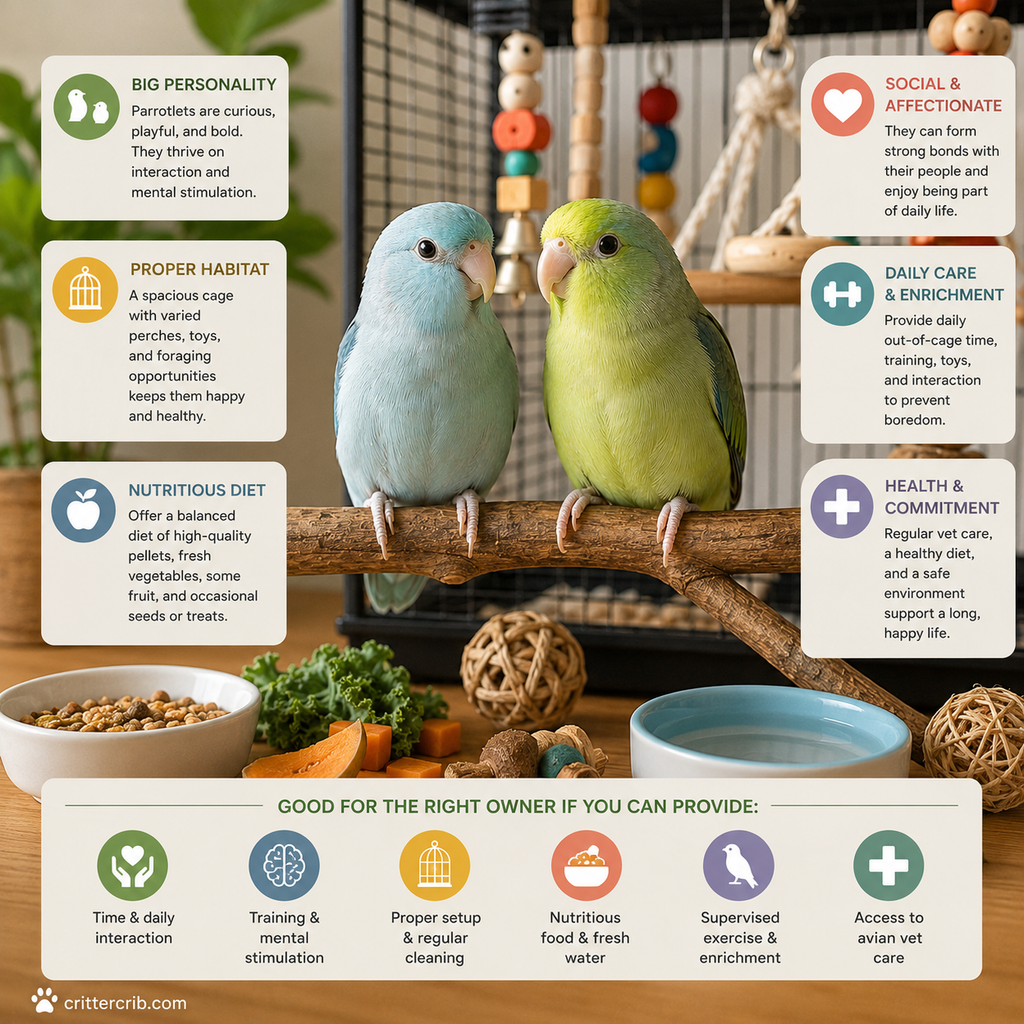
Parrotlets need daily interaction and mental stimulation.
A single bird that has bonded closely with people will usually expect to participate in household life.
Daily interaction can include:
- Training
- Talking
- Playing
- Supervised out-of-cage time
- Foraging activities
- Sitting near you
- Exploring a play stand
- Learning simple tricks
That doesn’t mean you must hold your bird every minute you’re home.
Independent play is healthy too.
The goal is to provide a balanced life that includes social interaction, exercise, rest, and opportunities to entertain itself.
Do Parrotlets Need a Companion?
Not necessarily.
A single parrotlet can thrive when it receives appropriate human interaction and enrichment.
Keeping two parrotlets can provide bird-to-bird companionship, but adding another bird isn’t automatically the right solution for every household.
Two birds may:
- Bond closely with each other
- Require a larger habitat
- Create additional mess
- Increase veterinary costs
- Require careful introductions
- Become territorial
- Not necessarily get along
Never put unfamiliar birds together and assume they’ll become friends.
Introductions should be gradual, and new birds should receive appropriate veterinary evaluation and quarantine before sharing space.
What Size Cage Does a Parrotlet Need?
Parrotlets may be tiny, but they need room to move.
Avoid miniature cages marketed simply because the bird itself is small.
A cage around 18 by 18 by 18 inches is sometimes cited as a starting minimum for one parrotlet, but a larger cage is preferable whenever possible.
Something around 24 inches wide or larger provides more useful space for movement, toys, and multiple perches.
Horizontal room is particularly valuable.
The cage should allow your parrotlet to stretch its wings and move comfortably without constantly colliding with accessories.
What Bar Spacing Is Safe for Parrotlets?
Because parrotlets are so small, bar spacing needs careful attention.
Approximately 1/2-inch spacing or smaller is generally appropriate.
Inspect the entire cage.
Larger gaps sometimes appear around:
- Doors
- Corners
- Feeding ports
- Removable trays
- Decorative areas
A small bird can potentially squeeze through openings that don’t look particularly large to us.
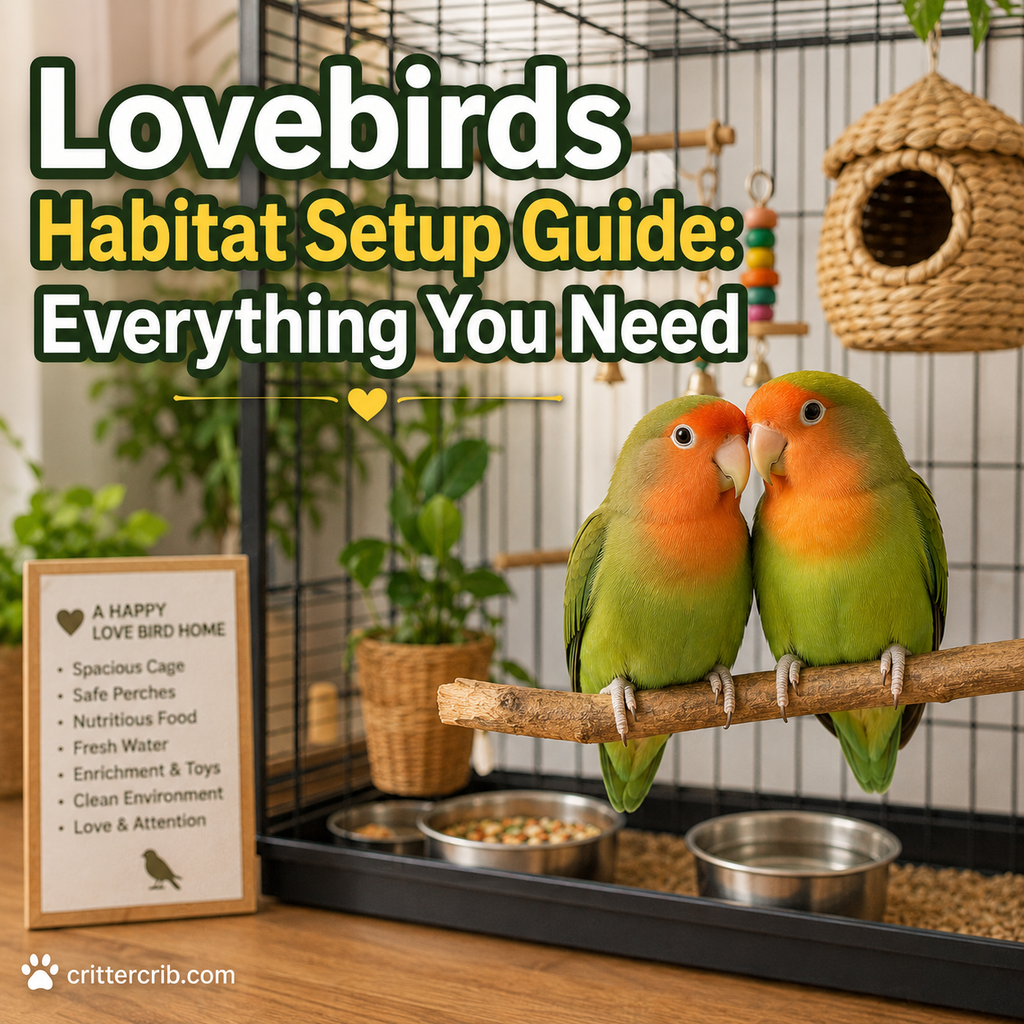
What Should Be Inside a Parrotlet Cage?
A good cage setup should encourage movement and natural behaviors without becoming overcrowded.
Useful items include:
- Natural bird-safe perches
- Perches of varying diameters
- Food dishes
- Fresh water
- Chewing toys
- Shredding toys
- Foraging activities
- Climbing toys
- Swings
- Open movement space
Avoid relying exclusively on identical smooth dowel perches.
Natural branch-style perches allow the feet to rest in different positions.
Parrotlets Need Toys and Enrichment
A bored parrotlet can find its own entertainment.
Unfortunately, its idea of entertainment might involve destroying something you would rather keep intact.
Provide safe opportunities for:
- Chewing
- Shredding
- Climbing
- Foraging
- Exploring
- Problem-solving
Rotate toys occasionally rather than placing everything inside the cage at once.
Some birds approach new toys immediately. Others need time before deciding they’re safe.
Inspect toys regularly for frayed fibers, sharp edges, broken pieces, or other hazards.
What Do Parrotlets Eat?
A balanced diet is essential.
Feeding only a bowl of seeds may be convenient, but seed-only diets can be nutritionally incomplete.
A parrotlet diet generally includes an appropriately formulated food along with fresh bird-safe vegetables and other suitable foods.
Examples of vegetables that may be offered include:
- Leafy greens
- Broccoli
- Bell peppers
- Carrots
- Peas
- Squash
Fruit can be offered appropriately in smaller amounts.
Seeds and nuts can be useful as treats or components of the diet depending on your veterinarian’s recommendations.
Fresh water should always be available.
Don’t Change a Parrotlet’s Diet Overnight
A bird accustomed to eating seeds may not immediately recognize pellets or vegetables as food.
Never simply remove everything familiar and assume hunger will force the bird to eat something new.
Small birds can deteriorate quickly if they stop eating.
Diet transitions should happen gradually, ideally with guidance from an avian veterinarian.
Are Parrotlets Messy?
Yes.
They’re small, but they can still scatter an impressive amount of debris.
Expect:
- Food crumbs
- Seed hulls
- Vegetable pieces
- Droppings
- Feathers
- Shredded paper
- Chewed toy fragments
Daily spot cleaning keeps the mess manageable.
Cage liners should be replaced regularly, and food and water dishes need frequent washing.
You’ll also need to clean the floor or furniture around the cage.
Do Parrotlets Smell?
Healthy parrotlets themselves generally don’t produce a strong unpleasant odor.
A dirty cage can.
Old food, wet cage liners, dirty water, and accumulated droppings can quickly create unpleasant conditions.
Regular cleaning keeps the environment much fresher.
If your bird itself suddenly develops an unusual smell along with changes in droppings, behavior, or appetite, contact an avian veterinarian.
How Much Exercise Does a Parrotlet Need?
Daily movement is important.
Even a large cage shouldn’t be the bird’s entire world.
Supervised out-of-cage time gives a parrotlet opportunities to fly, climb, explore, train, and interact.
Before opening the cage, bird-proof the room.
Check for:
- Open windows
- Exterior doors
- Ceiling fans
- Hot surfaces
- Open toilets
- Deep containers of water
- Toxic plants
- Electrical cords
- Other pets
- Small gaps where the bird could become trapped
Ceiling fans should always be turned off before your bird flies freely.
Are Parrotlets Good Apartment Pets?
They can be.
Their small size and relatively moderate volume make parrotlets more practical for apartments than many larger parrots.
However, check your lease or building rules before bringing home any pet.
Also consider your neighbors.
A parrotlet’s normal calls may not be extremely loud, but cages positioned directly against a shared wall can make sounds more noticeable.
Are Parrotlets Good Pets for Children?
A parrotlet can live successfully in a household with children, but adults should remain responsible for its care and safety.
These birds are delicate.
Children should learn:
- Not to grab the bird
- Not to squeeze it
- Not to chase it
- To approach calmly
- To respect bites and warning signals
- To keep doors and windows closed during out-of-cage time
A frightened parrotlet can bite, and a child may instinctively jerk away or accidentally injure the bird.
Supervision is important.
Can Parrotlets Live With Dogs or Cats?
They can live in the same household, but direct interaction is risky.
A cat can seriously injure or kill a parrotlet in seconds.
Dogs can also injure birds through predatory behavior, rough play, or simple accidents.
Don’t assume another pet is safe because it seems friendly.
When your parrotlet is outside its cage, other animals should be securely separated.
The cage should also be positioned where a cat or dog can’t knock it over or constantly stalk the bird.
How Long Do Parrotlets Live?
Getting a parrotlet is a long-term commitment.
With proper care, many parrotlets can live approximately 15 to 20 years, although individual lifespans vary.
Genetics, nutrition, exercise, veterinary care, accidents, housing, and overall health all play a role.
A bird purchased today could still be part of your life many years from now.
Think about future housing, work schedules, relationships, travel, and finances before making the commitment.
Do Parrotlets Need an Avian Veterinarian?
Yes.
Ideally, locate an avian veterinarian before bringing your bird home.
Not every general veterinarian treats birds, and an emergency isn’t the best time to discover that the nearest clinic won’t see your parrotlet.
Routine veterinary care can help establish a health baseline and identify problems early.
Birds also tend to hide illness.
Possible warning signs include:
- Persistent feather fluffing
- Reduced appetite
- Weight loss
- Unusual droppings
- Difficulty breathing
- Tail bobbing while breathing
- Weakness
- Sitting on the cage floor
- Sudden behavioral changes
A small bird can become seriously ill quickly, so concerning symptoms deserve prompt attention.
How Much Does It Cost to Keep a Parrotlet?
The price of the bird itself is only one part of the cost.
You’ll also need to budget for:
- A quality cage
- Perches
- Toys
- Food
- Fresh vegetables
- Cleaning supplies
- A carrier
- Routine veterinary visits
- Emergency veterinary care
- Replacement toys and accessories
Because parrotlets destroy toys and need ongoing enrichment, some expenses continue throughout the bird’s life.
Veterinary emergencies can also cost considerably more than the original price of the bird.
Pros and Cons of Parrotlets as Pets
Parrotlets have plenty of appealing qualities, but they’re not the right pet for everyone.
Advantages of Parrotlets
Parrotlets are:
- Small
- Intelligent
- Playful
- Interactive
- Relatively quiet compared with larger parrots
- Capable of learning tricks
- Sometimes able to talk
- Suitable for smaller homes
- Full of personality
- Able to form strong bonds with people
For someone who wants a true parrot experience in a much smaller package, they can be a great fit.
Disadvantages of Parrotlets
Potential challenges include:
- Biting
- Territorial behavior
- Daily social needs
- Regular cleaning
- Veterinary expenses
- Chewing
- Long lifespan
- Need for training
- Need for supervised exercise
- Possible one-person bonding
- Ongoing enrichment requirements
Their size makes some aspects of ownership easier, but it doesn’t remove the responsibility that comes with keeping an intelligent parrot.
Questions to Ask Before Getting a Parrotlet
Before bringing one home, consider your everyday lifestyle.
Ask yourself:
- Can I provide daily interaction?
- Do I have time for training and supervised exercise?
- Can I tolerate chirping and occasional louder calls?
- Am I comfortable dealing with occasional biting?
- Can I afford avian veterinary care?
- Is there an avian veterinarian reasonably accessible?
- Can I provide a spacious, safe cage?
- Can I bird-proof an area for exercise?
- Are my other pets safely manageable around a bird?
- Am I prepared for a commitment that could last 15 years or longer?
If you’re comfortable with those responsibilities, a parrotlet may be a good match.
Are Parrotlets Low-Maintenance Pets?
Not really.
They’re more manageable in some ways than larger parrots. They require less physical space, eat smaller quantities of food, and generally make less noise.
But they still require daily care.
That includes:
- Fresh food and water
- Cleaning
- Social interaction
- Training
- Exercise
- Enrichment
- Health monitoring
“Small parrot” is a much more accurate description than “low-maintenance bird.”
Frequently Asked Questions About Parrotlets as Pets
Are Parrotlets Friendly?
Many parrotlets become friendly and affectionate with people they trust.
Their personalities vary, and some can also be territorial or independent.
Patient socialization and positive interactions help build a strong relationship.
Do Parrotlets Like to Be Held?
Some enjoy sitting on hands, fingers, or shoulders, but they generally shouldn’t be physically restrained or grabbed for affection.
Allow your bird to choose when it wants interaction.
Are Parrotlets Loud?
Parrotlets are generally quieter than many larger parrots, but they still chirp, chatter, and call throughout the day.
They’re not silent pets.
Are Parrotlets Aggressive?
Parrotlets can be territorial and surprisingly assertive.
That doesn’t mean every bird is aggressive.
Training, socialization, environment, hormones, and individual personality all influence behavior.
Can Parrotlets Learn to Talk?
Some can learn words and short phrases.
Speech ability varies considerably, so there’s no guarantee that an individual bird will talk.
Can a Parrotlet Be Left Alone During the Day?
A parrotlet can spend some time alone, but a single bird shouldn’t be socially isolated for long periods every day.
Provide toys and independent enrichment and make sure the bird receives meaningful interaction when you’re home.
Is One Parrotlet Better Than Two?
It depends on your household and goals.
A single parrotlet can bond closely with people when given sufficient attention. Two compatible birds can provide companionship for each other but require additional space, expense, and management.
Never assume unfamiliar parrotlets will automatically get along.
Are Parrotlets Good First Birds?
They can be good first birds for someone prepared to learn about parrot behavior, training, nutrition, and care.
A person who wants an extremely easy or hands-off pet may find a parrotlet more demanding than expected.
Final Thoughts
So, are parrotlets good pets?
For the right person, absolutely.
They’re tiny, intelligent parrots with enormous personalities. A well-socialized parrotlet can become a playful, curious, entertaining companion that enjoys participating in everyday life with its owner.
Their small size also makes them easier to accommodate than many larger parrots.
But don’t mistake small for simple.
Parrotlets need daily attention, training, enrichment, exercise, good nutrition, a proper cage, regular cleaning, and access to avian veterinary care. They can bite, become territorial, chew things, make noise, and demand your attention when they’d rather not be ignored.
They’re also potentially a 15-to-20-year commitment.
If you’re looking for an interactive little parrot and you’re prepared for the responsibility that comes with one, a parrotlet can be an excellent pet.
If you’re looking for a bird that requires very little daily involvement, you’ll probably be happier with another type of pet.
The best parrotlet owner isn’t necessarily someone with years of bird experience. It’s someone willing to learn, pay attention to the bird’s behavior, provide consistent care, and respect the fact that even the smallest parrot is still very much a parrot.