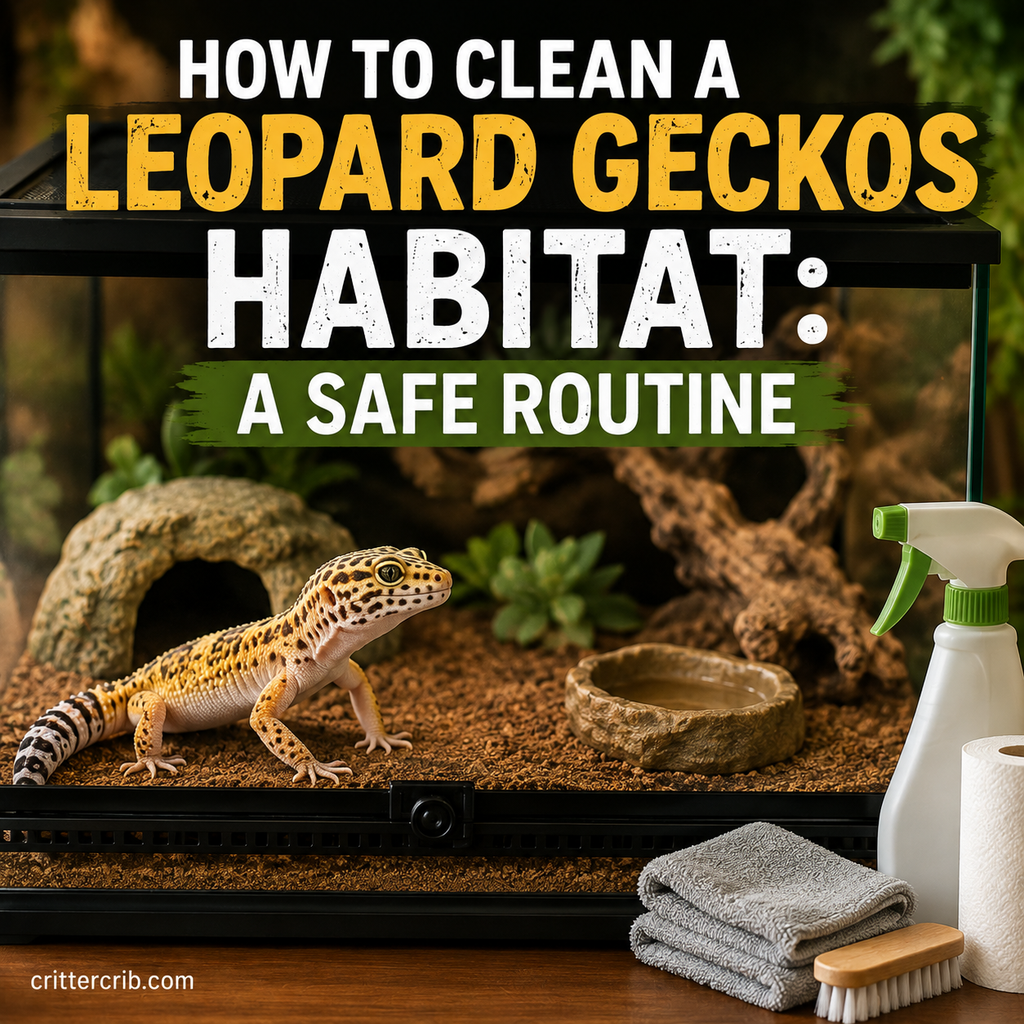
How to Clean a Leopard Gecko’s Habitat: A Safe Routine

Leopard gecko in its habitat with reptile enclosure cleaning supplies
Regular spot cleaning and periodic deeper cleaning help keep a leopard gecko’s habitat clean and well maintained.

Keeping a leopard gecko’s habitat clean isn’t just about making the enclosure look nice. Regular cleaning helps remove waste, leftover food, shed skin, and other debris that can accumulate where your gecko eats, sleeps, and explores.

Fortunately, leopard gecko enclosure maintenance doesn’t have to be complicated.

Most of the work comes down to quick spot cleaning throughout the week, with more thorough cleaning performed periodically when the enclosure needs it. Once you establish a routine, maintaining the habitat usually becomes a fairly simple part of leopard gecko care.

The important part is knowing what to clean, what products are safe to use, and how to avoid exposing your gecko to cleaning chemicals or unnecessary stress.

Here’s how to clean a leopard gecko’s habitat safely and efficiently.

Continue reading “How to Clean a Leopard Gecko’s Habitat: A Safe Routine”


How Much Space Do Bearded Dragons Need? Housing Size Guide

Bearded dragon beside a large enclosure showing how much space bearded dragons need
Adult bearded dragons need enough enclosure space for basking, cooling, climbing, hiding, and exploring.

Bearded dragons may look small when they’re curled up under a basking lamp, but they need more room than many new owners expect. These active reptiles spend their days moving between warm and cool areas, climbing, basking, exploring, and finding comfortable places to rest.

For most adult bearded dragons, a 4 x 2 x 2-foot enclosure (120 gallons or equivalent) should be considered a practical minimum. Larger enclosures can be even better when they’re set up correctly.

Baby bearded dragons can live in smaller habitats temporarily, but they grow quickly. Starting with an adult-sized enclosure can save you from buying several tanks as your dragon gets bigger.

This guide explains how much space bearded dragons need at different ages, why enclosure dimensions matter, and how to make good use of the space you provide.

Continue reading “How Much Space Do Bearded Dragons Need? Housing Size Guide”

How Much Do Turtles Cost? Setup and Ongoing Expenses

Pet turtle in an aquatic habitat illustrating turtle setup and ongoing ownership costs
The cost of owning a turtle includes much more than the animal itself, with expenses for the habitat, filtration, UVB lighting, heating, food, maintenance, and veterinary care.

Turtles are sometimes sold as inexpensive pets. You might see a small turtle with a relatively low price tag and assume you’re looking at an easy, budget-friendly animal.

The turtle may be inexpensive.

The setup usually isn’t.

So, how much do turtles cost?

Depending on the species and where you get one, the turtle itself might cost around $20 to $100 or more. Certain species, morphs, captive-bred animals, or less common turtles can cost considerably more. Adoption fees may sometimes be lower.

For an aquatic turtle, however, the enclosure, filtration, heating, UVB lighting, basking equipment, substrate or décor, food, water maintenance supplies, and other necessities can easily bring the initial investment to several hundred dollars.

A reasonable first-year budget for many pet turtles may fall somewhere around $500 to $1,500 or more, depending heavily on the species and setup.

And because turtles can live for decades, the ongoing costs matter just as much as the initial price.

Here’s what to budget for before bringing one home.

Continue reading “How Much Do Turtles Cost? Setup and Ongoing Expenses”

Best Enrichment Ideas for Happy, Active Tortoises

Tortoises exploring an enriched habitat with plants, hides, natural substrate, and leafy greens
A varied habitat with opportunities to forage, dig, explore, hide, and navigate different terrain can encourage natural tortoise behaviors.

Tortoises have a reputation for being slow, quiet pets that don’t need much entertainment. Give them food, water, warmth, and somewhere to sleep, and they’re good to go—right?

Not quite.

Tortoises may move at their own pace, but they’re active animals that naturally spend time walking, exploring, digging, grazing, investigating objects, and searching for food. A bare enclosure gives them very few opportunities to perform those behaviors.

That’s where enrichment comes in.

Good tortoise enrichment isn’t about buying colorful toys or trying to entertain your tortoise like a dog. It’s about creating a varied environment that encourages natural behaviors while allowing the animal to make choices.

The best enrichment can be surprisingly simple. A pile of leaves, a new hiding place, scattered food, uneven terrain, or a safe patch of soil to dig in may provide more meaningful stimulation than an expensive pet-store toy.

Here are some of the best enrichment ideas for keeping a tortoise active and engaged.

Continue reading “Best Enrichment Ideas for Happy, Active Tortoises”

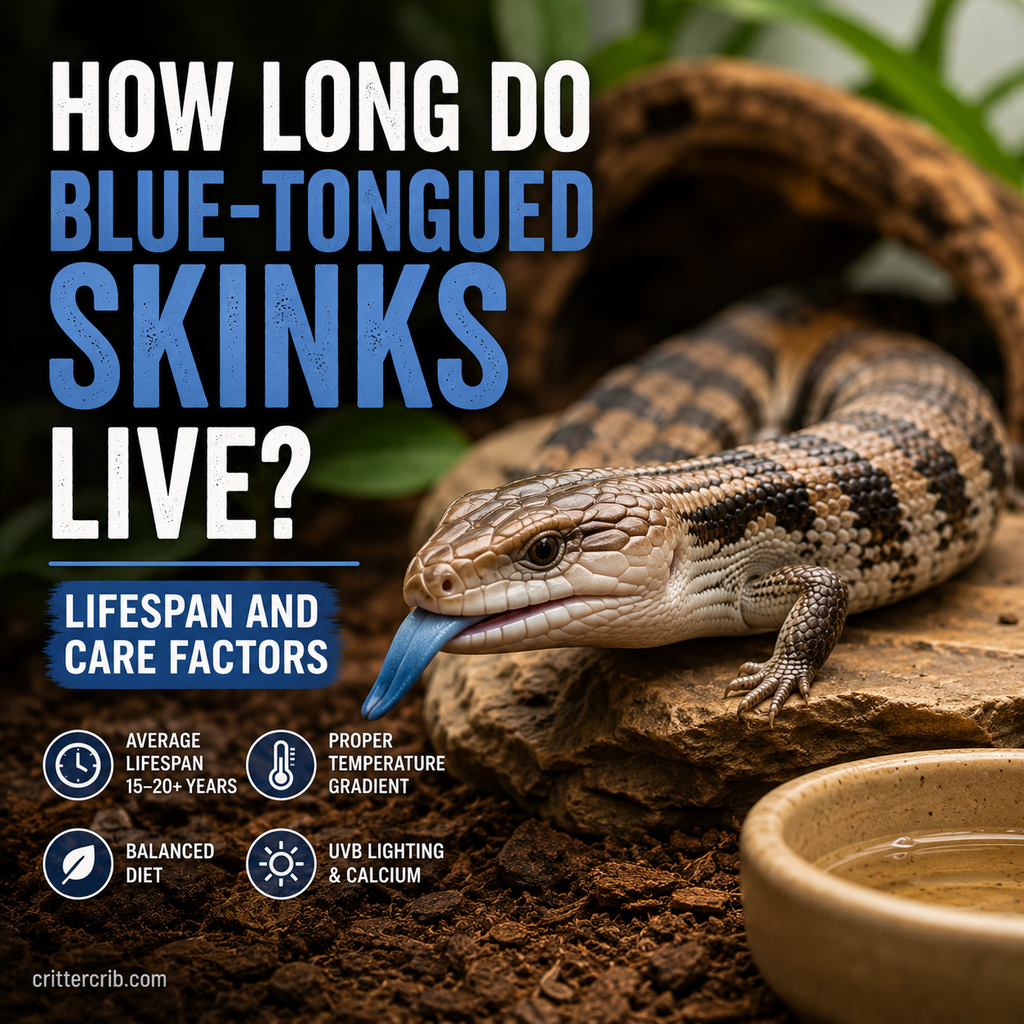
How Long Do Blue-Tongued Skinks Live? Lifespan and Care Factors

Blue-tongued skink in a naturalistic enclosure illustrating lifespan and important care factors
Blue-tongued skinks can live 15 to 20 years or longer with appropriate nutrition, temperatures, UVB lighting, habitat conditions, and veterinary care.

Blue-tongued skinks aren’t short-term pets. With proper care, one could be part of your household for a couple of decades.

So, how long do blue-tongued skinks live?

Many pet blue-tongued skinks can live around 15 to 20 years, and some individuals may live beyond 20 years with excellent care. Their actual lifespan depends on several factors, including species, genetics, diet, enclosure conditions, temperature, lighting, body condition, and access to veterinary care.

That makes getting a blue-tongued skink a much bigger commitment than some prospective owners expect.

Fortunately, many of the things that support a long life are within an owner’s control. Good nutrition, proper temperatures, appropriate UVB lighting, enough space, exercise, and early attention to health problems can all contribute to long-term well-being.

Here’s what to know about blue-tongued skink lifespan and the care factors that can influence it.

Continue reading “How Long Do Blue-Tongued Skinks Live? Lifespan and Care Factors”

What Do Corn Snakes Eat? A Complete Feeding Guide

Corn snake with appropriately sized mouse prey illustrating a corn snake feeding guide
Corn snakes primarily eat appropriately sized whole rodents, with prey size and feeding frequency changing as the snake grows.

Corn snakes aren’t complicated eaters, but feeding them correctly involves more than dropping a mouse into the enclosure every so often.

So, what do corn snakes eat?

Pet corn snakes primarily eat appropriately sized rodents, with mice forming the staple diet for most individuals. Hatchlings typically start with very small mice and gradually move to larger prey as they grow. Large adults may eventually need larger mice or appropriately sized rats, depending on the snake’s size and body condition.

The important part isn’t providing lots of variety. It’s choosing prey of the right size and feeding it at intervals appropriate for your snake’s age, growth, and body condition.

Most captive corn snakes can also be successfully fed frozen-thawed rodents, which eliminates the risk of a live rodent injuring the snake.

Whether you’ve just brought home your first hatchling or you’re trying to fine-tune an adult’s feeding schedule, here’s what you should know about feeding a corn snake.

Continue reading “What Do Corn Snakes Eat? A Complete Feeding Guide”

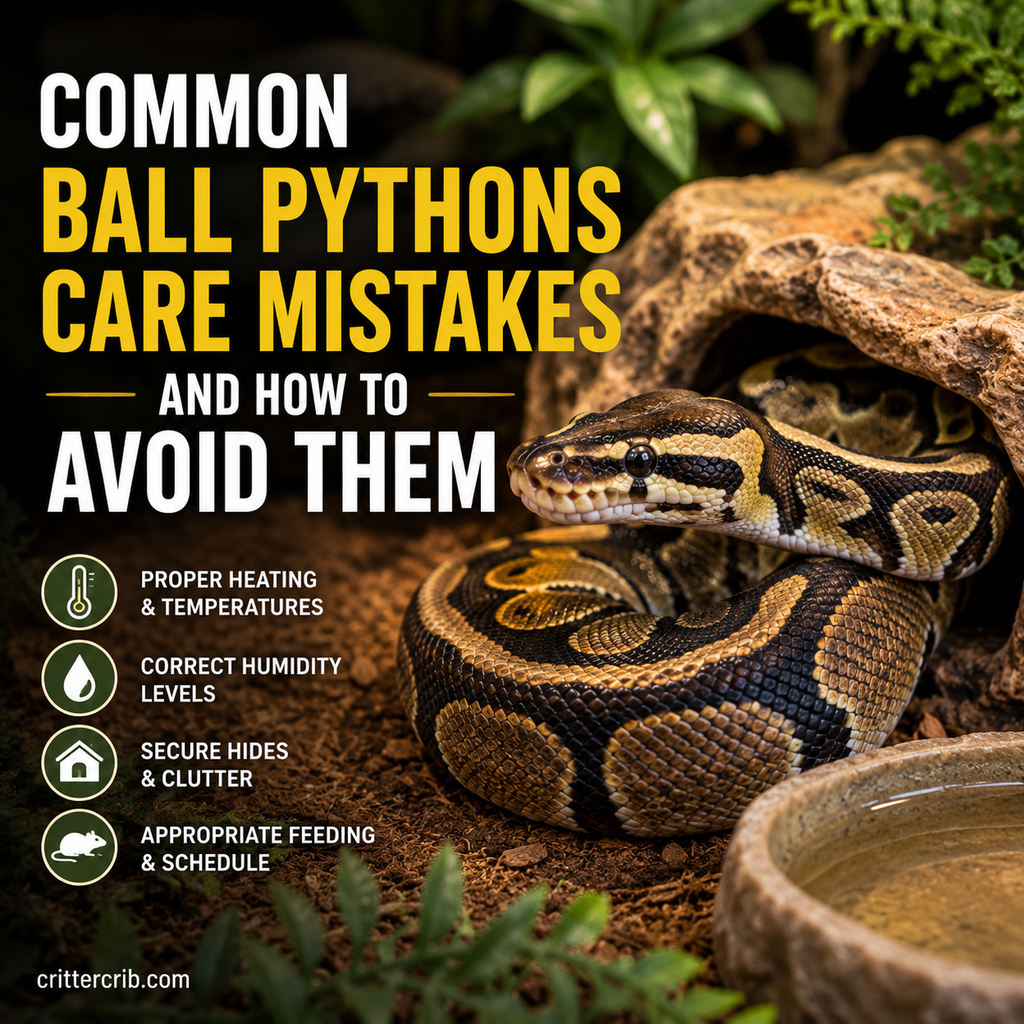
Common Ball Python Care Mistakes and How to Avoid Them

Ball python in a naturalistic enclosure illustrating common ball python care mistakes
Proper temperatures, humidity, secure hides, feeding, and enclosure setup can help prevent many common ball python care mistakes.

Ball pythons are often recommended as beginner-friendly snakes, and for good reason. They’re generally manageable in size, don’t require daily feeding, and can adapt well to life in captivity when their needs are met.

But “beginner-friendly” doesn’t mean impossible to care for incorrectly.

Many common ball python care mistakes come from seemingly small husbandry problems: temperatures that are slightly off, humidity that’s consistently too low, an enclosure that feels too exposed, or prey that’s the wrong size. Over time, those issues can affect feeding, shedding, behavior, and overall health.

The good news is that most husbandry mistakes are preventable.

Whether you’re preparing for your first ball python or already have one at home, understanding what can go wrong makes it much easier to build a safe, stable environment.

Here are some of the most common ball python care mistakes and what to do instead.

Continue reading “Common Ball Python Care Mistakes and How to Avoid Them”

How Much Do Crested Geckos Cost? Setup and Ongoing Expenses

Crested gecko with terrarium and supplies illustrating setup and ongoing ownership costs
The cost of a crested gecko includes much more than the animal itself, with enclosure equipment, food, supplies, and veterinary care adding to the long-term budget.

Crested geckos have a reputation for being relatively manageable reptiles to keep, but the price of the gecko itself is only one part of the budget.

So, how much does a crested gecko cost?

A typical pet crested gecko may cost around $50 to $200, although prices vary considerably based on age, coloration, pattern, genetics, breeder, and availability. Unusual morphs or animals from desirable bloodlines can cost hundreds or even thousands of dollars.

Then there’s the enclosure.

A proper habitat, lighting, heating equipment if needed, décor, food, supplements, and other essentials can easily make the initial cost several hundred dollars more.

After the habitat is established, routine expenses are usually more manageable. You’ll still need to budget for food, feeder insects if you offer them, replacement supplies, electricity, and veterinary care.

Here’s a closer look at what it actually costs to own a crested gecko, from bringing one home to caring for it year after year.

Continue reading “How Much Do Crested Geckos Cost? Setup and Ongoing Expenses”

Best Enrichment Ideas for Happy, Active Leopard Geckos

Leopard gecko exploring an enriched terrarium with hides, climbing areas, plants, and natural surfaces
A varied habitat with hides, climbing surfaces, hunting opportunities, and places to explore can provide meaningful enrichment for leopard geckos.

Leopard geckos may spend plenty of time tucked inside a hide, but that doesn’t mean they benefit from living in a bare enclosure with nothing interesting to do.

In the wild, these small reptiles navigate rocky terrain, investigate their surroundings, search for food, find secure hiding places, and move between different temperatures throughout the day and night. A thoughtfully designed enclosure gives a pet leopard gecko opportunities to perform some of those same natural behaviors.

That’s where enrichment comes in.

Leopard gecko enrichment doesn’t need to involve elaborate toys or constant handling. In fact, some of the best enrichment ideas are surprisingly simple: additional hides, textured surfaces, climbing opportunities, occasional changes to the enclosure, and feeding methods that encourage natural hunting behavior.

The goal isn’t to keep a gecko entertained every minute. It’s to create an environment that gives it choices and encourages safe, species-appropriate activity.

Here are some of the best enrichment ideas for keeping a leopard gecko active and engaged.

Continue reading “Best Enrichment Ideas for Happy, Active Leopard Geckos”

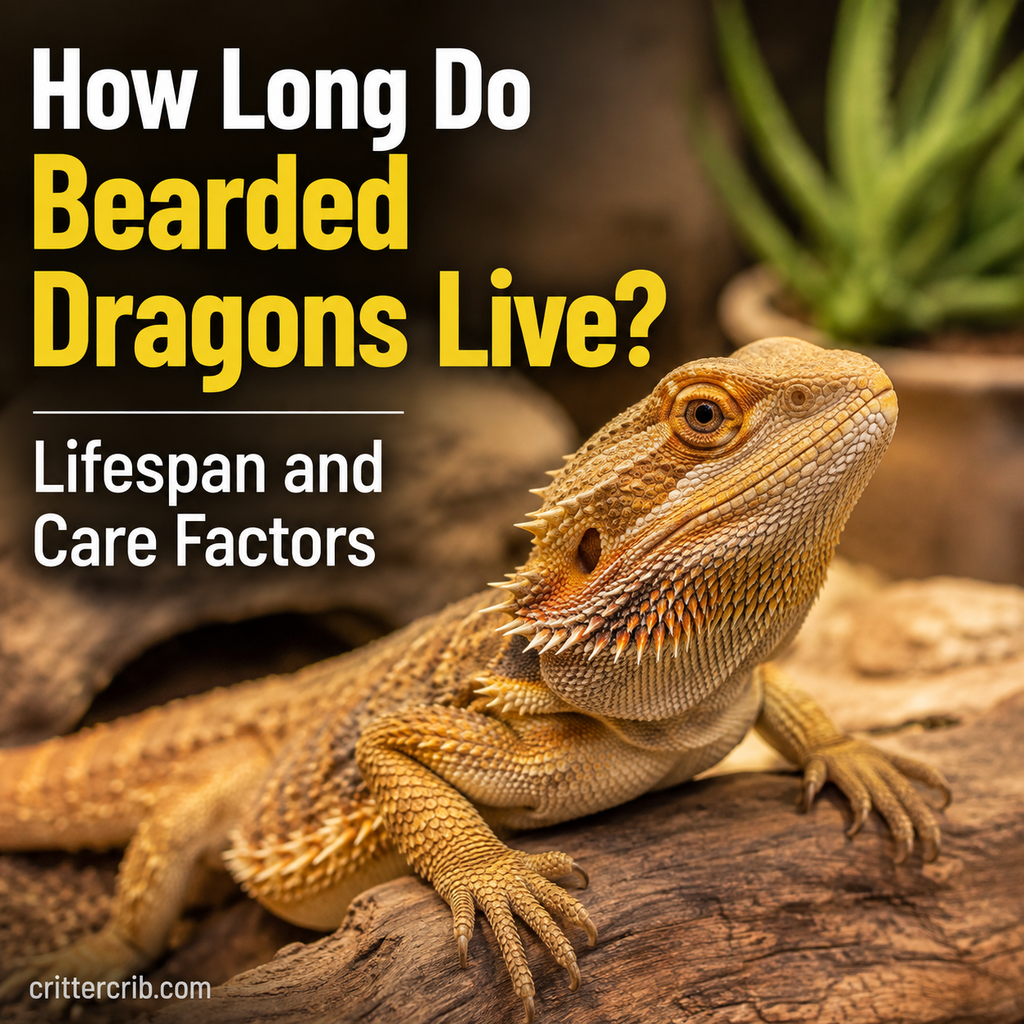
How Long Do Bearded Dragons Live? Lifespan and Care Factors

Bearded dragon in a terrarium for a guide about bearded dragon lifespan and care factors
Proper nutrition, UVB lighting, habitat conditions, and veterinary care can all influence a bearded dragon’s lifespan.

Bearded dragons can be surprisingly long-term companions. While they may be small enough to live in a home terrarium, caring for one is a commitment that can last well over a decade.

So, how long do bearded dragons live?

A well-cared-for pet bearded dragon commonly lives around 8 to 12 years, and some can live longer with excellent husbandry, nutrition, veterinary care, and a little genetic luck. Their lifespan in captivity is generally longer than it would be in the wild, where predators, food shortages, extreme weather, disease, and injuries all take their toll.

There isn’t one magic trick for helping a bearded dragon live longer. Longevity usually comes down to getting several everyday basics right: proper UVB lighting, appropriate temperatures, a balanced diet, hydration, a clean enclosure, enough space, and attention to changes in behavior or health.

Here’s what owners should know about the bearded dragon lifespan and the care factors that can influence it.

Continue reading “How Long Do Bearded Dragons Live? Lifespan and Care Factors”