Hamsters may be small pets, but they can become a surprisingly big part of your daily routine. You get used to hearing the wheel at night, watching food disappear into hidden stashes, and seeing a sleepy face emerge from the bedding when dinner arrives.
Unfortunately, hamsters don’t live as long as many other companion animals.
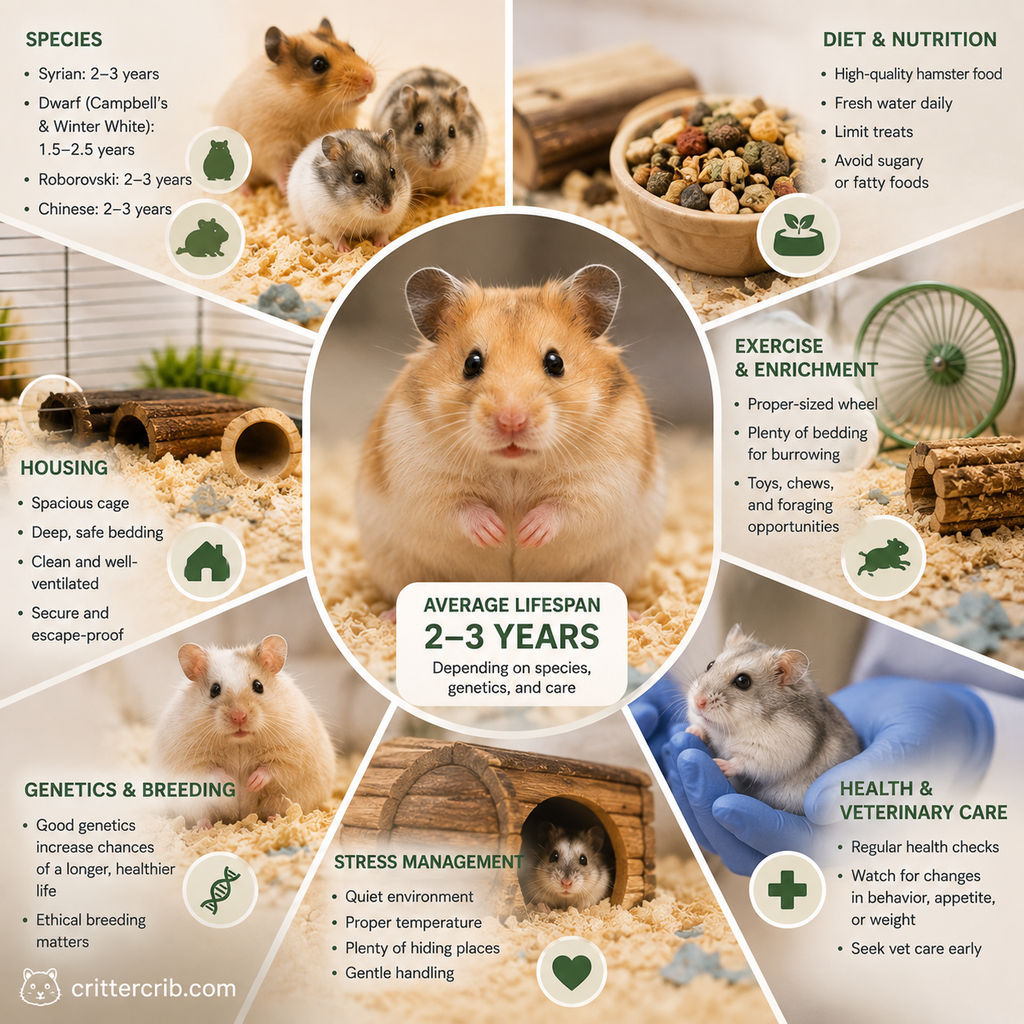
Most pet hamsters live for around 2 to 3 years, although lifespan varies depending on species, genetics, health, environment, and quality of care. Some hamsters live longer, while others may have considerably shorter lives because of illness or inherited health problems.
Understanding a hamster’s expected lifespan is important before bringing one home. It’s also useful for current owners who want to know what changes to expect as their hamster gets older.
While you can’t control genetics or guarantee a particular lifespan, good housing, appropriate nutrition, exercise, low stress, and veterinary attention can help give your hamster the best chance at a healthy life.
Here’s what affects hamster lifespan and what you can do to support your pet through every stage of life.
What Is the Average Lifespan of a Hamster?
Most pet hamsters live approximately 2 to 3 years.
That’s a general range rather than a guarantee.
Some hamsters may live less than two years, while others can reach three years or occasionally longer.
A hamster’s lifespan can be influenced by:
- Species
- Genetics
- Breeding
- Diet
- Housing
- Exercise
- Stress
- Body weight
- Dental health
- Disease
- Veterinary care
Even two hamsters of the same species living in similar environments may have different lifespans.
Good care matters, but genetics and chance also play significant roles.
How Long Do Syrian Hamsters Live?
Syrian hamsters, sometimes called golden hamsters, commonly live around 2 to 3 years.
Some may live beyond three years, although this shouldn’t be expected.
Syrians are the largest hamsters commonly kept as pets and are generally solitary as adults.
They should normally be housed alone.
Keeping incompatible hamsters together can result in severe stress, fighting, and injuries, so appropriate housing is an important part of long-term health.
How Long Do Dwarf Hamsters Live?
“Dwarf hamster” can refer to several different types of hamster, and their expected lifespans aren’t identical.
Campbell’s Dwarf Hamster Lifespan
Campbell’s dwarf hamsters commonly live around 1.5 to 2.5 years, although individual lifespans vary.
Genetics and breeding background can influence health considerably.
Winter White Dwarf Hamster Lifespan
Winter white dwarf hamsters often live approximately 1.5 to 2.5 years.
Hybridization between Campbell’s and winter white hamsters is common in the pet trade, which can make identifying the exact type difficult.
Roborovski Hamster Lifespan
Roborovski hamsters are tiny, extremely fast hamsters that may live around 2 to 3 years, with some individuals living longer.
They’re often more enjoyable to observe than handle because of their speed and naturally active personalities.
Chinese Hamster Lifespan
Chinese hamsters commonly live around 2 to 3 years.
Despite sometimes being grouped with dwarf hamsters because of their size, Chinese hamsters belong to a different genus from the commonly recognized dwarf species.
Hamster Lifespan by Type
Here’s a quick comparison of common pet hamster lifespans:
| Hamster Type | Typical Lifespan |
|---|---|
| Syrian hamster | About 2–3 years |
| Campbell’s dwarf hamster | About 1.5–2.5 years |
| Winter white dwarf hamster | About 1.5–2.5 years |
| Roborovski hamster | About 2–3 years |
| Chinese hamster | About 2–3 years |
These ranges are approximate.
An individual hamster may live for a shorter or longer period.
Instead of focusing on reaching a specific age, concentrate on maintaining good quality of life throughout whatever lifespan your hamster has.
Why Do Hamsters Have Such Short Lifespans?
Hamsters mature very quickly compared with humans and many larger companion animals.
A young hamster can progress from infancy to adulthood within a matter of months.
Their entire life cycle happens relatively quickly.
This means age-related changes can sometimes seem sudden from an owner’s perspective.
A hamster that appeared energetic and youthful not long ago may gradually begin sleeping more, moving more slowly, or losing muscle as it reaches old age.
Their short lifespan is one of the harder realities of hamster ownership.
It also makes good everyday care especially important.
Genetics Play a Major Role in Hamster Lifespan
You can provide excellent care and still have a hamster develop a serious health condition.
Genetics affect susceptibility to many diseases and can influence overall longevity.
Responsible breeding practices can reduce some inherited problems by avoiding animals with known health issues and selecting for healthy bloodlines.
Hamsters from large-scale commercial breeding operations may have less predictable genetic histories.
This doesn’t mean a pet-store hamster can’t live a healthy life.
It simply means genetics are one factor owners can’t completely control.
Once your hamster is home, focus on the things you can control: environment, nutrition, enrichment, monitoring, and veterinary care.
Diet Can Affect Hamster Health and Lifespan
A hamster needs a nutritionally appropriate diet rather than a random mixture of seeds and treats.
A quality hamster diet should provide balanced nutrition appropriate for the species.
Depending on the feeding plan, this may include a nutritionally complete commercial hamster food supplemented appropriately with other safe foods.
Avoid making sugary or high-fat treats a large part of the diet.
Fresh water should always be available.
Watch How Much Your Hamster Actually Eats
Hamsters store food.
A bowl that suddenly becomes empty doesn’t necessarily mean your hamster ate everything.
It may have moved half the meal into an underground pantry.
Check the enclosure periodically for food stashes, particularly when offering fresh foods that can spoil.
Don’t destroy every dry food cache you find unless necessary. Hoarding is normal hamster behavior.
Remove spoiled or damp food while allowing your hamster to maintain safe stores when practical.
Obesity Can Create Health Problems
A round hamster isn’t automatically an overweight hamster.
Hamsters naturally have compact bodies, and full cheek pouches can dramatically change their appearance.
Instead of judging weight entirely by sight, periodically weigh your hamster using a digital kitchen scale that measures in grams.
Keep a simple record.
Changes over time are often more useful than a single measurement.
A veterinarian can help determine whether your hamster is at an appropriate body condition.
Maintaining a healthy weight through suitable nutrition and exercise can support mobility and overall health.
A Good Habitat Supports Long-Term Health
A hamster’s enclosure is its entire home.
It should provide enough space for normal behaviors such as:
- Burrowing
- Foraging
- Running
- Digging
- Hiding
- Nesting
- Exploring
Small, highly restrictive cages can limit opportunities for these behaviors.
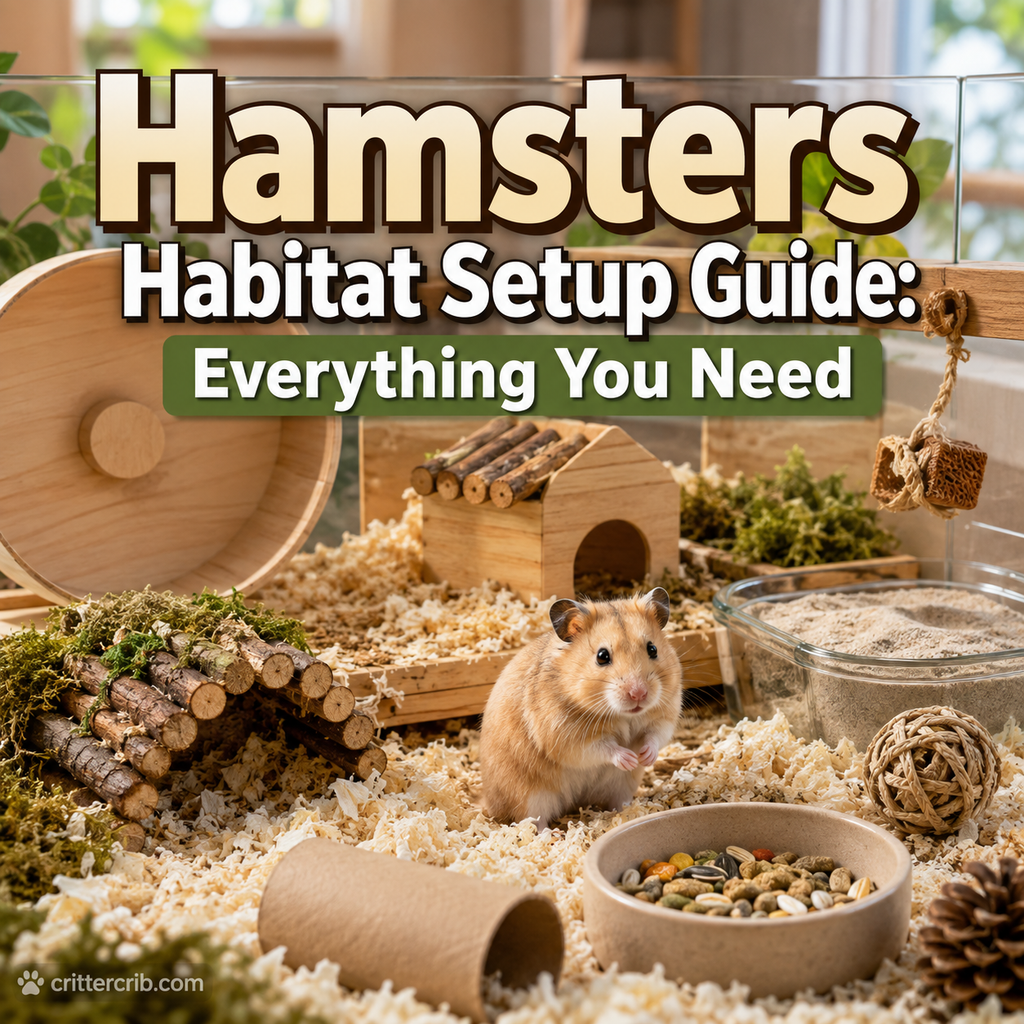
A larger, well-designed habitat allows you to provide deep bedding, an appropriate wheel, hides, sand, tunnels, and other enrichment without overcrowding everything.
Good housing isn’t just about making the cage look attractive.
It’s about giving your hamster opportunities to behave naturally.
Deep Bedding Is Important
Hamsters are natural burrowers.
Provide a deep layer of suitable substrate so your hamster can dig tunnels and create underground sleeping areas.
Choose bedding that is:
- Absorbent
- Low in dust
- Unscented
- Safe for burrowing
- Appropriate for small animals
Avoid heavily perfumed bedding and unsafe fluffy nesting materials.
Deep bedding also gives your hamster greater control over its environment.
It can build separate areas for sleeping, storing food, and nesting rather than being forced to live entirely on the surface.
Exercise Helps Maintain a Healthy Hamster
Hamsters can travel significant distances during their active hours.
A properly sized exercise wheel gives them an important outlet for this behavior.
The wheel should have:
- A solid running surface
- Enough diameter to allow comfortable running
- Stable construction
- No dangerous gaps
Your hamster’s back shouldn’t be sharply curved while running.
Wheel size requirements vary because Syrian hamsters are considerably larger than dwarf hamsters.
Choose based on the animal rather than simply buying a product labeled “hamster wheel.”
Enrichment Reduces Boredom and Encourages Natural Behavior
A wheel is important, but it shouldn’t be the only activity available.
Provide opportunities for:
- Digging
- Foraging
- Chewing
- Exploring
- Hiding
- Shredding
- Burrowing
Useful enrichment can include:
- Cardboard tubes
- Cork tunnels
- Safe wooden chews
- Multi-chamber hides
- Sand baths
- Foraging activities
- Different safe substrate textures
Scatter feeding part of your hamster’s regular food can encourage natural searching behavior.
You don’t need to constantly replace the entire enclosure layout.
Hamsters rely heavily on scent, and keeping some familiar areas intact can help them feel secure.
Stress Can Affect a Hamster’s Well-Being
Chronic stress isn’t good for any animal.
A hamster may become stressed by:
- Inadequate housing
- Constant disturbance
- Rough handling
- Excessive noise
- Lack of hiding places
- Inappropriate cage mates
- Frequent complete cage cleaning
- Poor temperature control
- Other pets hovering around the enclosure
Learn your hamster’s routine and give it opportunities to retreat.
Because hamsters are primarily active in the evening and at night, avoid repeatedly waking your pet during the day just to interact.
Let sleeping hamsters sleep whenever possible.
Keep Your Hamster at a Comfortable Temperature
Hamsters should live indoors in a stable environment protected from temperature extremes.
Avoid placing the enclosure:
- In direct sunlight
- Beside radiators
- In front of heaters
- Directly under air-conditioning vents
- Beside drafty windows
- In garages or sheds
- In areas with major temperature fluctuations
Cold conditions are particularly concerning because hamsters can enter a state of torpor when temperatures become too low.
A hamster that is unusually cold, limp, or unresponsive may be experiencing a medical emergency rather than simply “sleeping deeply.”
Seek veterinary guidance promptly if you’re concerned.
Clean the Habitat Without Removing Every Familiar Scent
Hamster enclosures need cleaning, but completely stripping the habitat unnecessarily often can be stressful.
Spot cleaning is useful for routine maintenance.
Remove:
- Wet bedding
- Heavily soiled substrate
- Spoiled food
- Dirty sand
- Contaminated nesting material when necessary
When a deeper cleaning is needed, retaining some clean old bedding can help preserve familiar scents.
The exact cleaning schedule depends on enclosure size, bedding depth, where your hamster urinates, and other factors.
Use the condition of the habitat as your guide rather than following an arbitrary schedule that requires replacing everything every few days.
Dental Health Matters Throughout a Hamster’s Life
Hamster incisors grow continuously.
Normal chewing helps maintain them, but dental problems can still occur.
Watch for:
- Difficulty eating
- Drooling
- Weight loss
- Food falling from the mouth
- Overgrown or uneven teeth
- Swelling around the face
- Reduced interest in harder foods
Dental problems can become serious if a hamster can’t eat properly.
Contact a veterinarian if you suspect abnormal tooth growth or another mouth problem.
Never attempt major tooth trimming yourself without veterinary guidance.
Veterinary Care Can Make a Difference
Hamsters need medical care too.
Because they’re small and have relatively short lifespans, owners sometimes assume there isn’t much a veterinarian can do.
That’s not necessarily true.
Veterinary care may help with conditions such as:
- Respiratory infections
- Skin problems
- Parasites
- Dental disease
- Injuries
- Digestive problems
- Eye problems
- Tumors
- Age-related conditions
Try to locate a veterinarian who treats hamsters before an emergency occurs.
Not every general veterinary practice regularly treats small exotic mammals.
Hamsters Can Hide Illness
As prey animals, hamsters may not make illness obvious during its earliest stages.
Small changes matter.
Watch for:
- Reduced appetite
- Weight loss
- Unusual lethargy
- Changes in drinking
- Diarrhea
- Difficulty breathing
- Eye or nose discharge
- Hair loss
- Lumps
- Difficulty walking
- Hunched posture
- Sudden behavioral changes
If something seems significantly different, don’t wait for your hamster to look severely ill before seeking advice.
Small animals can deteriorate quickly.
Weigh Your Hamster Regularly
One of the simplest ways to monitor health is to weigh your hamster.
Use a digital scale that measures grams.
A small container can make weighing easier:
- Place the empty container on the scale.
- Tare the scale to zero.
- Place your hamster inside.
- Record the weight.
You don’t need to obsess over tiny fluctuations.
Instead, look for trends.
Consistent unexplained weight loss can be an early warning that something is wrong.
What Are the Signs of an Aging Hamster?
Aging happens gradually, although it can sometimes feel surprisingly fast.
An older hamster may:
- Sleep more
- Run less frequently
- Move more slowly
- Lose muscle mass
- Develop thinner fur
- Become less interested in climbing
- Spend more time inside its nest
- Have difficulty navigating complicated cage layouts
Not every change should automatically be blamed on age.
Pain and illness can produce similar behaviors.
If you’re unsure, have your hamster evaluated by a veterinarian.
How to Make a Habitat Easier for an Older Hamster
An enclosure that worked perfectly for a young hamster may need adjustments as mobility declines.
You can make life easier by:
- Keeping food and water easy to reach
- Reducing steep climbs
- Removing dangerous fall risks
- Providing accessible hides
- Keeping frequently used areas on one level
- Making sure the wheel remains easy to enter
- Providing soft, comfortable bedding
Don’t remove all enrichment just because your hamster is older.
Instead, adapt it.
An elderly hamster may still enjoy foraging, chewing, digging, and exploring—it may simply do those things more slowly.
Keep Food and Water Easy to Access
Older or sick hamsters shouldn’t have to navigate an obstacle course to reach basic necessities.
Check that your hamster can comfortably reach its water source.
If using a bottle, make sure:
- Water flows properly
- The nozzle isn’t blocked
- The bottle doesn’t leak
- The height is comfortable
Monitor eating carefully as your hamster ages.
Reduced food intake can quickly lead to weight loss in such a small animal.
Quality of Life Matters More Than Reaching a Certain Age
It’s natural to want your hamster to live as long as possible.
But lifespan isn’t the only measure of good care.
Quality of life matters more.
A hamster that lives for two years with opportunities to burrow, forage, run, explore, hide, and sleep undisturbed has experienced something very different from one that simply survived for the same amount of time in an inadequate environment.
Focus on providing:
- Appropriate nutrition
- A spacious habitat
- Deep bedding
- Exercise
- Enrichment
- Comfortable temperatures
- Low stress
- Veterinary care when needed
You can’t control every health problem.
You can control the environment and care you provide.
Can You Make a Hamster Live Longer?
There’s no guaranteed way to extend a hamster’s lifespan.
You can’t change its genetics, and some diseases occur despite excellent care.
What you can do is remove avoidable risks and support overall health.
Give your hamster the best chance by:
- Feeding a balanced, appropriate diet.
- Maintaining a healthy body condition.
- Providing a spacious, enriched habitat.
- Offering deep, safe bedding.
- Providing an appropriately sized exercise wheel.
- Keeping the enclosure clean without excessive disturbance.
- Maintaining a comfortable indoor environment.
- Minimizing unnecessary stress.
- Monitoring weight and behavior.
- Seeking veterinary care when something changes.
These steps don’t guarantee that your hamster will reach a particular age.
They help make the time it does have healthier and more comfortable.
How Long Is a Hamster Considered a Senior?
There isn’t a precise birthday when every hamster suddenly becomes “senior.”
Species and individual health vary too much for that.
Generally, once a hamster reaches the later portion of its expected lifespan, pay closer attention to age-related changes.
For many hamsters, this may become particularly noticeable sometime around 18 months to 2 years and beyond.
Rather than focusing entirely on age, watch your individual pet.
A two-year-old hamster may still be remarkably active, while another may show substantial age-related changes earlier.
Preparing for a Hamster’s Short Lifespan
This is one of the most difficult parts of hamster ownership, especially for families getting their first small pet.
Two or three years can pass quickly.
Before getting a hamster for a child, adults should understand that the pet’s relatively short lifespan may mean dealing with illness, aging, and loss sooner than they would with a dog or cat.
That doesn’t make hamsters less worthwhile as pets.
If anything, it makes the quality of their everyday care even more meaningful.
So, How Long Do Hamsters Live?
Most pet hamsters live around 2 to 3 years, although the exact lifespan varies by species and individual.
Syrian, Roborovski, and Chinese hamsters often fall somewhere around the two-to-three-year range, while Campbell’s and winter white dwarf hamsters are frequently estimated at roughly one-and-a-half to two-and-a-half years.
Those numbers are averages, not deadlines.
Your hamster doesn’t know how old the internet says it’s supposed to live.
Pay more attention to the animal in front of you.
Monitor its appetite, weight, activity, mobility, coat, breathing, and normal behavior. Provide plenty of room to burrow and explore, a suitable wheel, nutritious food, clean water, appropriate enrichment, and veterinary attention when needed.
As your hamster gets older, adjust the habitat to match its changing abilities.
You can’t guarantee a longer life.
But you can make sure that whether your hamster lives for two years, three years, or longer, those years are spent in an environment that allows it to do what hamsters naturally want to do.
And ultimately, that’s one of the most important parts of good hamster care.