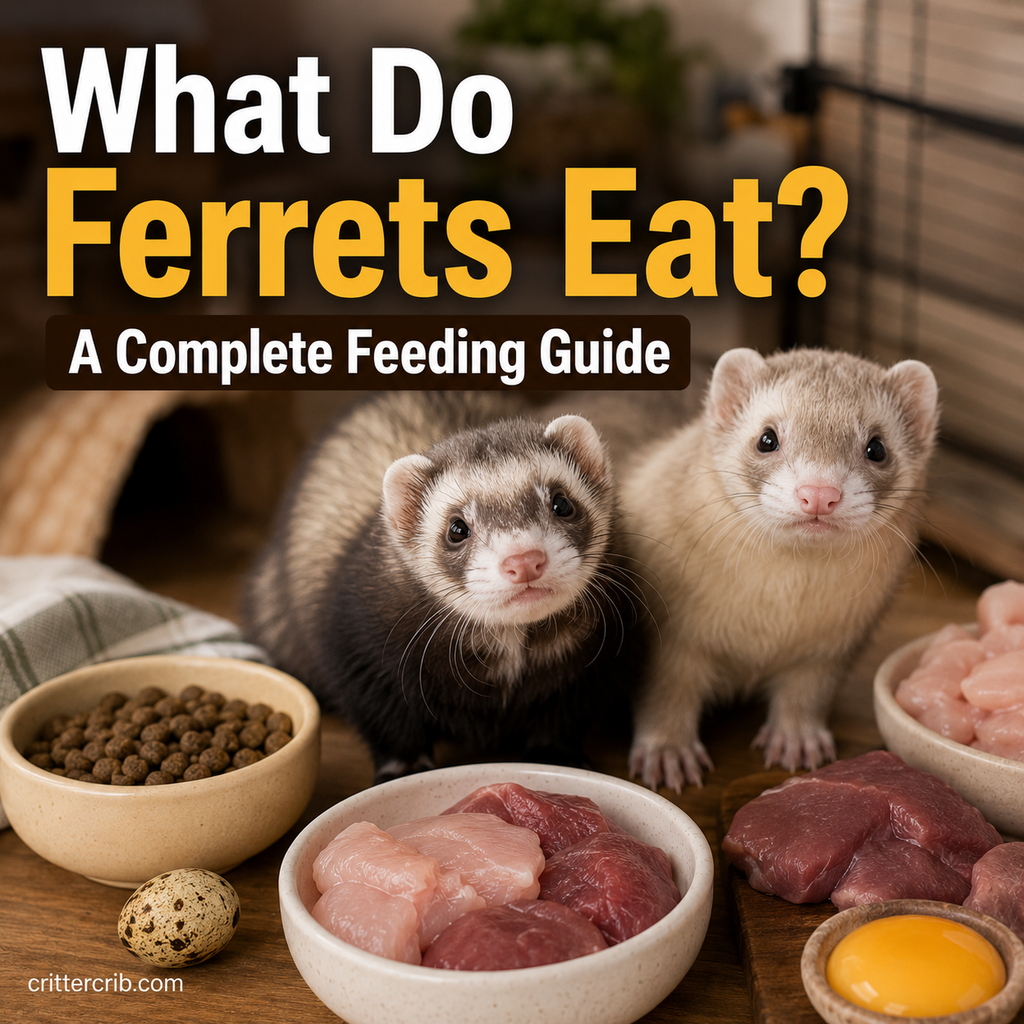
Ferrets may be small, playful pets, but their nutritional needs are quite different from those of many other animals commonly kept at home.
They aren’t rodents, and they shouldn’t be fed like rabbits, guinea pigs, or hamsters. Ferrets are obligate carnivores, which means their bodies are adapted to get nutrition primarily from animal-based foods.
That makes choosing the right diet especially important.
So, what do ferrets eat?
Pet ferrets generally need a diet rich in high-quality animal protein and fat, with relatively little carbohydrate and fiber. Depending on your ferret and veterinary guidance, this may come from a quality commercial ferret food or another carefully planned diet appropriate for the species.
Here’s what ferret owners should know about everyday feeding, treats, foods to avoid, water, and maintaining a healthy diet.
What Do Ferrets Naturally Eat?
Understanding the ferret digestive system makes their dietary requirements much easier to understand.
Ferrets are obligate carnivores.
Their digestive systems are relatively short and designed to process animal-based foods efficiently. Unlike herbivorous pets, they aren’t built to digest large amounts of plant material and fiber.
A suitable ferret diet therefore emphasizes:
- Animal-based protein
- Animal fat
- Highly digestible ingredients
- Low levels of fiber
- Limited carbohydrates
This is one reason generic “small animal food” isn’t appropriate.
A bag of food marketed for hamsters, guinea pigs, rabbits, or other small pets can have a completely different nutritional profile.
What Should Pet Ferrets Eat?
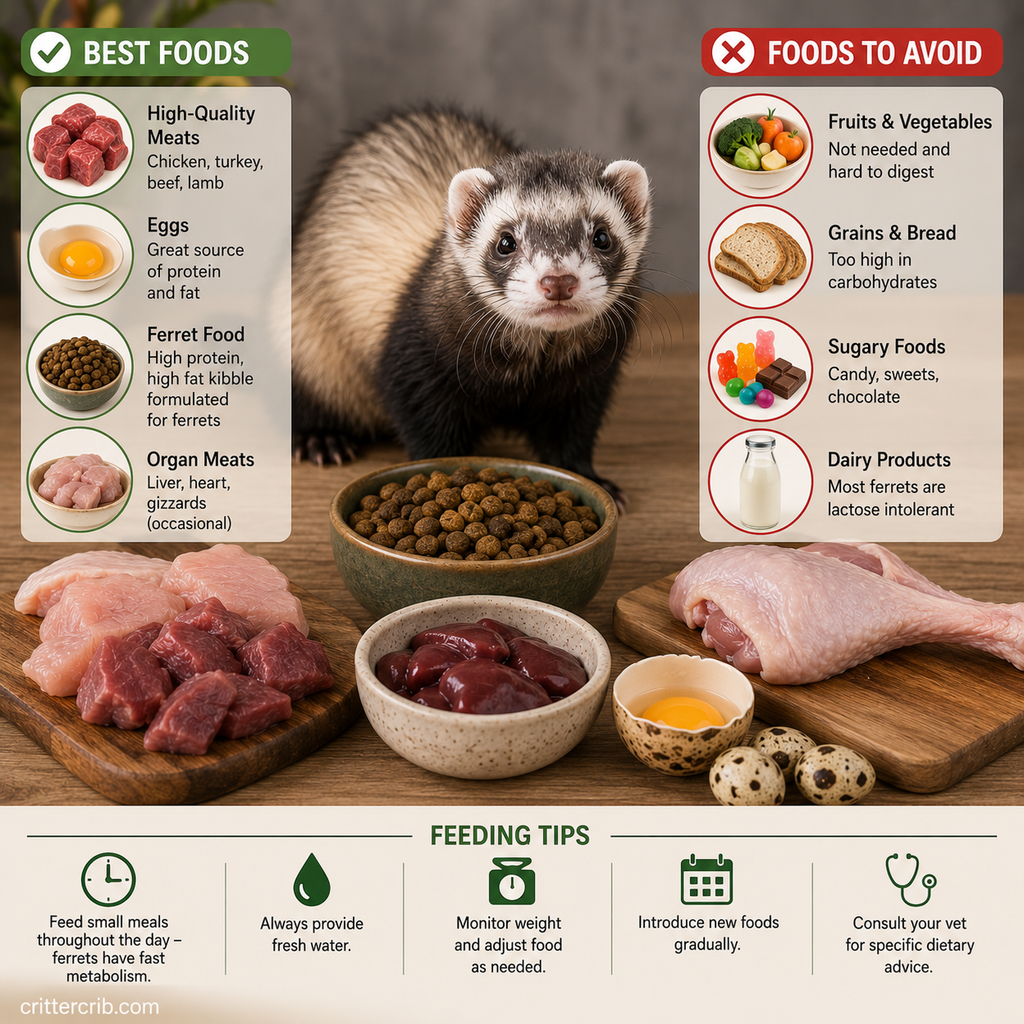
For many owners, a high-quality commercial food specifically formulated for ferrets is the most practical everyday option.
Commercial diets have the advantage of being convenient, consistent, and easier to store than fresh foods.
However, not every product with a picture of a ferret on the package is necessarily equal.
Read the nutritional information and ingredient list rather than relying entirely on the front of the bag.
Look for Animal-Based Protein
Animal protein should be a major part of a ferret’s diet.
When evaluating food, look for clearly identified animal ingredients rather than a formula built primarily around grains or plant proteins.
Examples of animal-based ingredients may include:
- Chicken
- Turkey
- Other poultry
- Meat meals from identified animal sources
- Eggs
- Other appropriate animal proteins
The exact formulation matters more than any single ingredient, so consider the overall nutritional profile.
If you’re uncertain whether a particular food is suitable, ask a veterinarian experienced with ferrets.
How Much Protein Do Ferrets Need?
Ferrets require a high-protein diet compared with many other household pets.
Commercial ferret foods commonly contain protein levels somewhere around the mid-30% range or higher, although the appropriate amount depends on the food’s formulation, protein sources, your ferret’s age, and individual health needs.
Quality matters as much as the number printed on the label.
A high percentage of protein isn’t automatically ideal if much of that protein comes from plant sources that aren’t well suited to a ferret’s digestive system.
This is why reading both the guaranteed analysis and ingredient list can be helpful.
Ferrets Need Dietary Fat Too
Fat isn’t something that should automatically be minimized in a ferret’s diet.
Ferrets use animal fat as an important energy source.
Many appropriate ferret diets contain a relatively high amount of fat compared with foods designed for some other small pets.
Look for diets containing suitable animal-based fat sources as part of an overall balanced formulation.
The appropriate amount may vary depending on your ferret’s:
- Age
- Activity level
- Body condition
- Health
- Reproductive status
- Individual metabolism
If your ferret is underweight, overweight, or has a medical condition, don’t simply change fat intake on your own. Ask your veterinarian for feeding guidance.
Why Ferrets Need Very Little Fiber
Fiber plays an important role in the diets of rabbits and guinea pigs.
Ferrets are different.
Their digestive systems aren’t designed to efficiently process large quantities of fibrous plant material.
For that reason, an appropriate ferret diet should generally be low in fiber.
Foods built around large amounts of grains, vegetables, or other high-fiber ingredients are not a suitable replacement for a properly formulated ferret diet.
What About Carbohydrates?
Ferrets have little nutritional need for large amounts of carbohydrates.
Unfortunately, some dry foods require starches as part of the manufacturing process, so completely eliminating carbohydrates from kibble may not be realistic.
The practical goal is to choose an appropriate ferret food that prioritizes animal protein and fat rather than one dominated by corn, wheat, peas, potatoes, or other carbohydrate-heavy ingredients.
Again, don’t judge a diet based on one ingredient alone. Look at the complete formulation.
How Often Should You Feed a Ferret?
Ferrets have fast metabolisms and relatively short digestive tracts.
They tend to eat multiple small meals throughout the day rather than one or two large meals.
Many healthy adult ferrets eating an appropriate dry diet are given regular access to food so they can eat according to their natural pattern.
However, feeding recommendations can vary based on:
- Type of diet
- Age
- Body condition
- Medical needs
- Whether multiple ferrets share food
Follow the feeding directions for your chosen diet and adjust them with veterinary guidance when necessary.
Pay Attention to Changes in Appetite
Because ferrets normally eat frequently, a significant reduction in appetite shouldn’t simply be ignored.
If your ferret suddenly stops eating, eats much less than usual, or appears sick along with an appetite change, contact a veterinarian promptly.
Small animals can become seriously ill relatively quickly.
How Much Should a Ferret Eat?
There’s no single serving size that works for every ferret.
A larger, highly active ferret may eat considerably more than a smaller or less active one.
Factors affecting food intake include:
- Body size
- Age
- Sex
- Activity
- Season
- Type of food
- Calorie density
- Health
Start with the manufacturer’s feeding recommendations when using commercial food, then monitor your ferret’s weight and body condition.
A veterinarian can help determine whether your individual ferret is maintaining a healthy weight.
Should Ferrets Eat Dry or Wet Food?
Both the nutritional quality and suitability of the food matter more than whether it comes in a bag or can.
Dry Ferret Food
Dry food is popular because it’s:
- Convenient
- Easy to measure
- Easy to store
- Less messy
- Suitable for leaving available longer than fresh food
Choose a high-quality product formulated appropriately for ferrets.
Wet or Moist Food
Some owners incorporate suitable moist foods into their ferret’s diet.
Wet food contains more moisture, which can be useful, but it spoils more quickly after being served.
Don’t leave perishable food sitting in the enclosure for extended periods.
Not every canned meat-based food is nutritionally complete for ferrets, either. Check whether a product is intended as a complete diet or only as supplemental food.
Can Ferrets Eat Cat Food?
This question comes up frequently.
Historically, some ferret owners have used certain high-quality cat or kitten foods because the nutritional profiles can be closer to ferret requirements than foods made for other species.
However, cat food is formulated for cats, not ferrets.
If you’re considering feeding cat food because an appropriate ferret diet isn’t available, don’t assume any high-protein cat food will work.
The specific formulation matters.
Discuss the product with a veterinarian experienced in ferret nutrition before making it your ferret’s primary diet.
Dog food is generally much less appropriate because it doesn’t match the nutritional needs of an obligate carnivore like a ferret.
Can Ferrets Eat Raw Meat?
Some ferret owners choose raw or whole-prey feeding.
This is a much more complicated subject than simply placing raw chicken in a bowl.
A properly constructed raw diet needs to provide the correct nutritional balance over time. Feeding only muscle meat can result in nutritional deficiencies because an animal needs more than protein alone.
Depending on the feeding approach, a balanced diet may need appropriate proportions of:
- Muscle meat
- Organs
- Bone or another suitable mineral source
- Fat
- Other nutrients
Raw animal products can also carry harmful microorganisms that may affect the ferret and people in the household.
For those reasons, don’t improvise a homemade raw diet based on social media posts or a simple list of meats.
If you’re interested in raw feeding, work with a veterinarian or qualified veterinary nutrition professional familiar with ferrets.
Can Ferrets Eat Whole Prey?
Whole-prey feeding attempts to more closely replicate the type of animal-based diet a carnivore might consume.
Appropriate feeder animals can provide muscle tissue, organs, bone, and other components in one package.
However, whole-prey feeding isn’t the right choice for every household.
Food safety, sourcing, storage, nutritional balance, and proper handling all need to be considered.
Talk with an experienced veterinarian before making a major change to your ferret’s diet.
What Treats Can Ferrets Eat?
Treats are optional.
Your ferret doesn’t need cookies, colorful snack drops, or sweet foods to be happy.
If you do offer treats, choose small portions that fit the animal’s carnivorous nutritional needs.
Depending on veterinary guidance, appropriate treats might include tiny amounts of:
- Plain cooked meat
- Freeze-dried meat intended for pets
- Suitable meat-based commercial ferret treats
- Small portions of other appropriate animal-based foods
Keep treats small.
A portion that looks tiny to you can be significant for an animal weighing only a few pounds.
Use Regular Food as a Reward
You don’t necessarily need a separate treat product.
Pieces of your ferret’s normal food can be used during training or handling sessions.
This lets you reward your ferret without adding unnecessary foods to the diet.
Can Ferrets Eat Eggs?
Eggs can sometimes be offered as an occasional food for healthy ferrets.
They provide animal protein and fat, but they shouldn’t replace a nutritionally complete everyday diet.
Portion size and frequency matter.
If you want to add eggs to your ferret’s diet, particularly on a regular basis, ask your veterinarian how much is appropriate.
Foods Ferrets Should Avoid
One of the easiest ways to protect your ferret’s diet is knowing what doesn’t belong in it.
Foods that are sugary, highly processed, or primarily plant-based aren’t appropriate substitutes for a carnivore-focused diet.
Avoid making foods such as these a regular part of your ferret’s diet:
- Candy
- Chocolate
- Cookies
- Cake
- Sweetened cereal
- Ice cream
- Sugary yogurt
- Bread
- Large amounts of grains
- Fruit
- Vegetables
- High-carbohydrate snacks
Some human foods can also be directly toxic or otherwise dangerous to pets.
When in doubt, don’t feed it until you’ve confirmed it’s safe.
Can Ferrets Eat Fruit?
Fruit may seem like a healthy treat because it’s nutritious for humans.
That doesn’t make it appropriate for every species.
Fruit contains natural sugars and plant material that don’t fit well with the nutritional needs of an obligate carnivore.
It’s better to choose an appropriate animal-based treat rather than routinely feeding fruit.
Can Ferrets Eat Vegetables?
Vegetables aren’t necessary components of a ferret’s normal diet.
Ferrets aren’t herbivores or omnivores that require vegetables for balanced nutrition.
Their digestive systems are specialized for animal-based foods.
Instead of trying to make a ferret’s bowl look varied from a human perspective, focus on providing nutrition appropriate for the species.
Can Ferrets Drink Milk?
Cow’s milk and other dairy products aren’t appropriate everyday drinks for ferrets.
Some ferrets may have difficulty digesting lactose, potentially leading to digestive upset.
Fresh water should be the normal beverage.
If you’re considering a milk replacement for a young, sick, or recovering ferret, don’t improvise with ordinary milk. Ask a veterinarian what product is appropriate.
Ferrets Need Fresh Water at All Times
Water is just as important as food.
Your ferret should have reliable access to clean, fresh drinking water every day.
Depending on your setup, you might provide:
- A sturdy water bowl
- A suitable water bottle
- Both
Bowls allow a more natural drinking posture but can be tipped, contaminated, or turned into toys by an enthusiastic ferret.
Water bottles stay cleaner in some setups, but the nozzle can potentially become blocked.
Whichever method you use, check it every day.
Check More Than the Water Level
A full bottle doesn’t necessarily mean your ferret can drink from it.
Test the nozzle regularly to make sure water actually flows.
For bowls:
- Refresh the water daily.
- Wash the bowl regularly.
- Remove food or debris.
- Make sure the bowl hasn’t tipped over.
Hydration shouldn’t depend on equipment that hasn’t been checked.
How to Switch Ferret Food
Ferrets can become surprisingly attached to familiar foods.
Some may be reluctant to recognize a new food as something they’re supposed to eat.
That makes sudden dietary changes particularly inconvenient.
When changing from one appropriate food to another, transition gradually unless your veterinarian recommends otherwise.
A simple transition might involve:
- Adding a small amount of the new food to the old food.
- Gradually increasing the proportion of new food.
- Reducing the old food over time.
- Monitoring appetite, stool, and behavior throughout the transition.
Don’t allow a stubborn ferret to go without eating simply because you’re determined to make it accept a new food.
Contact your veterinarian if your ferret refuses food or you have concerns during the transition.
Should You Mix Multiple Ferret Foods?
Some owners mix more than one appropriate food.
One potential advantage is that a ferret becomes familiar with different flavors and formulations. If one product becomes unavailable or changes its recipe, transitioning may be easier.
However, mixing foods also makes calorie intake and nutritional composition more complicated.
If you choose to mix diets, make sure each product is suitable rather than trying to improve a poor-quality food by combining it with a better one.
How to Read a Ferret Food Label
Pet food packaging can be overwhelming, but you don’t need to be a veterinary nutritionist to notice a few important things.
Check the Intended Species
First, determine whether the food is actually formulated for ferrets.
Don’t assume all small-animal foods are interchangeable.
Read the Ingredient List
Look for clearly identified animal-based ingredients prominently represented in the formula.
Be cautious with products heavily dependent on plant proteins, grains, or carbohydrate-rich ingredients.
Review the Guaranteed Analysis
Pay attention to:
- Crude protein
- Crude fat
- Crude fiber
- Moisture
Remember that percentages don’t tell the entire story. The source and digestibility of nutrients matter too.
Look at Feeding Instructions
Different foods have different calorie densities.
Don’t assume the serving size from your previous brand applies to the new one.
Common Ferret Feeding Mistakes
Even well-meaning owners can accidentally create nutritional problems.
Some common mistakes include:
- Feeding dog food
- Treating ferrets like omnivores
- Offering fruit and vegetables as daily snacks
- Giving too many sugary treats
- Choosing food based only on the protein percentage
- Ignoring the source of the protein
- Making sudden diet changes
- Feeding an unbalanced homemade diet
- Forgetting to monitor water
- Allowing wet food to sit out too long
- Ignoring significant changes in appetite
Most of these mistakes are easy to prevent with a little planning.
How to Tell If Your Ferret’s Diet Is Working
Food is only one part of overall health, but your ferret’s condition can provide useful clues.
Monitor:
- Body weight
- Body condition
- Appetite
- Energy level
- Stool
- Coat condition
- Drinking habits
Ferrets can naturally experience some seasonal changes in body weight and coat, so don’t judge health based on a single observation.
It can be useful to weigh your ferret periodically using an accurate scale and keep a record.
If you notice unexplained weight loss, persistent digestive changes, reduced appetite, or other concerning symptoms, contact your veterinarian.
Feeding Kits and Young Ferrets
Young ferrets have nutritional requirements that support rapid growth and development.
If you’re bringing home a kit, find out exactly what food it has been eating before changing anything.
Keeping the diet familiar initially can make the transition into a new home easier.
If you plan to switch foods, discuss the timing and appropriate diet with your veterinarian.
Young animals aren’t the place to experiment with poorly balanced homemade diets.
Feeding Senior Ferrets
Aging doesn’t automatically mean a ferret needs a completely different diet.
However, older ferrets are more likely to develop health conditions that can affect appetite, weight, digestion, or nutritional needs.
A senior ferret may benefit from more frequent veterinary monitoring.
Don’t make major dietary changes simply because your ferret has reached a certain age. Base changes on body condition, health, and veterinary recommendations.
When Diet Becomes a Medical Issue
Certain medical conditions may require dietary adjustments or special feeding strategies.
A veterinarian may recommend changes if your ferret experiences:
- Significant weight loss
- Chronic digestive problems
- Dental problems
- Difficulty eating
- Recovery from surgery or illness
- Certain metabolic or other medical conditions
Therapeutic feeding should be individualized.
An article can explain general ferret nutrition, but it can’t determine the correct diet for a ferret with a specific medical problem.
A Simple Ferret Feeding Routine
A consistent routine makes feeding easier.
Each day:
- Make sure appropriate food is available according to your feeding plan.
- Check how much your ferret has actually eaten.
- Refresh drinking water.
- Test water bottles for proper flow.
- Wash dirty food and water dishes.
- Remove leftover perishable food.
- Watch for changes in appetite or stool.
- Keep treats limited.
These checks take only a few minutes but can help you notice problems early.
What Does a Healthy Ferret Diet Look Like?
You don’t need to create an elaborate menu.
For many pet ferrets, good nutrition comes down to a few basic principles:
- Prioritize animal-based protein.
- Provide sufficient appropriate fat.
- Keep fiber relatively low.
- Limit unnecessary carbohydrates.
- Avoid sugary foods.
- Use an appropriately formulated complete diet.
- Provide fresh water at all times.
- Keep treats small and species-appropriate.
- Make dietary changes gradually.
- Monitor weight, appetite, and overall health.
The important thing is feeding for the animal in front of you, not based on what looks healthy to a human.
Final Thoughts: What Should You Feed a Ferret?
Ferrets are obligate carnivores, and their diet should reflect that.
A good everyday feeding plan centers on highly digestible animal protein and fat while keeping fiber and unnecessary carbohydrates relatively low. For many owners, a quality commercial ferret food provides the simplest way to meet those needs consistently.
Treats should remain occasional and appropriate for a carnivore. Fruits, vegetables, sugary snacks, and foods formulated for herbivorous small pets don’t belong in a normal ferret diet.
Whatever feeding method you choose, don’t overlook the basics: fresh water, gradual food transitions, portion awareness, and regular monitoring of your ferret’s appetite and body condition.
And if you’re considering raw feeding, homemade diets, major food changes, or feeding a ferret with a health condition, involve a veterinarian experienced with ferrets.
A ferret may happily investigate almost anything that smells interesting.
That doesn’t mean it belongs on the menu.