Bringing home a guinea pig is a bigger commitment than many first-time owners realize.
Despite their small size, guinea pigs can be part of the family for quite a few years. They’re not typically a short-term pet, and good daily care can make a meaningful difference in both how long they live and how healthy those years are.
So, how long do guinea pigs live?
Most pet guinea pigs live for roughly 5 to 7 years, although some live longer. Individual lifespan varies considerably based on genetics, diet, housing, veterinary care, underlying health conditions, and plain old luck.
Rather than focusing only on reaching a certain age, it’s more useful to think about healthy lifespan. A guinea pig that receives appropriate nutrition, plenty of space, companionship, exercise, and prompt medical attention has a better chance of enjoying a comfortable life from youngster to senior.
Here’s what affects guinea pig lifespan and what you can do to support your guinea pig through every stage of life.
What Is the Average Lifespan of a Guinea Pig?
A typical pet guinea pig lifespan is around 5 to 7 years.
That’s a useful range for planning purposes, but it isn’t an expiration date.
Some guinea pigs may develop serious health problems at a younger age. Others remain active well into their senior years and may live 8 years or longer.
Several factors influence the outcome, including:
- Genetics
- Quality of diet
- Vitamin C intake
- Dental health
- Housing conditions
- Exercise
- Social environment
- Veterinary care
- Reproductive history
- Chronic health conditions
- Stress levels
Even excellent care can’t guarantee a specific lifespan.
What it can do is reduce preventable risks and help health problems get noticed earlier.
How Long Do Guinea Pigs Live as Pets?
Pet guinea pigs generally have the potential to live longer and more comfortably when their needs are consistently met.
Domestic guinea pigs depend entirely on their owners for food, water, shelter, temperature control, exercise, and medical care.
A well-cared-for guinea pig has access to things its wild relatives wouldn’t necessarily have, including:
- Consistent nutrition
- Protection from predators
- Climate-controlled housing
- Veterinary treatment
- Clean drinking water
- Safe companionship
- Regular health monitoring
But living indoors isn’t automatically enough.
A guinea pig kept in a cramped enclosure with a poor diet can still develop serious health problems.
Longevity depends heavily on the quality of care.
Is a Guinea Pig a Long-Term Commitment?
Yes.
Someone adopting a young guinea pig should be prepared for potentially 5 to 7 years of daily care, and possibly longer.
That means thinking beyond the initial cage and food purchase.
Over a guinea pig’s lifetime, you’ll need to budget for:
- Hay
- Pellets
- Fresh vegetables
- Bedding or fleece supplies
- Enclosure maintenance
- Toys and enrichment
- Nail trimming and grooming
- Veterinary examinations
- Unexpected medical treatment
- Care during vacations or travel
Guinea pigs also thrive with appropriate companionship, so many households care for more than one.
They’re relatively small animals, but the commitment isn’t small.
Diet Has a Major Influence on Guinea Pig Health
Nutrition is one of the most important parts of long-term guinea pig care.
A healthy adult guinea pig diet generally centers around:
- Unlimited grass hay
- Appropriate guinea pig pellets
- Fresh vegetables
- A reliable source of vitamin C
- Fresh water
Treats should remain a small part of the overall diet.
Guinea pigs have a digestive system designed for frequent consumption of fibrous plant material.
Hay isn’t simply bedding or something to nibble when they’re bored.
It’s a dietary essential.
Unlimited Hay Supports Digestion and Dental Health
Good-quality grass hay should make up a large portion of an adult guinea pig’s diet.
Common options include:
- Timothy hay
- Orchard grass
- Meadow hay
- Other appropriate grass hays
Hay provides fiber that helps support normal gastrointestinal function.
It also encourages the chewing necessary to wear down continuously growing teeth.
This combination makes hay especially important for long-term health.
A guinea pig that doesn’t eat enough hay may be at greater risk of digestive and dental problems.
Make sure hay is fresh, dry, clean, and continuously available.
Vitamin C Is Essential for Guinea Pigs
Unlike many animals, guinea pigs cannot produce their own vitamin C.
They need to obtain it through their diet.
Insufficient vitamin C can lead to serious health problems, including scurvy.
Signs of vitamin C deficiency may include:
- Weakness
- Poor appetite
- Weight loss
- Joint discomfort
- Reluctance to move
- Rough coat
- Slow wound healing
- Swollen joints
A balanced guinea pig diet should include reliable dietary sources of vitamin C.
Fresh vegetables such as bell peppers can contribute vitamin C, and properly stored guinea pig pellets are commonly fortified with it.
Vitamin C degrades over time, particularly when exposed to heat, light, and air, so old food may contain less than expected.
If you’re uncertain whether your guinea pig is receiving enough vitamin C, talk with a veterinarian rather than guessing at supplementation.
Don’t Rely on Vitamin C in Drinking Water
Adding vitamin C to a water bottle may sound convenient, but it isn’t usually the most reliable approach.
Vitamin C can degrade in water, and additives may change the taste enough that some guinea pigs drink less.
It’s generally better to provide vitamin C through appropriate foods or veterinarian-recommended supplementation.
Your guinea pig should always have access to clean, fresh drinking water.
Guinea Pig Pellets Should Be Species Appropriate
Choose pellets specifically formulated for guinea pigs.
Rabbit pellets aren’t an appropriate substitute simply because rabbits and guinea pigs both eat hay.
Guinea pig pellets are designed around guinea pig nutritional needs and are commonly fortified with vitamin C.
For healthy adults, plain uniform pellets are generally preferable to colorful mixes containing seeds, dried fruit, or sugary pieces.
Those mixtures can encourage selective eating.
Follow appropriate portion recommendations for your individual guinea pig rather than continuously filling a large bowl.
Fresh Vegetables Add Nutrients and Variety
Fresh vegetables can provide useful nutrients, moisture, and enrichment.
Appropriate options may include:
- Bell pepper
- Romaine lettuce
- Cilantro
- Cucumber
- Small amounts of carrot
- Other guinea-pig-safe leafy greens and vegetables
Variety helps prevent the diet from becoming overly dependent on a single food.
Introduce unfamiliar vegetables gradually and monitor digestion.
Fruit is generally better treated as an occasional food because of its sugar content.
Weight Monitoring Can Reveal Problems Early
Guinea pigs are prey animals.
They can be remarkably good at hiding illness until a problem becomes advanced.
Regular weighing is one of the easiest ways to catch subtle changes.
Use a digital kitchen scale and keep a simple record.
Try to weigh your guinea pigs under similar conditions each time.
A downward trend can be more informative than a single measurement.
Unexpected weight loss may indicate:
- Dental problems
- Pain
- Digestive disease
- Infection
- Urinary problems
- Chronic illness
- Reduced appetite
If your guinea pig is losing weight or stops eating, contact a veterinarian promptly.
Dental Health Can Affect Lifespan
Guinea pig teeth grow continuously throughout life.
Normal chewing and an appropriate high-fiber diet help maintain them, but dental disease can still occur.
Possible signs of dental problems include:
- Difficulty eating
- Dropping food
- Eating slowly
- Refusing harder foods
- Drooling
- Wet fur around the mouth or chin
- Weight loss
- Changes in fecal output
- Facial swelling
Dental problems can become serious quickly because pain may cause a guinea pig to stop eating.
A guinea pig that isn’t eating normally needs prompt veterinary attention.
Don’t assume that providing a wooden chew automatically prevents dental disease.
Hay and overall dental alignment matter much more.
Housing Can Influence Long-Term Health
Guinea pigs need considerably more floor space than many traditional pet-store cages provide.
A larger habitat allows room for:
- Walking
- Running
- Exploring
- Resting
- Eating
- Hiding
- Interacting with companions
- Moving away from another guinea pig when needed
Adequate space supports exercise and can reduce stress and conflict.
The enclosure should also provide solid flooring.
Wire flooring can contribute to foot injuries and shouldn’t be used as the primary walking surface.
Keep the Habitat Clean and Dry
Clean housing matters throughout a guinea pig’s life.
Wet, dirty bedding can contribute to:
- Skin irritation
- Foot problems
- Unpleasant ammonia buildup
- Poor air quality
- Increased bacterial exposure
Spot-clean heavily soiled areas regularly and perform full cleaning as needed.
How often that happens depends on enclosure size, number of guinea pigs, bedding type, and litter habits.
The goal isn’t to make the habitat smell like disinfectant.
It should simply stay reasonably clean, dry, and well ventilated.
Watch for Bumblefoot
Pododermatitis, often called bumblefoot, is a painful condition affecting the feet.
Risk factors can include inappropriate flooring, obesity, poor sanitation, limited movement, and other health issues.
Check your guinea pig’s feet regularly.
Look for:
- Redness
- Swelling
- Sores
- Crusting
- Limping
- Reluctance to move
Foot problems shouldn’t be ignored.
Early veterinary treatment can help prevent a manageable problem from becoming much more serious.
Guinea Pigs Need Exercise
Guinea pigs aren’t built to spend their entire lives sitting beside a food bowl.
A spacious enclosure naturally encourages movement.
You can also make the habitat more interesting with:
- Tunnels
- Hideouts
- Hay piles
- Safe cardboard boxes
- Rearranged enrichment
- Multiple feeding locations
- Supervised floor time in a secure area
Food can even become part of the enrichment.
Placing hay in multiple locations or safely scattering appropriate vegetables encourages your guinea pigs to explore.
Exercise helps support healthy body condition, muscles, joints, and mental stimulation.
Obesity Can Create Health Problems
A guinea pig that carries excessive body fat may have more difficulty moving and grooming normally.
Extra weight can also place additional strain on joints and feet.
Don’t attempt aggressive dieting without veterinary guidance.
Instead, focus on the fundamentals:
- Unlimited appropriate grass hay
- Proper pellet portions
- Suitable vegetables
- Limited sugary treats
- Plenty of space
- Opportunities to move
Weight should always be considered alongside the guinea pig’s overall build, health, and veterinary assessment.
Guinea Pigs Are Social Animals
Companionship is another important part of quality of life.
Guinea pigs are social animals and generally benefit from living with compatible guinea pig companions.
A human can provide affection and interaction, but we can’t fully replicate another guinea pig.
Companions can:
- Rest together
- Communicate naturally
- Explore together
- Share routines
- Provide social stimulation
Pairing guinea pigs requires planning.
Sex, personality, available space, and reproductive status all matter.
Not every pair immediately becomes best friends.
Compatible Companions Reduce Social Stress
A good relationship doesn’t necessarily mean two guinea pigs spend every second cuddling.
They may occasionally disagree about a hideout or piece of food.
That’s normal.
Problems arise when one guinea pig is continuously bullied, prevented from eating, injured, or unable to escape conflict.
Providing enough space and duplicate resources can help.
Consider having multiple:
- Hideouts
- Hay areas
- Food locations
- Water sources
Hideouts should ideally have more than one entrance so one guinea pig can’t easily trap another inside.
Stress Can Affect Overall Well-Being
Guinea pigs are prey animals, so feeling secure matters.
Chronic stress isn’t good for overall health.
Common stressors can include:
- Constant loud noise
- Rough handling
- Predator-like pets hovering around the enclosure
- Frequent environmental changes
- Lack of hiding places
- Social conflict
- Extreme temperatures
- Overcrowding
Give guinea pigs places to retreat when they want privacy.
They should be able to hide without completely disappearing from normal household interaction all day.
Temperature Matters
Guinea pigs generally handle moderate indoor temperatures better than temperature extremes.
Heat is particularly concerning.
Guinea pigs can overheat, especially when housed in direct sunlight or poorly ventilated areas.
Keep their enclosure away from:
- Direct sun
- Heating vents
- Radiators
- Hot windows
- Drafty exterior doors
- Garages with large temperature swings
- Unconditioned outdoor spaces
Signs of heat stress can include weakness, rapid breathing, lethargy, and difficulty moving normally.
Heatstroke is an emergency.
If you think your guinea pig is overheating, contact a veterinarian immediately.
Veterinary Care Can Make a Major Difference
One of the best things you can do before your guinea pig gets sick is locate a veterinarian experienced with guinea pigs.
Not every veterinary clinic regularly treats them.
Find one before you have an emergency.
Routine veterinary examinations can help identify issues involving:
- Teeth
- Weight
- Heart and lungs
- Skin and coat
- Feet
- Eyes
- Urinary system
- Reproductive system
- Lumps and masses
As guinea pigs age, regular examinations become increasingly useful.
Guinea Pigs Can Become Sick Quickly
A guinea pig that isn’t eating normally deserves attention.
Their digestive systems depend on frequent food intake, and prolonged appetite loss can become dangerous.
Seek veterinary advice promptly for signs such as:
- Refusing food
- Significant reduction in appetite
- Sudden weight loss
- Difficulty breathing
- Diarrhea
- Very small or absent droppings
- Blood in urine
- Straining to urinate
- Drooling
- Severe lethargy
- Swelling
- Head tilt
- Difficulty walking
- Unusual discharge
Waiting several days to “see what happens” can be risky with a small animal.
Urinary Problems Are Important to Watch For
Guinea pigs can develop bladder stones and other urinary tract problems.
Possible warning signs include:
- Squeaking while urinating
- Straining
- Blood in the urine
- Frequent attempts to urinate
- Reduced appetite
- Hunched posture
- Lethargy
Urinary obstruction can be an emergency.
Don’t try to diagnose urinary problems based only on the appearance of bedding.
A veterinarian can determine what’s actually happening.
Respiratory Problems Need Prompt Attention
Guinea pigs can develop respiratory infections.
Signs may include:
- Sneezing
- Nasal discharge
- Eye discharge
- Noisy breathing
- Labored breathing
- Reduced appetite
- Lethargy
Breathing difficulty is particularly urgent.
Good ventilation and clean housing help support respiratory health, but they don’t replace veterinary treatment when an infection develops.
Genetics Also Affect Guinea Pig Lifespan
Not every factor is under your control.
Genetics can influence susceptibility to certain health conditions.
A guinea pig may receive excellent care and still develop cancer, heart disease, dental abnormalities, or another serious condition.
That’s one reason lifespan ranges should never be treated as guarantees.
Good care improves the odds.
It doesn’t make an animal immune to disease.
Does Breed Affect Guinea Pig Lifespan?
There isn’t a simple rule that one common guinea pig breed will always live significantly longer than another.
Individual genetics and quality of care often matter more.
Different coat types can, however, create different maintenance needs.
Long-haired guinea pigs may require more grooming, while hairless varieties can have particular skin and temperature considerations.
Choose a guinea pig based on your ability to meet its care needs rather than expecting a specific lifespan based solely on appearance or breed.
Spaying and Neutering Require Veterinary Guidance
Reproductive health can influence quality of life, particularly for females that develop ovarian or uterine problems.
However, surgery in guinea pigs isn’t something to approach casually.
Any decision about spaying or neutering should be discussed with an experienced veterinarian who can evaluate:
- Age
- Sex
- Health
- Reproductive concerns
- Pairing needs
- Anesthetic risk
Never place an intact male and female together unless you’re prepared for breeding—which is generally best avoided by ordinary pet owners.
Pregnancy and birth can carry serious risks.
How Can You Help a Guinea Pig Live Longer?
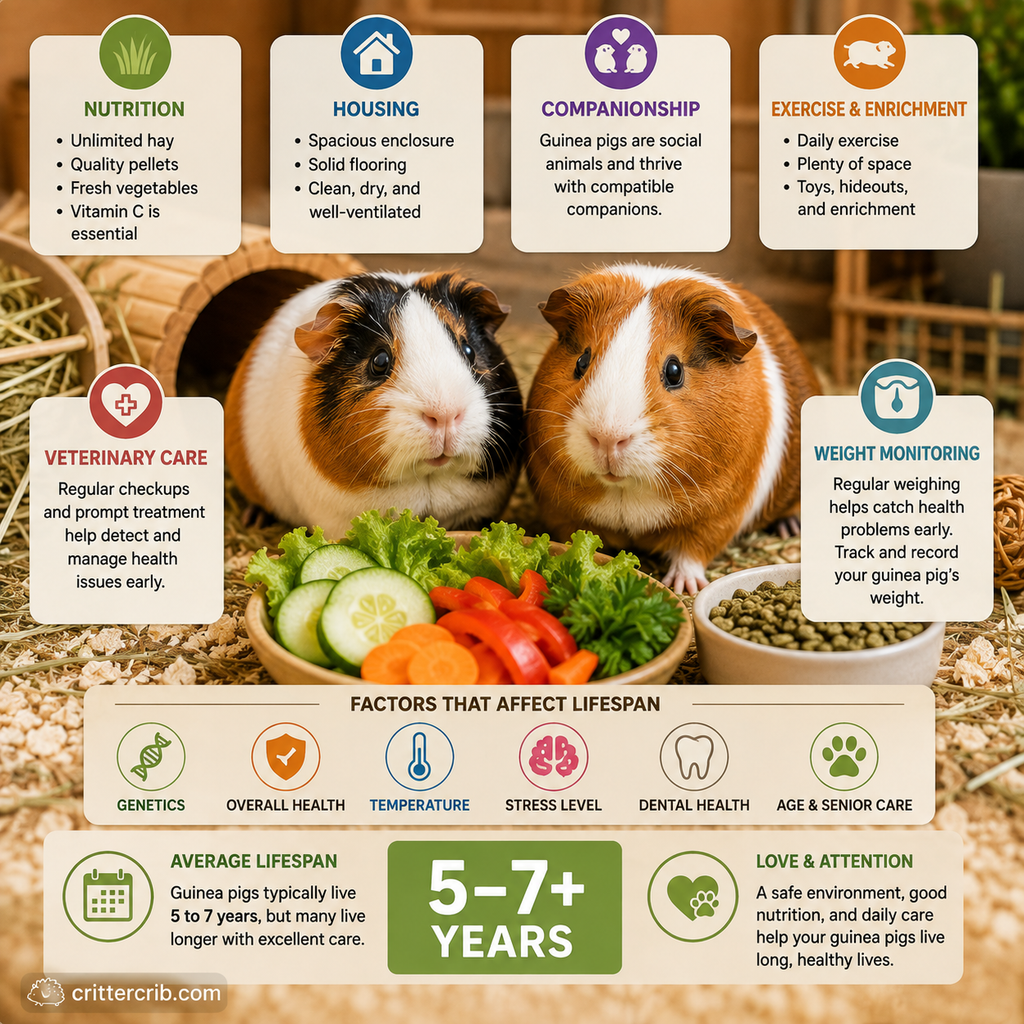
You can’t control every medical or genetic factor, but you can create conditions that support long-term health.
Focus on the basics:
- Provide unlimited high-quality grass hay.
- Feed appropriate guinea pig pellets.
- Supply suitable fresh vegetables and reliable vitamin C.
- Keep fresh water available at all times.
- Provide a spacious, solid-floor enclosure.
- Keep bedding clean and dry.
- House guinea pigs with appropriate companionship when possible.
- Provide hiding places and enrichment.
- Encourage regular movement and exercise.
- Weigh your guinea pigs regularly.
- Check teeth, feet, coat, eyes, and general condition.
- Find an experienced guinea pig veterinarian.
- Respond quickly to appetite or behavior changes.
None of these steps is particularly glamorous.
Together, though, they form the foundation of good guinea pig care.
What Happens as Guinea Pigs Get Older?
Guinea pigs are often considered seniors somewhere around the later part of their typical lifespan, but aging isn’t identical for every animal.
You may gradually notice:
- Less energetic movement
- More time resting
- Changes in body condition
- Reduced muscle mass
- Greater sensitivity to temperature
- Joint stiffness
- Changes in grooming
- Dental problems
- Chronic medical conditions
Don’t automatically dismiss every change as “just getting old.”
Pain, arthritis, dental disease, heart problems, or other conditions may be treatable.
Senior guinea pigs often benefit from closer monitoring and more frequent veterinary care.
Caring for a Senior Guinea Pig
Older guinea pigs may need some adjustments.
Keep essential resources easy to reach.
Hay, water, food, and favorite sleeping areas shouldn’t require difficult climbing.
Soft, dry bedding can make resting more comfortable.
Watch whether an older guinea pig can still:
- Reach the water bottle
- Eat hay normally
- Move around comfortably
- Groom itself
- Maintain weight
- Interact with companions
- Enter and exit hideouts
Small environmental changes can make a big difference for an aging animal.
Continue Weighing Senior Guinea Pigs
Weight monitoring becomes especially valuable with age.
Gradual weight loss may be the first visible sign of a chronic problem.
Don’t assume weight loss is inevitable just because a guinea pig is old.
A veterinarian can help determine whether changes are related to muscle loss, dental disease, pain, organ disease, or another condition.
Don’t Forget Quality of Life
Living longer is valuable only when those additional years remain comfortable.
Quality of life includes more than eating and drinking.
Consider whether your guinea pig can still:
- Eat comfortably
- Move without severe pain
- Rest comfortably
- Interact with companions
- Show interest in food
- Explore its environment
- Groom normally
- Enjoy familiar routines
When a guinea pig develops a serious chronic or terminal condition, talk openly with your veterinarian about comfort and quality of life.
Those conversations are difficult, but they’re part of responsible lifelong care.
Common Mistakes That May Affect Guinea Pig Health
Some problems are surprisingly easy to prevent.
Common mistakes include:
- Feeding too little hay
- Using rabbit food instead of guinea pig food
- Ignoring vitamin C requirements
- Feeding too many sugary treats
- Keeping guinea pigs in undersized cages
- Using wire flooring
- Allowing bedding to stay wet
- Housing guinea pigs alone without considering social needs
- Providing too little exercise
- Ignoring gradual weight loss
- Waiting too long when appetite decreases
- Assuming dental problems will fix themselves
- Exposing guinea pigs to excessive heat
- Using medications without veterinary guidance
- Waiting until an emergency to find a guinea pig veterinarian
Good care is mostly about consistency.
Small things done correctly every day add up over years.
Frequently Asked Questions About Guinea Pig Lifespan
How Long Do Guinea Pigs Usually Live?
Pet guinea pigs commonly live around 5 to 7 years, although individual lifespans vary.
Some guinea pigs may live 8 years or longer with favorable genetics, good care, and a bit of luck.
Can Guinea Pigs Live 10 Years?
It isn’t typical, but exceptionally long-lived guinea pigs can reach advanced ages.
A lifespan approaching 10 years should be considered unusual rather than something every owner should expect.
Is 5 Years Old for a Guinea Pig?
A 5-year-old guinea pig is entering the older portion of the typical lifespan, but many guinea pigs remain active and healthy at this age.
This is a good time to pay even closer attention to weight, mobility, teeth, appetite, and routine veterinary care.
Is 7 Years Old for a Guinea Pig?
Yes. Seven is a senior age for a guinea pig and represents a good lifespan.
Some continue beyond this age, while others develop age-related health problems earlier.
Do Indoor Guinea Pigs Live Longer?
Indoor housing generally makes it easier to protect guinea pigs from predators, extreme temperatures, weather, and environmental hazards.
However, simply living indoors doesn’t guarantee longevity.
Diet, space, companionship, cleanliness, exercise, and veterinary care still matter.
Do Male or Female Guinea Pigs Live Longer?
There isn’t a reliable rule that every male or every female will live longer.
Individual genetics, reproductive health, diet, medical care, and living conditions are more useful factors to focus on.
How Do I Know if My Guinea Pig Is Getting Old?
Possible signs include reduced activity, increased sleeping, changes in body condition, joint stiffness, and a greater need for medical care.
Because illness can resemble normal aging, significant changes should be discussed with a veterinarian.
What Is the Most Important Food for a Guinea Pig?
For most healthy adult guinea pigs, unlimited appropriate grass hay is one of the most important components of the diet.
It supports both digestive function and dental wear.
A complete diet also includes suitable pellets, fresh vegetables, vitamin C, and clean water.
How Often Should I Weigh My Guinea Pig?
Regular weighing is useful throughout life, and many owners choose to weigh their guinea pigs weekly.
What matters most is consistency and noticing trends.
Ask your veterinarian how frequently your individual guinea pig should be weighed, especially if it is elderly or has a medical condition.
Why Did My Guinea Pig Suddenly Stop Eating?
Appetite loss can have many causes, including dental disease, pain, digestive problems, infection, urinary disease, and other illnesses.
Because not eating can become dangerous for guinea pigs, prompt veterinary evaluation is important.
A Guinea Pig’s Lifespan Is Only Part of the Story
Most guinea pigs live around 5 to 7 years, with some reaching 8 years or beyond.
But the number alone doesn’t tell you much about the quality of those years.
A guinea pig needs proper nutrition, unlimited hay, vitamin C, room to move, appropriate companionship, clean housing, enrichment, and veterinary care throughout its life.
Just as importantly, owners need to notice when something changes.
A few grams disappearing from the scale week after week, a favorite vegetable suddenly being ignored, or an older guinea pig moving differently can all provide clues that deserve attention.
You can’t guarantee that your guinea pig will reach a particular age. Genetics and unexpected illness will always play a role.
What you can do is provide the conditions for a healthy life, catch problems as early as possible, and adjust care as your guinea pig grows older.
For an animal that may spend five, seven, or even more years with you, those everyday habits matter.