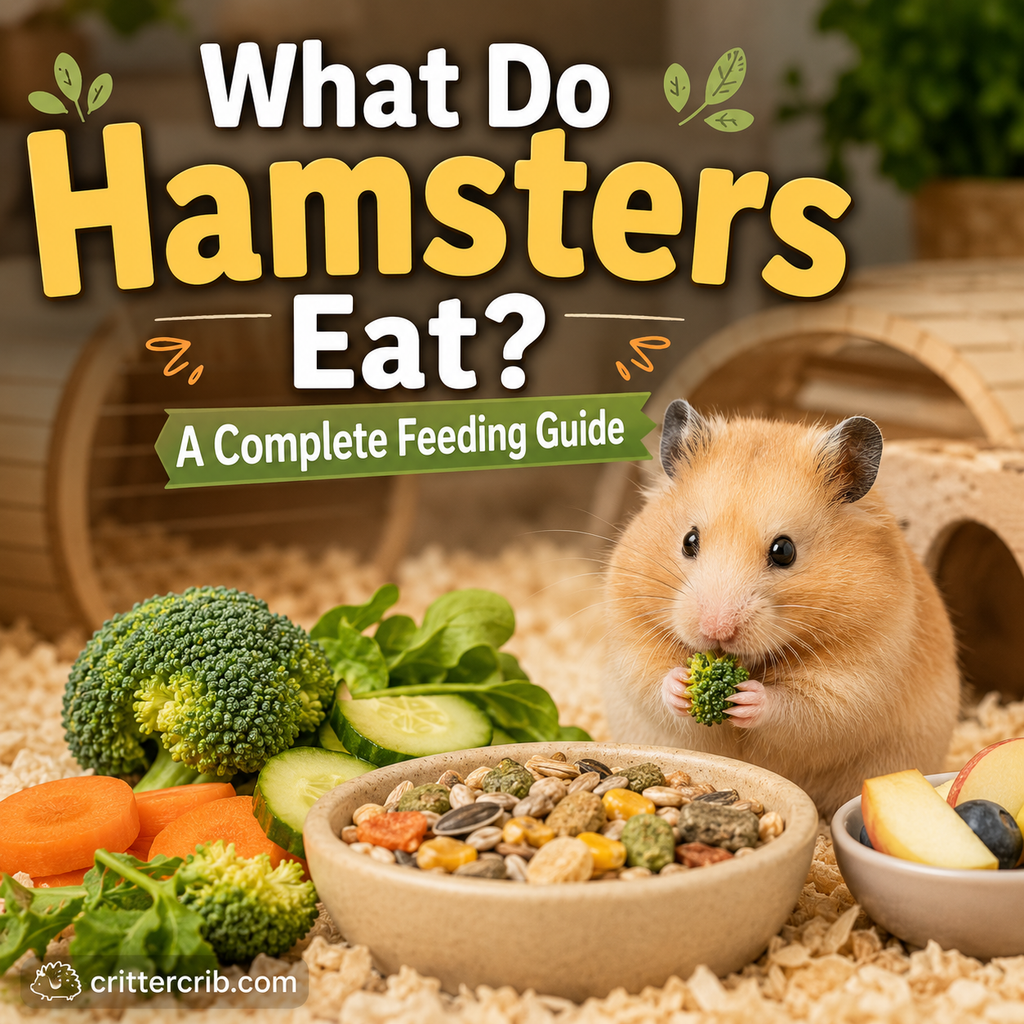
Hamsters may be tiny, but figuring out what to put in their food bowl can be surprisingly confusing.
Walk through a pet store and you’ll find seed mixes, pellets, colorful treats, dried fruit, chew sticks, and packages promising to be complete hamster diets. Then there’s fresh food. Can hamsters eat carrots? What about bananas? Eggs? Broccoli?
A healthy hamster diet doesn’t need to be complicated.
The foundation should be a nutritionally balanced food formulated for hamsters, with appropriate fresh foods and occasional treats adding variety. The exact amount and type of food can vary depending on your hamster’s species, age, size, health, and the diet you’re using.
There’s another wrinkle: hamsters store food.
An empty bowl doesn’t necessarily mean your hamster ate everything. There’s a good chance some of dinner has been transported into a carefully guarded underground pantry.
Here’s what hamsters eat, which foods can be offered safely, what to avoid, and how to build a practical feeding routine.
What Do Hamsters Eat?
Hamsters are omnivores.
Their natural diets can include seeds, grains, plant material, and small amounts of animal-based foods such as insects.
For pet hamsters, a balanced diet generally consists of:
- A nutritionally complete hamster food
- Small portions of suitable vegetables
- Occasional appropriate protein-rich foods
- Limited fruit, depending on species and individual needs
- Small amounts of safe treats
- Fresh water at all times
The commercial food should provide the nutritional foundation.
Fresh foods are additions rather than a replacement for a properly formulated diet.
Start With a Complete Hamster Food
Choosing the staple diet is the most important feeding decision you’ll make.
Look for food specifically formulated for hamsters rather than a generic “small animal” product.
Commercial diets generally come in two broad forms:
- Uniform pellets or blocks
- Seed and grain mixtures
Some feeding plans use one type, while others combine an appropriate formulated block with a quality seed mixture.
The best choice depends on the nutritional composition of the product and your hamster’s individual needs.
If you’re unsure whether a particular food provides complete nutrition, ask a veterinarian experienced with small mammals.
Pellets and Laboratory-Style Blocks
Uniform foods have one major advantage: every piece contains a similar nutritional profile.
That makes selective eating more difficult.
With a colorful seed mixture, some hamsters enthusiastically eat their favorite high-fat ingredients while leaving less exciting pieces behind.
A properly formulated pellet or block can reduce this problem.
However, nutritional quality varies between brands.
Don’t assume every food shaped like a pellet is automatically balanced.
Read the label and make sure it’s intended for hamsters.
Are Seed Mixes Good for Hamsters?
A quality seed mix can provide variety and encourage natural foraging behavior.
Hamsters may spend considerable time sorting, carrying, and storing individual ingredients.
The downside is selective feeding.
A hamster may choose:
“Sunflower seed? Absolutely.”
“Less exciting grain? Perhaps tomorrow.”
If the diet allows your hamster to consistently select only its favorite ingredients, the overall nutritional balance can suffer.
Monitor what your hamster actually eats rather than simply what you put in the enclosure.
Don’t Refill the Bowl Just Because It’s Empty
Hamsters are famous food hoarders.
They have expandable cheek pouches that allow them to carry food back to their nest or storage areas.
This means an apparently empty bowl may have been emptied within minutes while very little was actually eaten.
Before adding large amounts of extra food, check your hamster’s normal storage behavior.
You don’t need to destroy its nest every day looking for dinner.
Just be aware that food may be hidden elsewhere.
Overfeeding because the bowl “looks empty” can lead to excessive food accumulation and make it harder to monitor appetite.
How Much Should You Feed a Hamster?
There’s no single portion that’s appropriate for every hamster and every commercial diet.
Species, body size, age, activity, health, and the calorie density of the food all matter.
Start with the feeding directions for your specific staple food and adjust based on:
- Your hamster’s species
- Body condition
- Weight
- Activity level
- Amount actually consumed
- Amount being stored
- Veterinary recommendations
Syrian hamsters generally require more food than dwarf hamsters because they’re considerably larger.
Rather than relying only on a tablespoon measurement found online, monitor the individual animal.
Feed at a Consistent Time
Hamsters are primarily active in the evening and at night.
Offering the main portion of food around the time your hamster normally wakes can work well.
A consistent routine also makes appetite changes easier to recognize.
If your hamster normally appears shortly after feeding but suddenly ignores food, pay attention.
Changes in appetite can be an early sign that something isn’t right.
Scatter Feeding Encourages Natural Behavior
Food doesn’t always have to arrive in a bowl.
Scatter feeding some of the daily dry diet throughout clean bedding encourages your hamster to search for it.
This turns an everyday necessity into enrichment.
You can also hide appropriate food in:
- Cardboard tubes
- Safe paper
- Foraging toys
- Different areas of the enclosure
Start with easy hiding places.
The goal is to encourage natural searching behavior, not make dinner impossible to find.
What Vegetables Can Hamsters Eat?
Many hamsters can enjoy small portions of suitable fresh vegetables as part of a balanced diet.
Possible options include small amounts of:
- Broccoli
- Bell pepper
- Cucumber
- Zucchini
- Romaine lettuce
- Carrot
- Cauliflower
- Peas
- Green beans
- Certain leafy greens
Variety is useful, but introduce unfamiliar foods gradually.
A hamster doesn’t need a full salad bowl.
Small pieces are enough.
Wash Fresh Produce
Wash vegetables thoroughly before serving.
Remove spoiled or damaged portions and cut food into manageable pieces.
Fresh produce left in a warm enclosure can spoil, particularly if your hamster carries it into a hidden food stash.
Remove uneaten perishable food before it deteriorates.
Can Hamsters Eat Carrots?
Yes, hamsters can generally eat small amounts of carrot.
Carrots contain natural sugars, so think of them as one vegetable among many rather than something that needs to be offered every day.
A small piece is plenty for a hamster.
Dwarf hamsters, particularly those with increased susceptibility to diabetes, may need greater attention to sugary foods.
Discuss your individual hamster’s diet with a veterinarian if you’re concerned.
Can Hamsters Eat Broccoli?
Broccoli can generally be offered in small amounts.
Introduce it gradually, particularly if your hamster hasn’t eaten many fresh vegetables before.
As with all fresh foods, remove leftovers before they spoil.
Can Hamsters Eat Cucumber?
Hamsters can generally eat cucumber in moderation.
Its high water content makes portion size important.
Too much watery produce at once may contribute to loose stools or digestive upset in some animals.
A small piece provides variety without overwhelming the diet.
Can Hamsters Eat Lettuce?
Some lettuces can be offered in moderation.
Choose nutrient-containing varieties such as romaine rather than relying on very watery lettuce as a major part of the diet.
Wash it thoroughly and provide only a small amount.
Fresh vegetables should complement the staple food, not replace it.
Can Hamsters Eat Fruit?
Many hamsters can eat certain fruits in very small amounts.
Possible examples include:
- Apple without seeds
- Blueberries
- Strawberries
- Pear without seeds
- Small pieces of banana
Fruit contains natural sugar, so portions should remain tiny and infrequent.
For dwarf hamsters, sugary foods may be particularly inappropriate depending on species and health risk.
You don’t need to give fruit simply because it’s on a list of foods hamsters “can” eat.
A food being safe doesn’t mean it needs to be a regular part of the diet.
Be More Cautious With Fruit for Dwarf Hamsters
Some dwarf hamster populations are particularly prone to diabetes.
For these animals, minimizing sugary treats is a sensible precaution.
That includes foods marketed as healthy simply because they’re made from fruit or honey.
Dried fruit can be especially concentrated in sugar.
If you keep a dwarf hamster and aren’t sure how much fruit is appropriate, ask a veterinarian familiar with the species.
There are plenty of lower-sugar ways to add variety.
Can Hamsters Eat Apples?
A small piece of apple flesh can be an occasional treat for many hamsters.
Remove the seeds and core.
Apple seeds aren’t appropriate for hamsters.
Because apple contains sugar, keep portions small, particularly for dwarf species.
Can Hamsters Eat Bananas?
A tiny piece of banana can be offered occasionally to suitable hamsters.
Banana is relatively sugary, so it’s better treated as an occasional extra rather than a routine food.
Again, fruit isn’t essential to make a hamster diet interesting.
Do Hamsters Need Protein?
Hamsters are omnivores and require protein as part of a balanced diet.
A properly formulated commercial hamster food should already contribute appropriate protein.
Small amounts of additional protein-rich foods may sometimes be offered as enrichment or dietary variety.
Options may include appropriately prepared:
- Cooked egg
- Plain cooked chicken
- Mealworms
These should be plain and offered in small portions.
Avoid seasoning, sauces, butter, oil, salt, and processed meat products.
Can Hamsters Eat Eggs?
Hamsters can generally eat a small amount of thoroughly cooked plain egg.
Don’t add:
- Salt
- Pepper
- Butter
- Oil
- Cheese
- Sauces
A tiny portion is enough.
Remove leftovers promptly because cooked egg is perishable.
Can Hamsters Eat Mealworms?
Mealworms can be an appropriate protein-rich food for hamsters when offered in moderation.
Some commercial hamster foods already contain dried insects.
They’re calorie-dense, so more isn’t necessarily better.
Think of them as part of a varied feeding plan rather than unlimited snacks.
Can Hamsters Eat Chicken?
A tiny amount of plain, fully cooked, unseasoned chicken can be offered occasionally.
Remove bones, skin, sauces, seasoning, and excess fat.
Never offer raw chicken.
Fresh animal-based foods spoil quickly, so remove anything your hamster doesn’t eat promptly.
Nuts and Seeds Should Be Offered Carefully
Hamsters usually don’t need convincing to eat nuts and seeds.
The problem is that many are high in fat and calories.
Sunflower seeds and pumpkin seeds can be useful as small treats or components of an appropriate food mixture, but handing out large amounts on top of an already balanced diet can add unnecessary calories.
Plain, unsalted options are the safest choice when a particular nut or seed is appropriate.
Avoid:
- Salted nuts
- Honey-roasted products
- Candied nuts
- Chocolate-covered nuts
- Heavily flavored seeds
Your hamster doesn’t need the snack aisle version.
Treats Should Stay Small
A hamster weighs only a fraction of what a person does.
A treat that looks tiny in your hand can represent a substantial amount of food for the animal eating it.
Good treats are generally:
- Small
- Safe
- Plain
- Appropriate to the species
- Offered occasionally
Treats can be especially useful for hand-taming and training because a very small amount can create a positive association.
You don’t need to provide a large serving for the hamster to enjoy it.
Be Careful With Commercial Hamster Treats
Packaging can make treats look healthier than they are.
Some commercial small-animal treats contain large amounts of:
- Sugar
- Honey
- Molasses
- Fat
- Artificial colors
- Ingredients that provide little nutritional value
Products such as sugary yogurt-style drops and heavily sweetened seed sticks shouldn’t become dietary staples.
Read ingredient labels.
The word “hamster” on the package doesn’t automatically make a product ideal for everyday feeding.
Foods Hamsters Should Not Eat
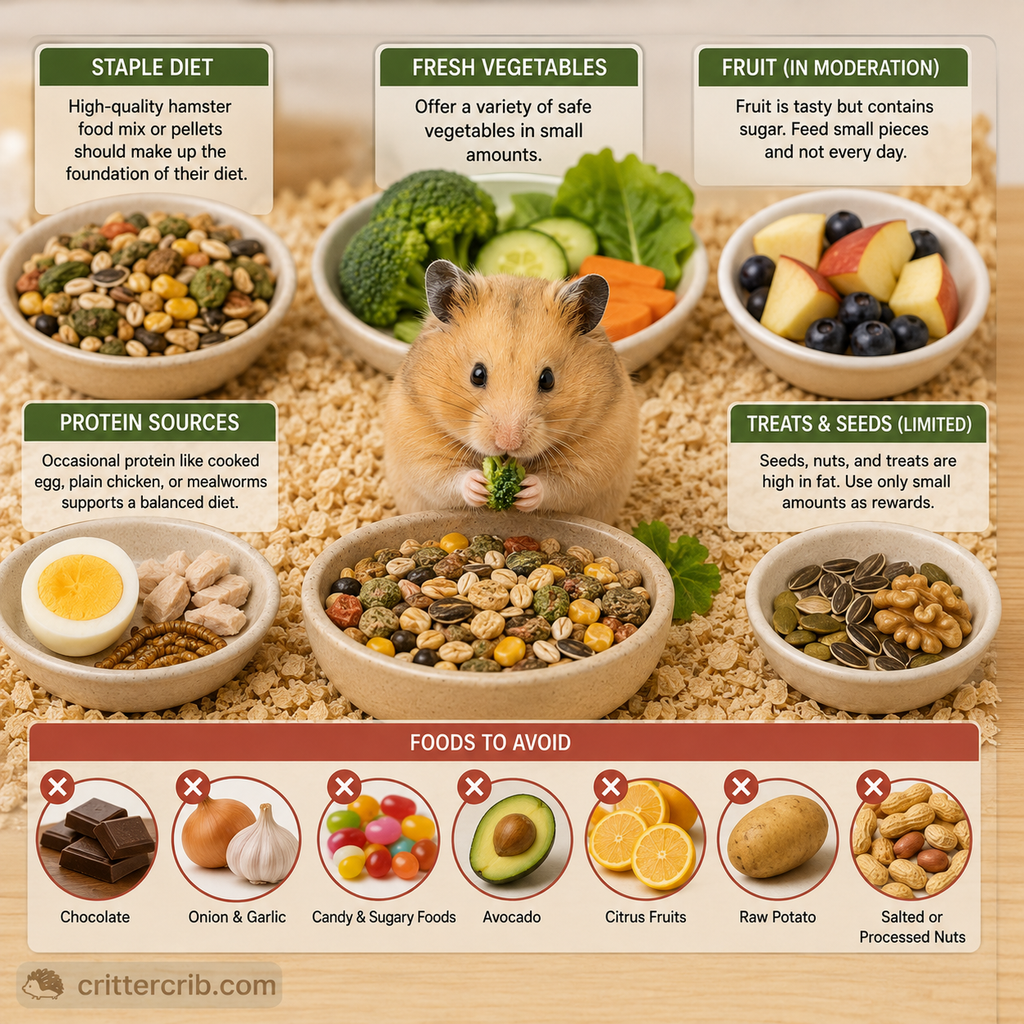
Not everything in your kitchen is safe for a hamster.
Avoid feeding foods known or suspected to be toxic, hazardous, or inappropriate.
Examples commonly avoided include:
- Chocolate
- Alcohol
- Caffeine
- Onion
- Garlic
- Raw kidney beans
- Apple seeds
- Fruit pits and stones
- Highly salty foods
- Sugary candy
- Heavily seasoned foods
- Fried foods
- Moldy or spoiled food
This isn’t an exhaustive list.
Before offering an unfamiliar food, verify that it’s appropriate for your hamster species.
When in doubt, leave it out.
Avoid Sticky Foods
Sticky foods can create problems because hamsters transport food in their cheek pouches.
Very sticky substances may adhere inside the mouth or pouch and can be difficult to remove.
Avoid foods with textures that create unnecessary choking or pouch-related risks.
This is another reason to keep human desserts and processed snacks away from hamsters.
Avoid Highly Processed Human Foods
Hamsters don’t need chips, cookies, candy, fast food, or heavily processed snacks.
These foods may contain excessive:
- Salt
- Sugar
- Fat
- Seasoning
- Additives
The fact that your hamster eagerly accepts something doesn’t mean it’s a good dietary choice.
Hamsters aren’t reading nutrition labels.
That’s our job.
Don’t Give Hamsters Alcohol or Caffeine
Alcohol and caffeinated products have no place in a hamster diet.
Keep hamsters away from:
- Coffee
- Tea containing caffeine
- Energy drinks
- Soda
- Alcoholic beverages
- Foods containing significant caffeine
Be careful during free-roam or handling time if drinks are nearby.
A curious hamster may investigate an unattended cup.
Fresh Water Is Essential
Hamsters should always have access to clean drinking water.
Water bottles are commonly used because they help keep bedding out of the water.
Check the bottle every day.
A bottle can appear full while the drinking tube is blocked.
Confirm that water flows properly.
Can Hamsters Drink From a Bowl?
Some owners use small, sturdy water bowls.
A bowl can work when it’s stable, appropriately sized, and kept clean.
However, hamsters may fill it with bedding or tip it over.
Whatever system you use, make sure your hamster has reliable access to fresh water at all times.
Some owners provide both a bottle and bowl.
Don’t Add Vitamins to Water Without Veterinary Advice
A balanced diet generally shouldn’t require random vitamin supplementation.
Adding supplements to drinking water can alter the taste and potentially discourage drinking. Some vitamins may also degrade in water.
If your hamster has a nutritional deficiency or medical condition requiring supplementation, follow your veterinarian’s instructions.
More vitamins aren’t automatically healthier.
How to Introduce New Foods
Don’t introduce five new vegetables on the same night.
If your hamster develops digestive upset, you won’t know which food caused it.
Instead:
- Choose one appropriate new food.
- Offer a very small portion.
- Watch your hamster’s appetite and droppings.
- Remove uneaten fresh food.
- Wait before introducing another unfamiliar food.
Gradual introduction also gives the digestive system time to adjust.
Check Hidden Food Stashes
Food hoarding is normal hamster behavior.
Don’t automatically remove every dry food stash you find.
A food cache can be an important part of the hamster’s normal routine.
Perishable foods are different.
Fresh vegetables, fruit, egg, chicken, or other moist foods can spoil when hidden.
Check likely storage areas periodically and remove spoiled fresh food without unnecessarily destroying the entire nest.
Why Hamsters Store Food
Hamsters evolved to collect food and transport it back to secure storage locations.
Their cheek pouches are perfectly suited for the job.
You may see your hamster:
- Stuff food into both cheeks
- Carry bedding alongside food
- Run back to its nest
- Deposit food in a corner
- Return immediately for another load
This isn’t necessarily a sign that your hamster is starving.
It’s normal behavior.
Providing opportunities to forage and store food can make the habitat more engaging.
Monitor Your Hamster’s Weight
Regular weight checks can help you determine whether the overall diet is working.
Use a digital kitchen scale that measures small increments.
Record the weight periodically under similar conditions.
A gradual change can be easier to spot in a written record than by looking at your hamster every day.
Unexpected weight loss can be associated with dental disease, illness, aging, or other problems.
Significant weight gain may indicate excessive calories or insufficient activity.
Discuss concerning changes with your veterinarian.
Dental Health and Diet
Hamster teeth grow continuously.
A proper diet and safe chewing opportunities support normal dental wear, but don’t assume hard food alone prevents every dental problem.
Provide appropriate chew materials in the habitat.
Watch for signs of dental trouble such as:
- Drooling
- Difficulty eating
- Dropping food
- Weight loss
- Overgrown or uneven teeth
- Swelling around the face
- Changes in food preference
If your hamster suddenly stops eating hard foods but continues accepting softer items, don’t simply switch permanently to soft food.
Have the teeth evaluated by a veterinarian.
A Sudden Loss of Appetite Is a Warning Sign
Hamsters are small animals and can deteriorate quickly when they’re sick.
Contact a veterinarian if your hamster stops eating or shows a major reduction in appetite, especially alongside:
- Lethargy
- Weight loss
- Diarrhea
- Difficulty breathing
- Drooling
- Swelling
- Changes in drinking
- Abnormal posture
- Unusual behavior
Remember that food hoarding can make appetite difficult to judge.
Weight monitoring and observing normal routines can help.
Feeding Syrian Hamsters
Syrian hamsters are the largest hamster species commonly kept as pets.
Their overall feeding principles are straightforward:
- Use an appropriate complete hamster diet.
- Offer safe fresh foods in small portions.
- Provide fresh water.
- Limit high-fat treats.
- Monitor food stores.
- Track body condition and weight.
Because Syrians are larger than dwarf hamsters, their portions will generally be larger.
Follow the directions for your chosen diet and adjust based on the individual hamster.
Feeding Dwarf Hamsters
“Dwarf hamster” can refer to several types of hamster, and their needs aren’t identical.
Some dwarf hamsters have a greater predisposition toward diabetes, making sugary foods an important consideration.
For these hamsters:
- Limit or avoid sugary treats.
- Be cautious with fruit.
- Avoid honey-based treats.
- Don’t assume commercial treats are healthy.
- Monitor weight and body condition.
- Choose a balanced staple diet.
Ask a veterinarian familiar with your hamster’s species if you have specific dietary concerns.
Should You Change Your Hamster’s Food?
Sometimes changing diets is necessary.
Maybe your current food is nutritionally inappropriate, unavailable, or your veterinarian recommends something different.
Avoid abrupt changes whenever possible.
Gradually mix increasing amounts of the new food with decreasing amounts of the old food over several days or according to veterinary guidance.
Sudden dietary changes may cause digestive upset or lead a picky hamster to reject the unfamiliar food.
A Simple Hamster Feeding Routine
A feeding routine doesn’t need to be complicated.
Daily
- Check fresh water.
- Confirm the bottle works.
- Provide the appropriate amount of staple food.
- Remove spoiled fresh food.
- Observe appetite and behavior.
Several Times a Week
Depending on your hamster’s diet and individual needs:
- Offer small portions of appropriate vegetables.
- Provide safe enrichment foods.
- Scatter feed part of the dry diet.
Occasionally
- Offer small treats.
- Provide suitable protein-rich extras when appropriate.
- Check food storage areas for spoiled items.
- Review your hamster’s weight and body condition.
The staple diet should remain the nutritional anchor.
Example of a Balanced Feeding Approach
Rather than creating a rigid daily menu, think in categories.
A practical approach may look like:
- Primary nutrition: complete hamster food
- Regular variety: small portions of suitable vegetables
- Enrichment: scatter feeding and foraging
- Occasional extras: appropriate protein foods
- Treats: tiny portions of safe seeds, nuts, or other suitable foods
- Hydration: unlimited fresh water
The proportions matter more than how many different ingredients you can fit into the bowl.
A hamster doesn’t need a complicated menu to have a good diet.
Common Hamster Feeding Mistakes
Many feeding mistakes come from good intentions.
Watch out for:
- Feeding too many treats
- Giving large portions of fruit
- Refilling an empty bowl without checking food stores
- Allowing selective eating
- Feeding an unbalanced seed-only diet
- Leaving fresh food in the enclosure until it spoils
- Making sudden diet changes
- Offering too many new foods at once
- Feeding heavily processed human snacks
- Giving sugary commercial treats frequently
- Forgetting to check the water bottle
- Assuming every dwarf hamster should eat the same way
- Ignoring changes in appetite or weight
- Using supplements without veterinary guidance
A simple, balanced diet is usually better than an elaborate but inconsistent one.
Frequently Asked Questions About Feeding Hamsters
What Should Hamsters Eat Every Day?
A nutritionally balanced commercial hamster food should form the foundation of the daily diet.
Small amounts of appropriate fresh foods can provide variety, while treats should remain limited.
Fresh water should always be available.
Can Hamsters Eat Vegetables Every Day?
Many hamsters can eat suitable vegetables regularly in small portions, but variety, portion size, species, and the rest of the diet matter.
Introduce vegetables gradually and remove leftovers before they spoil.
Can Hamsters Eat Fruit?
Some hamsters can have tiny amounts of suitable fruit occasionally.
Because fruit contains sugar, it shouldn’t be a major part of the diet.
Extra caution is appropriate for dwarf hamsters that may be predisposed to diabetes.
Can Hamsters Eat Cheese?
Although hamsters are omnivores, cheese isn’t necessary for a healthy diet.
It’s high in fat and some varieties are high in salt.
There are better options for providing appropriate protein and dietary variety.
Can Hamsters Eat Bread?
Plain bread isn’t generally needed in a hamster diet and provides little benefit compared with nutritionally balanced foods.
Avoid sugary, salty, seasoned, or heavily processed baked products.
Can Hamsters Eat Peanut Butter?
Sticky foods such as peanut butter can create unnecessary risks, particularly with cheek pouches.
It’s safer to choose non-sticky treats that are easier for a hamster to handle.
Can Hamsters Eat Sunflower Seeds?
Plain sunflower seeds can be offered in moderation.
They’re high in fat, so they work better as small treats or components of a balanced mixture than as an unlimited snack.
Can Hamsters Eat Mealworms?
Yes, mealworms can provide animal-based protein and enrichment when offered appropriately.
Some hamster foods already contain dried mealworms.
Keep portions moderate.
How Often Should I Feed My Hamster?
Hamsters should have regular access to an appropriate diet, with many owners providing the daily portion around the hamster’s normal evening waking time.
Follow the feeding guidance for your specific food and monitor what your hamster eats and stores.
Why Does My Hamster Hide Its Food?
Food hoarding is normal hamster behavior.
Hamsters use their cheek pouches to transport food to secure storage areas.
An empty bowl therefore doesn’t necessarily mean all the food has been eaten.
How Do I Know if I’m Overfeeding My Hamster?
Monitor weight, body condition, the amount of food being stored, and how much is actually eaten.
If large amounts continuously accumulate in storage areas or your hamster gains excessive weight, review portions and treats with your veterinarian.
The Best Hamster Diet Is Balanced, Not Complicated
Feeding a hamster well isn’t about creating an elaborate miniature buffet every night.
Start with a nutritionally complete hamster food.
Add small amounts of appropriate vegetables for variety. Use suitable seeds, protein-rich foods, and other treats sparingly. Be particularly cautious with sugary foods for dwarf hamsters, and make sure clean drinking water is always available.
Then pay attention to what your hamster actually does with the food.
Hamsters don’t read feeding charts.
They stuff food into their cheeks, rearrange it, hide it underneath bedding, save their favorite pieces, and occasionally make you wonder whether they’ve eaten anything at all.
That’s why monitoring weight, body condition, food stores, and normal behavior is so useful.
A good feeding routine works with those natural behaviors rather than against them.
Keep the staple diet balanced, portions appropriate, fresh foods fresh, and treats genuinely occasional. Combined with regular health monitoring and veterinary care when needed, that provides a strong nutritional foundation for your hamster.