White’s tree frogs are often considered fairly approachable amphibians for beginners, but the frog itself is only one part of the cost.
The enclosure, lighting, heating, humidity equipment, substrate, food, supplements, and veterinary care can easily cost more than the animal.
So, how much does a White’s tree frog cost?
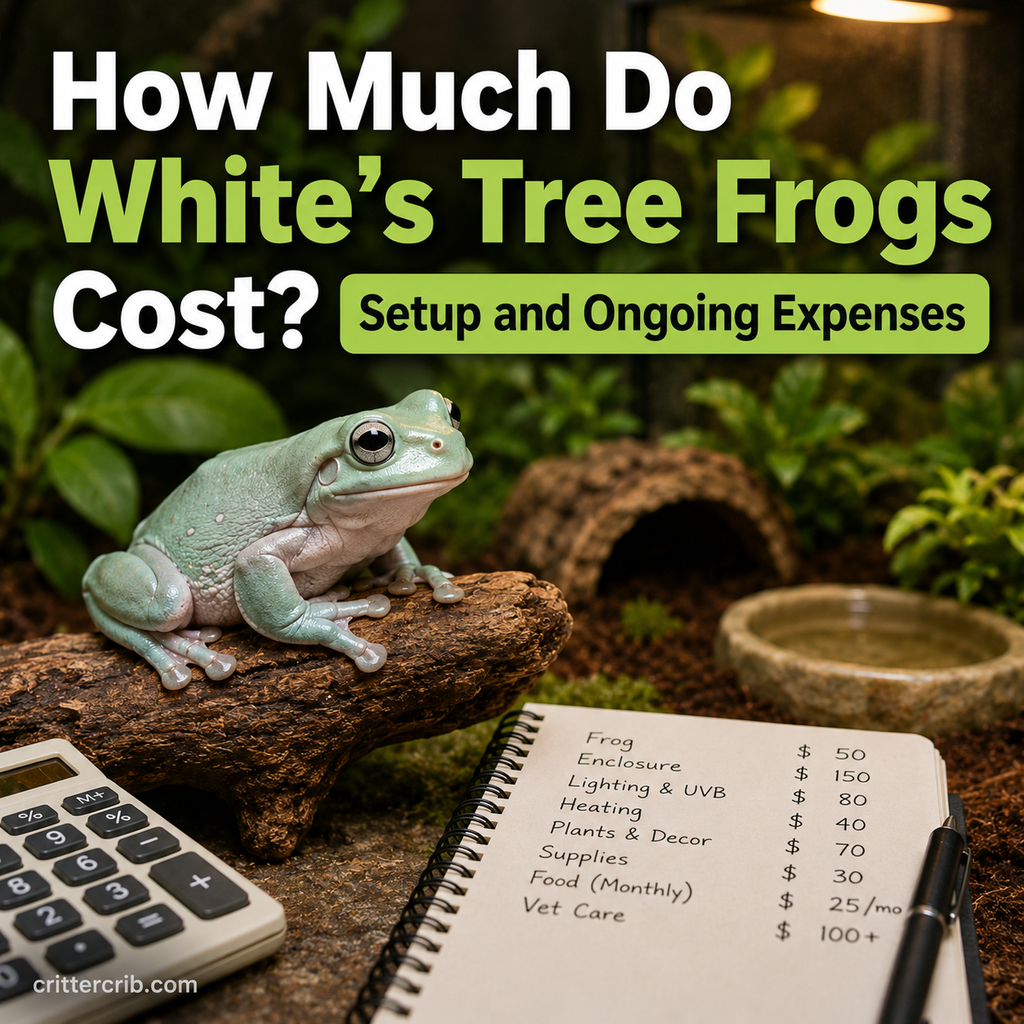
A White’s tree frog itself may commonly cost around $30–$100 or more, depending on age, coloration, breeder, availability, and where you buy it. A complete initial setup can bring your total starting cost to roughly $250–$600 or more.
After the habitat is established, ongoing care is much less expensive. Many owners may spend approximately $20–$50 per month on food, supplements, substrate, water treatment, and other routine supplies, although costs vary considerably.
Veterinary care is the wildcard. An exotic-animal appointment can quickly add another $100 or more to your expenses.
Before bringing home a White’s tree frog, it’s worth looking at the full cost rather than simply asking how much the frog costs at the pet store.
White’s Tree Frog Cost at a Glance
Here’s a rough budget for one White’s tree frog:
- Frog: $30–$100+
- Enclosure: $75–$200+
- Heating and temperature control: $20–$60+
- Lighting and UVB: $40–$100+
- Thermometer and hygrometer: $15–$40
- Substrate: $10–$30
- Plants, branches, and hides: $30–$100+
- Water dish: $10–$25
- Water conditioner and miscellaneous supplies: $10–$30
- Initial food and supplements: $15–$30
That puts a realistic initial budget somewhere around $250–$600 or more, depending on how elaborate you make the enclosure and whether you already own suitable equipment.
A naturalistic or bioactive setup can cost considerably more upfront.
How Much Does a White’s Tree Frog Cost?
The frog itself is usually one of the smaller expenses.
Common White’s tree frogs may sell for approximately $30–$100, although prices can fall outside that range.
Several factors affect the price.
Age and Size
Juveniles may be priced differently from established adults.
An older frog that’s already feeding reliably and has been raised for some time may cost more because the breeder has invested additional food, housing, and care into the animal.
Color and Appearance
White’s tree frogs naturally vary in appearance.
Some captive-bred color variations or particularly desirable animals may be sold at higher prices.
Don’t choose a frog based entirely on color.
A healthy animal from a responsible source is more important than getting a specific shade.
Breeder vs. Pet Store
Prices vary between breeders, specialty reptile and amphibian shops, expos, and general pet stores.
A reputable breeder may sometimes charge more, but you may also receive much better information about:
- Age
- Feeding history
- Origin
- Genetics
- Current husbandry
- Health history
That information has value.
Captive-Bred vs. Wild-Caught White’s Tree Frogs
Whenever possible, look for a healthy captive-bred frog from a responsible breeder.
Captive-bred animals are generally preferable because they haven’t been removed from wild populations and are typically better adapted to captive conditions.
They may also come with more reliable background information.
Ask the seller directly whether the frog is captive-bred.
Don’t assume.
A lower purchase price isn’t necessarily a better deal if the animal arrives stressed, unhealthy, or carrying parasites that require veterinary treatment.
How Much Does a White’s Tree Frog Enclosure Cost?
A suitable enclosure will probably be your largest initial purchase.
White’s tree frogs are arboreal, which means they spend much of their time climbing.
That makes vertical space especially important.
For a single adult, many keepers start with an enclosure around 18 x 18 x 24 inches, with larger habitats providing additional climbing room.
A suitable glass terrarium may cost approximately $75–$200 or more, depending on size, brand, door style, ventilation, and features.
Don’t choose the smallest possible enclosure simply to save money.
The enclosure is something your frog may use for many years.
Heating and Temperature Equipment
White’s tree frogs need appropriate temperatures, and your home may not naturally provide them throughout the year.
Depending on room temperature, you may need supplemental heat.
Possible equipment includes:
- Low-wattage heat source
- Thermostat
- Digital thermometer
- Additional temperature probe
Budget approximately $20–$60 or more for basic heating and control equipment.
A thermostat is especially important when using many types of supplemental heating because it helps prevent dangerous overheating.
Don’t Skip the Thermometer
A thermostat controls equipment.
A thermometer tells you what temperature the enclosure actually is.
Ideally, monitor temperatures in more than one area so you understand the gradient rather than measuring only one spot.
Digital thermometers with probes are generally inexpensive compared with the cost of treating a frog harmed by incorrect temperatures.
Humidity Monitoring Costs
White’s tree frogs need access to appropriate humidity without being kept in constantly stagnant, soaking-wet conditions.
A digital hygrometer can help you monitor the enclosure.
Combination thermometer-hygrometer units often cost around $15–$40, depending on the model and number of probes or sensors.
You may also want a spray bottle or pressure mister for routine misting.
Simple manual misting is inexpensive.
Automated misting systems cost considerably more and aren’t necessary for every setup.
How Much Does Lighting Cost?
Lighting expenses depend on your enclosure design.
You’ll generally need to provide a consistent day-and-night cycle, and live plants require appropriate light.
Many keepers also provide suitable low-level UVB for White’s tree frogs.
A basic lighting setup may include:
- Fixture
- Appropriate bulb
- UVB lamp
- Timer
Expect to spend roughly $40–$100 or more initially.
Remember that some bulbs need periodic replacement even if they still produce visible light.
That’s an ongoing expense you’ll need to include in your long-term budget.
Substrate Costs
Substrate doesn’t need to be expensive.
Suitable options depend on how you’re maintaining the enclosure.
You might use:
- Appropriate amphibian-safe substrate
- Soil-based terrarium mixtures
- Coconut-based products
- Bioactive substrate systems
A basic substrate setup may cost around $10–$30 initially.
Bioactive systems usually cost more because they may include multiple substrate layers, drainage material, leaf litter, plants, and cleanup crew organisms.
Paper Towels Can Be Useful Temporarily
For quarantine or health monitoring, plain paper towels can sometimes be useful because they’re inexpensive and make waste easy to see.
They don’t provide the naturalistic benefits of a permanent planted habitat, but simplicity can be helpful when monitoring a new or sick animal.
Plants, Branches, and Hides
This is one category where costs can vary dramatically.
White’s tree frogs need climbing opportunities and places where they feel secure.
Your enclosure may include:
- Cork bark
- Branches
- Vines
- Live plants
- Artificial plants
- Elevated hides
- Background structures
A simple setup may cost around $30–$100 for furnishings.
An elaborate planted terrarium can cost considerably more.
Spend Money on Function Before Appearance
It’s easy to get carried away decorating a terrarium.
Your frog doesn’t care whether its branch matches the background.
Prioritize:
- Safe climbing surfaces
- Secure resting areas
- Cover
- Easy-to-clean materials
- Appropriate plants
- Attractive decoration
You can always improve the appearance later.
Water Dish and Water Treatment
White’s tree frogs should have access to a clean water dish large enough for them to sit in comfortably.
A simple amphibian-safe dish may cost around $10–$25.
You’ll also need appropriate water treatment if your tap water contains chlorine or chloramine.
Water conditioner is inexpensive and usually lasts a long time when you’re treating the relatively small volumes needed for a frog enclosure.
Budget roughly $5–$15 initially for conditioner.
Change the water regularly and whenever it becomes dirty.
How Much Does Food Cost?
Food is one of the main recurring expenses, but feeding a single White’s tree frog generally isn’t very expensive.
White’s tree frogs eat appropriately sized live prey such as:
- Crickets
- Dubia roaches
- Other suitable feeder insects
Depending on the frog’s size, age, feeding schedule, local prices, and whether you raise feeders yourself, food might cost approximately $10–$25 per month.
Buying insects individually from a pet store is usually more expensive than purchasing larger quantities.
However, buying too many feeders doesn’t save money if they die before you can use them.
Don’t Forget Feeder Insect Care
The insects you feed also need care.
Gut-loading feeder insects means giving them nutritious food before offering them to your frog.
That may require:
- Feeder containers
- Insect food
- Fresh vegetables or other appropriate foods
- Water sources
- Cleaning supplies
These expenses are relatively small, but they’re part of the true cost of feeding an insect-eating pet.
Calcium and Vitamin Supplements
White’s tree frogs typically need appropriate supplementation as part of a balanced captive diet.
Depending on the feeding plan, you may need:
- Calcium supplement
- Vitamin/mineral supplement
A container may cost around $5–$15 and can last quite a while when caring for one frog.
Supplements still expire, so don’t assume one container will last indefinitely.
Follow an appropriate supplementation schedule rather than heavily coating every meal without a plan.
Monthly Cost of Owning a White’s Tree Frog
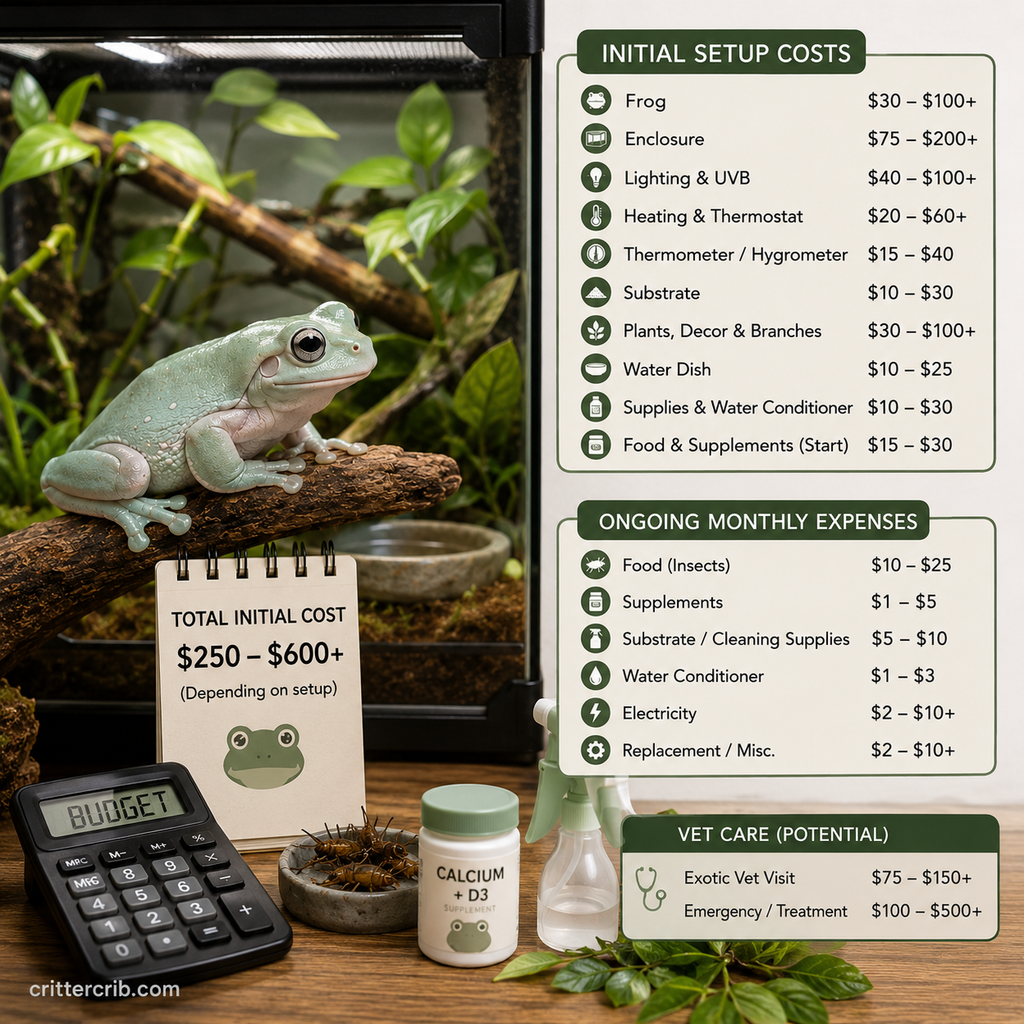
Once the enclosure is established, routine monthly expenses are fairly manageable.
A rough monthly budget might look like:
- Feeder insects: $10–$25
- Supplements: $1–$5 averaged monthly
- Substrate and cleaning supplies: $5–$10
- Water conditioner: $1–$3
- Electricity: $2–$10+
- Replacement supplies: $2–$10
That puts many basic setups around $20–$50 per month.
This isn’t a guarantee.
Your costs may be higher depending on electricity rates, feeder prices, substrate choices, number of frogs, and enclosure design.
Electricity Costs
A frog enclosure doesn’t usually have an enormous impact on your electric bill.
Still, equipment uses power.
Possible electricity-consuming equipment includes:
- Lights
- UVB fixtures
- Heating
- Automated misting systems
- Fans
- Other environmental controls
Climate matters.
Someone living in a home that naturally stays within the frog’s preferred temperature range may spend less than someone who needs additional heating throughout winter.
Replacement Bulbs and Equipment
Not every expense happens monthly.
Some costs appear once or twice per year.
You may need to periodically replace:
- UVB bulbs
- Plant lights
- Heating equipment
- Thermometers
- Hygrometers
- Substrate
- Plants
- Water dishes
- Misting equipment
Setting aside a small amount of money every month can make these replacements easier to handle when they occur.
Veterinary Costs Can Be Significant
This is the expense new owners are most likely to overlook.
White’s tree frogs require a veterinarian experienced with amphibians or exotic animals.
Not every veterinary clinic treats frogs.
An exotic veterinary examination may cost around $75–$150 or more, depending on your location and clinic.
Diagnostic testing, medication, emergency care, or treatment can increase the bill substantially.
A health problem could easily turn into an expense of several hundred dollars.
Build a Veterinary Emergency Fund
Even if your frog is inexpensive, its medical care isn’t necessarily inexpensive.
Consider keeping at least $200–$500 available for unexpected veterinary expenses, with more providing a better cushion.
You may never need all of it.
But having the money available is far better than trying to find it during an emergency.
How Much Does a Bioactive White’s Tree Frog Setup Cost?
Bioactive terrariums can be beautiful and functional, but they generally cost more upfront.
A bioactive setup may require:
- Drainage layer
- Barrier material
- Specialized substrate
- Leaf litter
- Live plants
- Cork bark
- Cleanup crew
- Plant lighting
- Additional hardscape
Depending on enclosure size and complexity, a bioactive build can easily add $75–$200 or more to your startup costs.
Bioactive also doesn’t mean maintenance-free.
You’ll still need to monitor humidity, temperature, waste, plants, water, and the frog itself.
Does Keeping Two White’s Tree Frogs Cost Twice as Much?
Not necessarily, but it definitely costs more.
Two frogs may share:
- Enclosure equipment
- Lighting
- Heating
- Some decorations
But you’ll need a larger enclosure and more food.
More animals also produce more waste and increase potential veterinary expenses.
Don’t buy two frogs simply because the second frog seems inexpensive.
Calculate the cost of caring for both animals properly over their entire lives.
How Long Do White’s Tree Frogs Live?
White’s tree frogs can live for many years with proper care.
Captive lifespans of roughly 10–15 years or more are possible.
That changes how you should think about cost.
A $50 frog isn’t really a $50 purchase.
You’re committing to years of:
- Food
- Electricity
- Supplements
- Substrate
- Replacement equipment
- Veterinary care
- Routine maintenance
The annual cost may not be enormous, but it adds up over a decade.
Ways to Save Money Without Cutting Corners
You don’t need to buy the most expensive product in every category.
There are reasonable ways to reduce costs.
Buy the Right Enclosure the First Time
Buying a tiny enclosure and upgrading six months later often costs more than purchasing an appropriately sized adult habitat from the beginning.
Compare Feeder Insect Prices
Local reptile shops, breeders, and online feeder suppliers may offer better prices than buying small containers from large pet stores.
Use Simple Decorations
A safe piece of cork bark can be just as useful as an expensive decorative hide.
Function matters more than branding.
Grow Suitable Plants
Once established, terrarium plants can often be propagated rather than continually replaced.
Maintain Equipment
Keeping misting equipment, fixtures, and enclosure components clean can help them last longer.
What You Shouldn’t Cheap Out On
Some savings aren’t worth the risk.
Don’t cut corners on:
- Appropriate enclosure size
- Reliable temperature monitoring
- Thermostat control when required
- Safe water
- Proper nutrition
- Supplements
- Secure enclosure doors or lids
- Veterinary care
Cheap equipment that fails can ultimately cost more than buying reliable equipment from the start.
First-Year Cost of a White’s Tree Frog
Let’s put everything together.
For one White’s tree frog, a reasonable first-year budget might be:
- Frog: $30–$100+
- Complete setup: $220–$500+
- Food and routine supplies for one year: $240–$600
- Replacement equipment and bulbs: $25–$100+
- Veterinary emergency fund: $200–$500+
That means you could reasonably spend $500–$1,000 or more during the first year, especially if you’re starting completely from scratch.
You won’t necessarily spend the veterinary fund, but it’s smart to budget as though you might.
A premium bioactive enclosure can push first-year costs higher.
Is a White’s Tree Frog Expensive to Own?
Compared with many larger exotic pets, White’s tree frogs can be relatively affordable.
They don’t consume huge quantities of food, require enormous enclosures, or need expensive daily supplies.
The biggest expense is getting started correctly.
Once you have a suitable enclosure and reliable equipment, routine costs tend to be modest.
The exception is veterinary care.
A frog may cost less than a routine veterinary examination, which sometimes surprises first-time exotic pet owners.
White’s Tree Frog Cost Checklist
Before buying your frog, make sure your budget covers:
- The frog
- Appropriately sized enclosure
- Heating if needed
- Thermostat if needed
- Thermometer
- Hygrometer
- Lighting
- UVB if used
- Substrate
- Climbing branches
- Hides
- Plants
- Water dish
- Water conditioner
- Feeder insects
- Feeder insect supplies
- Calcium and vitamins
- Cleaning supplies
- Replacement bulbs
- Electricity
- Veterinary care
If buying the frog itself uses your entire budget, you’re not ready to bring it home yet.
The habitat should ideally be purchased, assembled, and tested first.
Final Thoughts
So, how much does a White’s tree frog cost?
The frog itself may only cost around $30–$100 or more, but that’s a small part of the real expense.
A realistic initial investment for the frog and a properly equipped habitat can reach approximately $250–$600 or more, while ongoing care may average around $20–$50 per month.
Then there’s veterinary care, which can add hundreds of dollars unexpectedly.
Fortunately, White’s tree frogs aren’t particularly expensive pets once their enclosure is established.
The best approach is to spend your money where it matters: a properly sized habitat, reliable environmental monitoring, safe furnishings, nutritious food, appropriate supplements, and access to veterinary care.
Buy and test the enclosure before purchasing the frog, keep an emergency fund available, and budget for years rather than weeks.
That gives you a much more realistic picture of what owning a White’s tree frog actually costs.