African dwarf frogs are small, fully aquatic amphibians that can make fascinating aquarium pets without the price tag of many larger exotic animals. The frog itself is usually inexpensive, but that’s only a small part of what you’ll actually spend.
So, how much do African dwarf frogs cost?
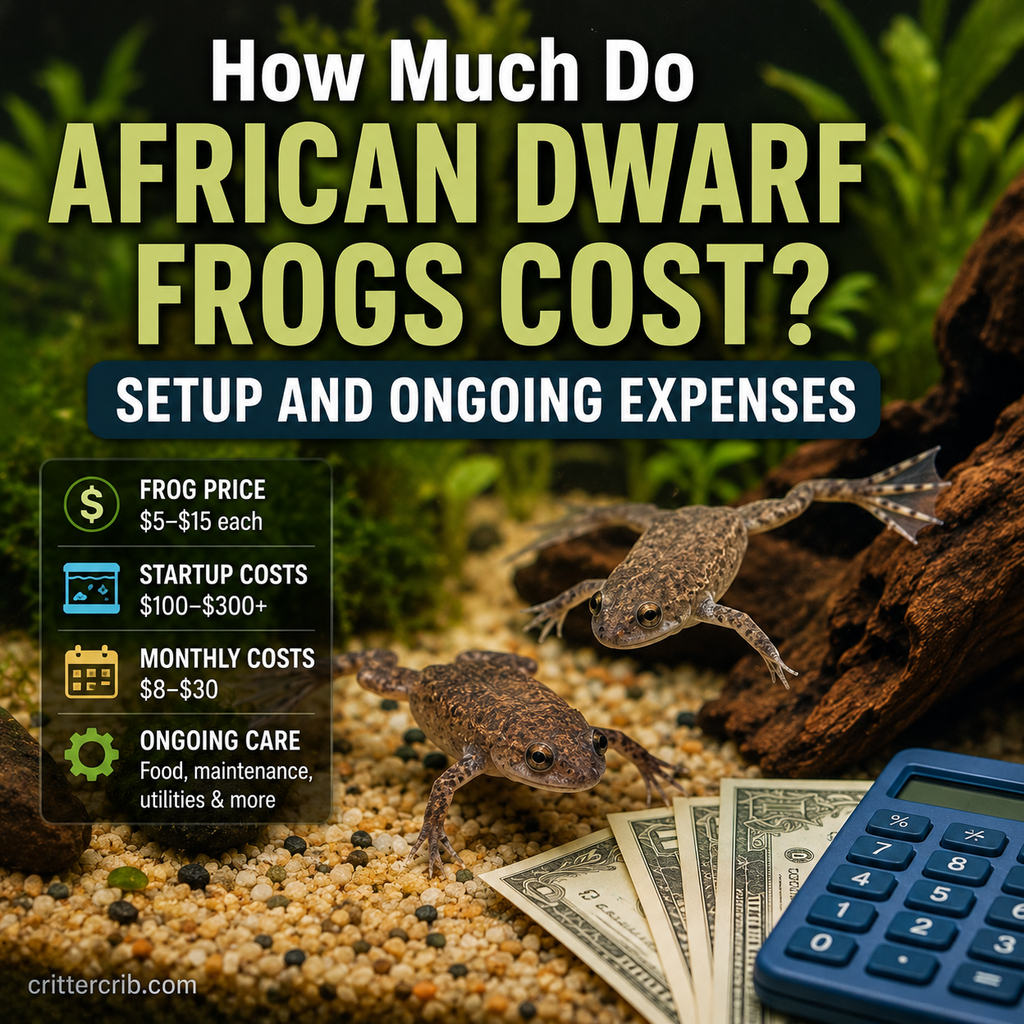
An African dwarf frog commonly costs around $5 to $15, although prices vary by store, breeder, location, and availability. Setting up an appropriate aquarium can bring your initial investment to roughly $100 to $300 or more, depending on what equipment you already own and how elaborate you want the tank to be.
After the aquarium is established, ongoing expenses are generally modest. You’ll primarily be paying for food, water treatment, replacement filter media or aquarium supplies, electricity, and occasional equipment replacement.
Veterinary care is less predictable and can become the biggest unexpected expense.
Here’s a closer look at what you should budget before bringing African dwarf frogs home.
How Much Does an African Dwarf Frog Cost?
The frog itself is usually the cheapest part of the setup.
Expect an individual African dwarf frog to cost approximately:
- $5–$15 from many pet stores
- Potentially $15–$30 or more from specialty aquatic stores or breeders
- Additional shipping costs when purchasing online
Prices can vary considerably depending on your location.
African dwarf frogs are commonly sold through aquarium and pet retailers, so they tend to be much more affordable than rare amphibian species.
However, choosing the cheapest frog isn’t necessarily the best approach.
A healthy animal from a reputable source can save you considerable frustration later.
Should You Buy More Than One African Dwarf Frog?
African dwarf frogs can be kept with others of their own species, and many keepers choose to maintain a small group.
That means your animal cost may be higher than the price of a single frog.
For example, if frogs cost $10 each:
- 1 frog = $10
- 2 frogs = $20
- 3 frogs = $30
- 4 frogs = $40
The bigger consideration is enclosure size.
Adding frogs doesn’t just increase your purchase price. More animals produce more waste and require adequate aquarium space, filtration, hiding places, and feeding opportunities.
Don’t buy several frogs simply because they’re inexpensive.
Plan the aquarium around the number of animals you intend to keep.
African Dwarf Frog vs. African Clawed Frog
Before buying anything, make sure you’re actually purchasing an African dwarf frog.
African dwarf frogs and African clawed frogs are different animals with different adult sizes and care requirements.
Young individuals can sometimes cause confusion, especially for first-time owners.
African dwarf frogs remain relatively small and have webbing on their front feet as well as their hind feet. African clawed frogs grow considerably larger and have different physical characteristics.
A mistaken identification can eventually leave you with an animal much larger than you planned for.
When purchasing a frog, verify the species rather than relying only on a generic label such as “aquatic frog.”
How Much Does an African Dwarf Frog Setup Cost?
For most new owners, the aquarium setup will be the largest initial expense.
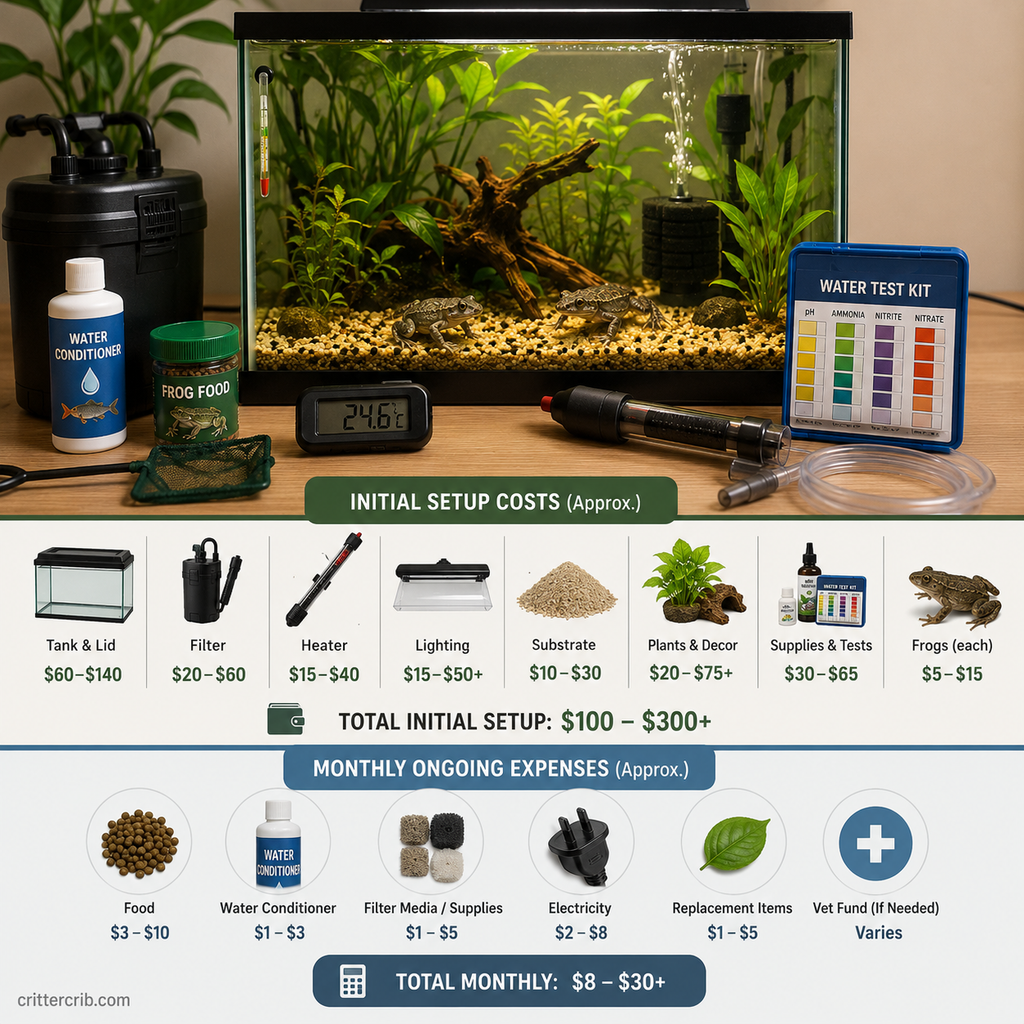
A reasonable starting budget is approximately $100 to $300 or more.
A basic setup may include:
| Item | Estimated Cost |
|---|---|
| African dwarf frogs | $10–$40+ |
| Aquarium | $30–$100+ |
| Aquarium lid | $15–$40 |
| Filter | $20–$60 |
| Heater | $15–$40 |
| Thermometer | $5–$15 |
| Lighting | $15–$50+ |
| Substrate | $10–$30 |
| Plants and decorations | $20–$75+ |
| Water conditioner | $5–$15 |
| Water test kit | $20–$50 |
| Food | $5–$15 |
| Gravel vacuum/siphon | $10–$25 |
| Bucket and maintenance supplies | $5–$20 |
You won’t necessarily need to purchase every item separately.
Aquarium kits often include a tank, lid, lighting, and filter. If you already keep aquariums, you may also own water-testing equipment, buckets, siphons, and other supplies.
At the other extreme, a heavily planted aquarium with premium lighting, natural wood, specialty substrate, and upgraded filtration can easily exceed these estimates.
Aquarium Cost
The aquarium itself will probably be one of your largest purchases.
Small glass aquariums can be relatively inexpensive, particularly during pet-store sales.
Although African dwarf frogs are tiny, avoid choosing the smallest tank simply because the animals fit inside it.
Larger aquariums generally provide:
- More stable water parameters
- More swimming space
- More room for hiding places
- Better opportunities for group housing
- More flexibility when arranging plants and decorations
A larger water volume also means that small changes in waste or water chemistry tend to have less dramatic effects than they would in a tiny container.
For a small group of African dwarf frogs, many keepers prefer an aquarium around 10 gallons or larger.
The exact size should reflect the number of frogs and overall aquarium setup.
Don’t Forget the Aquarium Lid
African dwarf frogs need access to the water’s surface because they breathe air.
Unfortunately, their ability to reach the surface also means they can potentially escape from an uncovered aquarium.
A secure lid is an important part of the setup.
Expect to spend roughly $15 to $40 depending on aquarium size and whether a lid is included with the tank.
Check for openings around filters, cables, and other equipment.
You want ventilation and equipment access without leaving obvious frog-sized escape routes.
Filter Cost
Filtration helps maintain water quality by providing mechanical and biological filtration.
A suitable aquarium filter might cost approximately $20 to $60.
African dwarf frogs aren’t powerful swimmers, so avoid creating excessively strong currents.
Depending on the aquarium, options may include:
- Sponge filters
- Adjustable internal filters
- Hang-on-back filters with controlled flow
- Other gentle aquarium filtration systems
Sponge filters are particularly attractive for simple frog setups because they provide biological filtration while producing relatively gentle water movement.
If using an air-powered sponge filter, remember to include the cost of:
- Air pump
- Airline tubing
- Check valve
- Sponge filter
Even inexpensive components add up when you’re building an aquarium from scratch.
Heater and Thermometer Cost
African dwarf frogs are tropical animals and generally require warm, stable water.
Unless your room remains consistently within an appropriate temperature range, you’ll probably need an aquarium heater.
A small heater may cost around $15 to $40.
You’ll also want a separate thermometer, which typically costs another $5 to $15.
Don’t rely entirely on the temperature setting printed on the heater.
A thermometer lets you verify the actual water temperature.
This is a small expense that can prevent a much bigger problem.
Substrate Cost
Substrate isn’t always the most expensive part of an aquarium, but choosing the right material matters.
Depending on the tank size and material, expect to spend around $10 to $30.
African dwarf frogs feed near the bottom of the aquarium and may accidentally ingest loose material while eating.
Avoid small gravel that’s easily swallowed.
Some keepers choose:
- Bare-bottom tanks
- Sand
- Appropriately sized smooth stones that can’t be swallowed
- Substrates suitable for planted aquariums
Each option has advantages and disadvantages.
Don’t choose substrate based only on appearance. Consider feeding behavior, cleaning, plant requirements, and the possibility of accidental ingestion.
Plants, Hides, and Decorations
This category can be as cheap or expensive as you make it.
A simple setup might require only $20 or $30 worth of decorations.
A heavily planted natural aquarium could cost $75, $100, or considerably more.
Useful additions include:
- Live aquarium plants
- Silk artificial plants
- Smooth caves
- Driftwood
- Frog-safe hides
- Broad-leaved plants
- Other aquarium-safe structures
African dwarf frogs benefit from places to rest and hide.
Plants near the upper portion of the aquarium can also provide convenient resting areas closer to the surface.
Inspect decorations for sharp edges or small openings where a frog could become trapped.
Lighting Cost
African dwarf frogs don’t need an expensive reef-style lighting system.
However, aquarium lighting makes the tank easier to observe and may be necessary if you’re growing live plants.
A basic aquarium light might cost around $15 to $50 or more.
Your actual cost depends heavily on your plants.
Low-light plants can keep equipment costs down, while demanding aquarium plants may require stronger lighting and additional care.
Use a consistent day-night schedule rather than leaving aquarium lights on continuously.
An inexpensive outlet timer can automate the schedule.
Water Conditioner Cost
If your tap water contains chlorine or chloramine, it needs to be appropriately treated before being added to an amphibian aquarium.
A bottle of aquarium water conditioner typically costs around $5 to $15 and can last quite a while in a small tank.
This is one of the less expensive recurring supplies.
Always follow the product’s dosing directions.
Water Testing Supplies
A water test kit is one expense new aquarium owners sometimes overlook.
It’s also one of the most useful things you can buy.
African dwarf frogs depend on stable, clean water. You need a way to monitor the aquarium’s nitrogen cycle and identify problems that may not be visible.
A freshwater liquid test kit may cost approximately $20 to $50.
At minimum, you’ll want to understand and monitor parameters such as:
- Ammonia
- Nitrite
- Nitrate
- pH
The aquarium should be properly cycled before frogs are introduced.
Buying animals before understanding the nitrogen cycle can turn an inexpensive pet into an expensive and stressful experience.
How Much Does African Dwarf Frog Food Cost?
Food is relatively inexpensive.
You might spend approximately $5 to $15 initially on appropriate foods, with ongoing monthly costs often remaining fairly low for a small group.
African dwarf frogs are carnivorous.
Foods may include:
- Quality aquatic frog or carnivore pellets
- Frozen mysis shrimp
- Frozen brine shrimp
- Blackworms from appropriate sources
- Other suitable animal-based foods
Diet should be nutritionally balanced rather than based entirely on one treat food.
Because the frogs are small, a package of food can last quite a while when stored properly.
Monthly Cost of Keeping African Dwarf Frogs
Once the aquarium is established, routine expenses are usually modest.
A rough monthly budget might look something like this:
| Expense | Approximate Monthly Cost |
|---|---|
| Food | $3–$10 |
| Water conditioner | $1–$3 |
| Filter/maintenance supplies | $1–$5 |
| Electricity | $2–$8 |
| Replacement supplies | $1–$5 |
| Estimated routine total | $8–$31 |
These numbers are intentionally approximate.
Electricity rates vary by location, and equipment consumption depends on heater size, lighting, filtration, room temperature, and aquarium size.
You also won’t buy every maintenance product monthly.
One month may cost almost nothing beyond food and electricity. Another month you might replace a heater or purchase new plants.
Annual Cost of African Dwarf Frog Care
If routine expenses average roughly $10 to $30 per month, you might spend around $120 to $360 per year after the initial setup.
Again, this doesn’t include significant veterinary expenses or major equipment replacement.
Your yearly spending could be lower if:
- You already own aquarium equipment
- You propagate your own plants
- Food lasts a long time
- Your equipment is energy efficient
It could be higher if:
- You maintain a larger aquarium
- You regularly purchase live or frozen specialty foods
- You replace plants frequently
- Equipment fails
- Veterinary care is required
Aquarium keeping tends to involve occasional surprise purchases.
It’s worth leaving some room in your budget.
Electricity Costs
An aquarium uses electricity continuously or for substantial portions of each day.
Equipment may include:
- Filter
- Air pump
- Heater
- Aquarium light
The heater can be one of the larger energy users because it cycles on and off to maintain water temperature.
Actual electricity costs depend on:
- Aquarium size
- Heater wattage
- Room temperature
- Desired water temperature
- Lighting wattage
- Filter type
- Local electricity rates
For a small African dwarf frog aquarium, electricity generally isn’t a huge expense, but it shouldn’t be ignored when estimating long-term costs.
Maintenance Supply Costs
Aquarium maintenance doesn’t require many expensive products.
Basic supplies might include:
- Dedicated bucket
- Gravel vacuum or siphon
- Algae scraper
- Water conditioner
- Water test kit
- Towels
- Feeding tongs or pipette
- Turkey baster for spot cleaning
Many of these are one-time or infrequent purchases.
A simple siphon and bucket can last for years.
Keep aquarium equipment dedicated to aquarium use. You don’t want household cleaning chemicals accidentally entering an amphibian tank.
Filter Replacement Costs
One common misconception is that aquarium filters require constantly replacing all filter media.
Biological filtration depends on beneficial microorganisms living on filter media and other aquarium surfaces.
Replacing everything at once can disrupt that biological community.
Maintenance requirements depend on your filter design.
Some disposable cartridges may need replacement, while reusable sponge and biological media can often be cleaned appropriately and used for extended periods.
Follow the requirements of your filtration system without automatically throwing away useful biological media every few weeks.
This can also reduce ongoing costs.
Veterinary Costs
Veterinary care is the hardest expense to predict.
African dwarf frogs are inexpensive animals, but that doesn’t mean veterinary treatment will be inexpensive.
A visit to an exotic-animal veterinarian may cost considerably more than the frog itself.
Depending on the clinic and problem, expenses may include:
- Examination fee
- Diagnostic testing
- Medication
- Follow-up visits
- Emergency care
Costs vary dramatically by location and clinic.
Before getting exotic pets, it’s worth checking whether there’s a veterinarian in your area who treats amphibians.
Having an emergency fund is much better than discovering your only option costs several hundred dollars when your frog is already sick.
Can You Save Money by Buying a Used Aquarium?
Absolutely.
Used aquarium equipment can significantly reduce setup costs.
Local marketplaces and aquarium groups often have:
- Tanks
- Stands
- Lights
- Filters
- Decorations
- Air pumps
However, inspect used equipment carefully.
Check glass tanks for:
- Cracks
- Chips
- Damaged silicone
- Previous leaks
It’s also important to know what a tank was previously used for.
Avoid equipment that may have been exposed to harmful chemicals or medications unless you know it can be safely cleaned and reused.
Never clean an amphibian aquarium with ordinary household soap and assume rinsing will automatically make it safe.
Aquarium Kits Can Reduce Startup Costs
Starter aquarium kits can be a cost-effective option.
A kit might include:
- Aquarium
- Lid
- Light
- Filter
Buying these items together can be cheaper than purchasing each one separately.
However, check what’s actually included.
You may still need:
- Heater
- Thermometer
- Water conditioner
- Test kit
- Substrate
- Plants
- Decorations
- Food
- Maintenance equipment
A “$50 aquarium kit” doesn’t necessarily mean you’ll have a complete frog habitat for $50.
Don’t Save Money by Skipping Water Testing
If you’re trying to keep costs down, there are plenty of places to economize.
Water testing shouldn’t be one of them.
Clear aquarium water can still contain dangerous levels of ammonia or nitrite.
A reliable test kit allows you to catch water-quality problems before they become obvious from your frogs’ behavior.
The same applies to a thermometer.
These aren’t decorative extras. They’re basic monitoring equipment.
Sample Budget: Affordable African Dwarf Frog Setup
Here’s an example of a relatively simple setup for someone starting from scratch:
| Item | Example Budget |
|---|---|
| Two African dwarf frogs | $20 |
| 10-gallon aquarium | $40 |
| Lid | $20 |
| Sponge filter and air pump | $30 |
| Heater | $20 |
| Thermometer | $8 |
| Light | $20 |
| Substrate | $15 |
| Plants and hides | $30 |
| Water conditioner | $10 |
| Test kit | $30 |
| Food | $10 |
| Siphon and bucket | $20 |
| Total | About $273 |
This isn’t a required shopping list or fixed price.
Sales, used equipment, aquarium kits, and supplies you already own can bring the total down considerably.
Premium equipment and elaborate aquascaping can push it much higher.
The point is that a $10 frog can easily require a setup costing more than $200.
Sample First-Year Cost
Using the example above:
- Initial setup: approximately $273
- Routine annual expenses: approximately $120–$360
- Estimated first-year total: approximately $393–$633
Veterinary expenses aren’t included.
Your actual cost could fall well outside this range.
Someone who already owns a suitable cycled aquarium may spend very little. Someone building an elaborate planted display aquarium could spend hundreds more.
Are African Dwarf Frogs Expensive Pets?
Compared with many exotic pets, African dwarf frogs are relatively inexpensive to maintain.
They don’t require:
- Large quantities of food
- Huge enclosures
- Expensive bedding replaced weekly
- Large heating systems
- Frequent equipment purchases
The biggest financial hurdle is usually setting up the aquarium correctly.
Once that investment is made, ongoing routine costs are manageable for many owners.
However, affordability shouldn’t be measured by the animal’s purchase price alone.
A $7 frog still deserves a properly cycled aquarium, clean water, nutritious food, appropriate equipment, and veterinary attention when necessary.
Common Expenses New Owners Forget
When planning your budget, don’t forget the small purchases.
They add up quickly.
Frequently overlooked expenses include:
- Aquarium lid
- Thermometer
- Water test kit
- Water conditioner
- Siphon
- Dedicated bucket
- Feeding tools
- Air tubing
- Check valve
- Outlet timer
- Replacement equipment
- Shipping costs for specialty foods
- Veterinary care
Planning for these expenses before buying the frogs makes the setup process much easier.
Frequently Asked Questions About African Dwarf Frog Costs
How much is an African dwarf frog at a pet store?
African dwarf frogs often cost approximately $5 to $15 each at pet stores, although prices vary by retailer and location.
Specialty stores and breeders may charge more.
How much does it cost to set up an African dwarf frog tank?
Starting from scratch, a basic African dwarf frog aquarium may cost roughly $100 to $300 or more.
The final price depends on aquarium size, filtration, lighting, plants, decorations, and whether you buy equipment new or used.
How much do African dwarf frogs cost per month?
Routine monthly expenses for a small established aquarium might average roughly $8 to $30.
Food, electricity, water conditioner, and maintenance supplies make up most recurring costs.
Veterinary care and unexpected equipment replacement aren’t included in this estimate.
Do African dwarf frogs need a heater?
African dwarf frogs require warm, stable water.
Whether you need a heater depends on the temperature of your home and aquarium, but many owners use an adjustable aquarium heater to maintain suitable conditions.
Use a separate thermometer to monitor the actual water temperature.
Do African dwarf frogs need a filter?
A properly selected filter helps maintain stable water quality and supports biological filtration.
Because African dwarf frogs aren’t particularly strong swimmers, filtration should provide adequate water movement without creating an excessively powerful current.
Is it cheaper to keep African dwarf frogs or fish?
It depends entirely on the species and setup.
A small African dwarf frog aquarium can be relatively inexpensive, but many of the basic expenses are identical to fishkeeping: aquarium, filter, heater, lighting, water conditioner, test kit, food, and maintenance equipment.
The frog’s low purchase price doesn’t eliminate the cost of maintaining healthy aquarium conditions.
Are African dwarf frogs good budget pets?
They can be relatively affordable once the aquarium is properly established.
However, they’re only a good choice if you can afford the correct initial setup, routine maintenance, nutritious food, and unexpected veterinary care.
Choosing an animal because it’s cheap to purchase isn’t a good reason to bring it home.
Final Thoughts
African dwarf frogs themselves are inexpensive. You may only spend around $5 to $15 for an individual frog.
The aquarium is where most of your initial budget goes.
Starting from scratch, expect to spend roughly $100 to $300 or more on the tank, filtration, heating, lighting, water-testing supplies, plants, hides, food, and maintenance equipment. After that, routine expenses are generally modest, often somewhere around $10 to $30 per month for a small setup.
The easiest way to keep costs under control is to plan the entire aquarium before buying the frogs.
Look for aquarium sales, consider safe used equipment, choose simple and reliable filtration, and spend your money on things that actually affect the animals’ health. A water test kit and dependable heater are much more valuable than an expensive decoration.
African dwarf frogs may be inexpensive pets, but good care still requires an investment.
Get the aquarium right from the beginning, and you’ll have a much better foundation for keeping these tiny aquatic frogs healthy for years.