Ferrets have a talent for turning ordinary household objects into entertainment.
A cardboard box becomes a tunnel. A blanket becomes a sleeping cave. A gap behind the furniture becomes the most interesting place in the entire house—especially if you don’t want them going there.
That curiosity is part of what makes ferrets such entertaining pets, but it also means their habitat needs more thought than simply buying a cage and adding food and water.
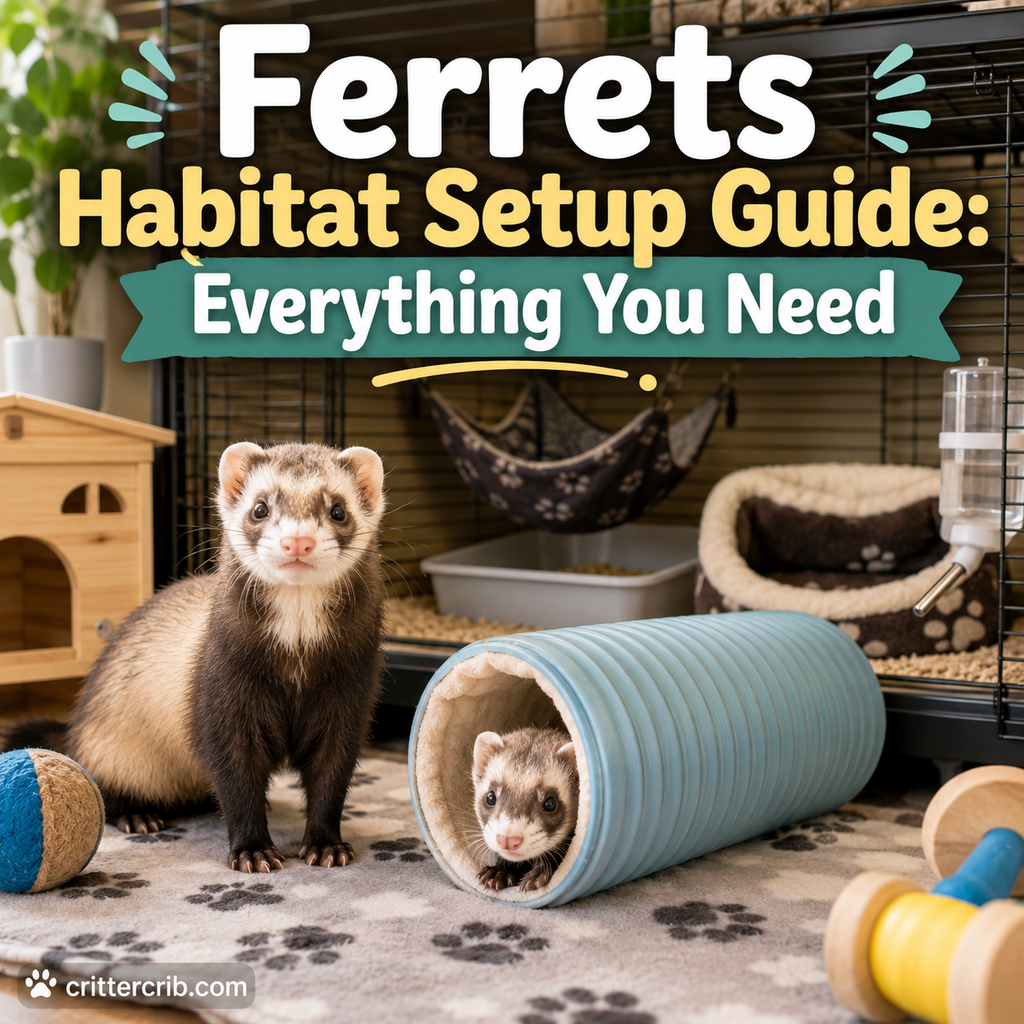
Ferrets need a secure home base with comfortable sleeping areas, litter boxes, food, fresh water, and enrichment. They also need regular opportunities to exercise and explore outside their enclosure in a properly ferret-proofed space.
Whether you’re preparing for your first ferrets or improving an existing setup, here’s what you need to create a safe, comfortable, and engaging ferret habitat.
What Does a Ferret Need in Its Habitat?
A good ferret habitat should provide several things at once.
Your ferrets need somewhere to:
- Sleep comfortably
- Eat and drink
- Use the bathroom
- Hide when they want privacy
- Move around safely
- Play and explore
- Interact with compatible companions
- Escape excessive heat
- Rest between periods of activity
The enclosure is best thought of as a secure home base rather than the ferret’s entire world.
Even a spacious enclosure doesn’t replace regular exercise and exploration.
Choosing the Right Ferret Enclosure
Ferrets are active animals, so their enclosure needs enough usable space for sleeping areas, litter boxes, food, water, and movement.
Multi-level enclosures are popular because they increase usable space without taking up as much floor area.
However, size isn’t the only consideration.
The enclosure also needs to be secure.
Ferrets are remarkably skilled at squeezing through openings, pushing doors, and discovering weaknesses you didn’t know existed.
Look for Secure Doors and Bar Spacing
Check the entire enclosure for potential escape routes.
Doors should latch securely enough that a determined ferret can’t push them open.
Bar spacing should be narrow enough to prevent your ferret from squeezing through or getting stuck.
Inspect:
- Doors
- Latches
- Corners
- Platforms
- Ramps
- Gaps around accessories
If you’re looking at an enclosure and wondering, “Could a ferret possibly fit through that?”
It’s worth assuming one will try.
Avoid Wire Flooring
Ferrets should have solid surfaces beneath their feet rather than spending their time walking directly on exposed wire flooring.
If an enclosure contains wire levels or ramps, appropriately cover or replace them with safe solid surfaces.
The goal is to create comfortable areas for walking, playing, eating, and sleeping.
Washable liners or other suitable materials can make solid levels easier to maintain.
Create Separate Areas Inside the Habitat
Organizing the enclosure into functional areas can make it more comfortable and easier to clean.
For example, you might have:
- A sleeping area
- A litter area
- A feeding area
- A water station
- A play or enrichment area
Ferrets often develop their own preferences, of course.
You can put a litter box in what seems like the perfect location only to discover your ferret has selected another corner.
When that happens, sometimes it’s easier to work with the ferret than against it.
Give Ferrets Comfortable Sleeping Areas
Ferrets sleep a lot.
Although they’re extremely energetic when awake, they may spend a large portion of the day sleeping.
Comfortable sleeping spaces are therefore an important part of habitat design.
Popular options include:
- Hammocks
- Fleece blankets
- Fabric sleep sacks
- Covered beds
- Tunnels
- Soft nesting areas
Many ferrets enjoy sleeping in enclosed spaces where they can burrow beneath fabric.
Provide More Than One Sleeping Option
If you have multiple ferrets, provide several resting places.
They may pile into one hammock anyway, but having choices prevents one sleeping location from becoming the only option.
Different heights and styles can also make the enclosure more interesting.
Inspect fabric accessories regularly for damage.
Loose threads, exposed stuffing, or pieces that are being chewed apart should be repaired or removed.
Ferrets Need Appropriate Litter Boxes
Many ferrets can learn to use litter boxes, although their accuracy may not match your expectations of a litter-trained cat.
Ferrets naturally tend to back into corners when eliminating.
That behavior can work in your favor.
Place litter boxes in corners your ferrets already prefer.
Choosing a Ferret Litter Box
The box should be large enough for the ferret to comfortably position its entire body inside.
A box that’s too small may result in the front half of the ferret being inside while the important half remains outside.
High-backed litter boxes can help contain mess while still allowing easy entry.
For some setups, rectangular boxes fit corners better than small triangular designs.
Choose Safe Litter
Use an absorbent, low-dust litter appropriate for ferrets.
Avoid heavily scented products intended to cover odors.
Strong fragrances aren’t necessary when litter areas are maintained properly and may be irritating.
Clumping litters can also create concerns if swallowed or tracked onto wet areas of the body, so choose litter specifically with ferret safety in mind.
Place Litter Boxes Where Ferrets Actually Go
You may have a carefully planned layout.
Your ferret has one too.
Watch which corners your ferrets naturally choose and place litter boxes there.
If they repeatedly use another location, adding a second litter box may be more effective than constantly trying to redirect them.
During free-roam playtime, provide litter boxes outside the main enclosure as well.
A ferret exploring an entire room isn’t necessarily going to stop what it’s doing and travel all the way back to its cage.
Provide Fresh Water at All Times
Ferrets should always have access to clean drinking water.
A sturdy water bowl can allow a natural drinking position, although some ferrets view water bowls as recreational equipment.
Choose a heavy bowl that’s difficult to tip.
Water bottles can sometimes be used as an additional source, but make sure your ferrets are actually drinking reliably.
Whatever method you choose:
- Check the water daily.
- Replace it regularly.
- Clean the container.
- Make sure every ferret can access it.
- Monitor for spills or contamination.
During warm weather, check water even more frequently.
Set Up a Dedicated Feeding Area
Ferrets need an appropriate carnivore diet designed around their nutritional requirements.
Place food somewhere clean and easily accessible.
Heavy ceramic or securely attached bowls can help prevent enthusiastic redecorating.
If you have multiple ferrets, make sure every animal can eat comfortably without being constantly displaced by another.
Keep food away from litter areas whenever possible.
What Should Ferrets Eat?
Ferrets are obligate carnivores.
Their digestive systems are designed for animal-based nutrition, and their diet should reflect that.
A suitable ferret diet should be high in appropriate animal protein and fat while being low in ingredients ferrets don’t digest well.
Diet choices can vary, and changing foods abruptly may cause digestive upset.
If you’re unsure what to feed, talk with a veterinarian experienced with ferrets about an appropriate diet for your animals’ age and health.
Fresh water should always accompany whatever feeding plan you choose.
Ferrets Need Daily Time Outside Their Enclosure
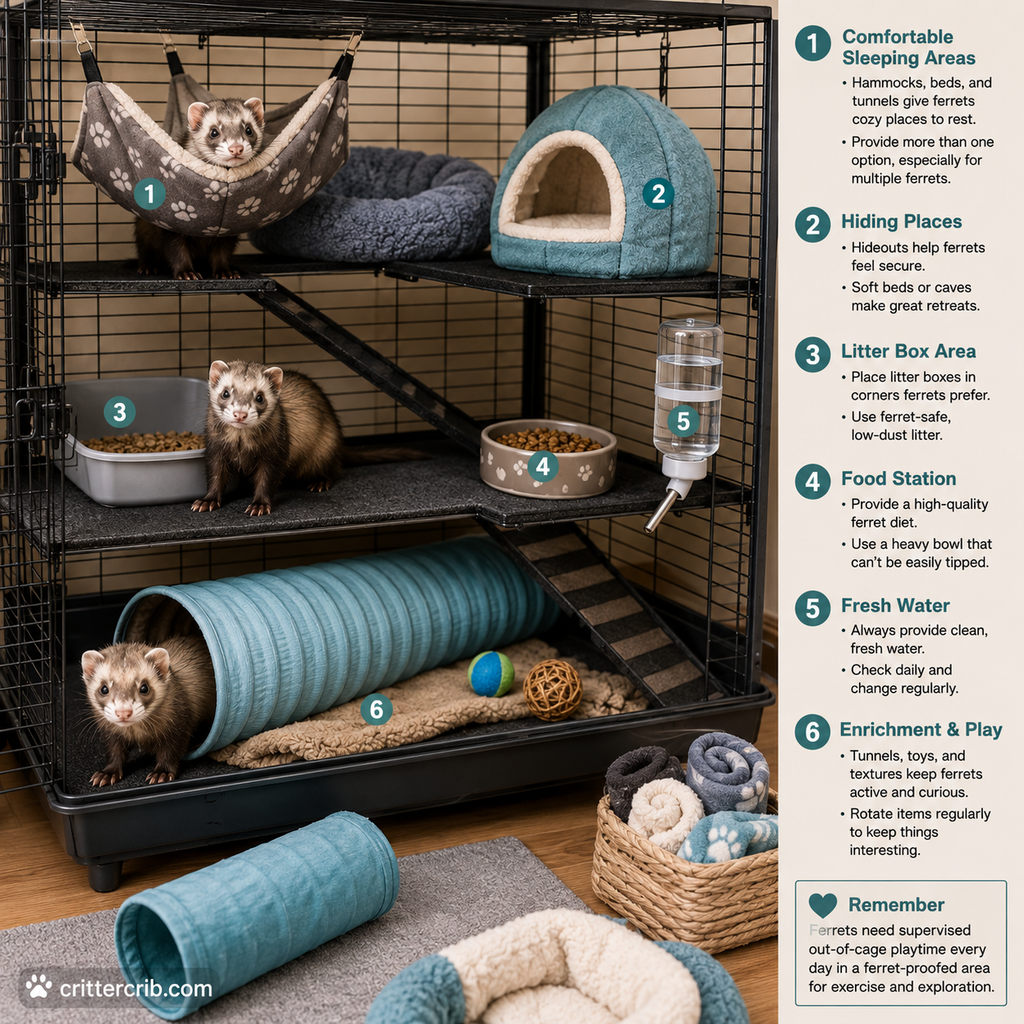
A good cage isn’t a substitute for exercise.
Ferrets need regular opportunities to leave their enclosure and explore a safe environment.
They run, climb, investigate, wrestle, tunnel, hide objects, and generally behave as though they’ve been assigned to inspect every square inch of the room.
Several hours of supervised activity outside the enclosure each day is a useful goal for many healthy ferrets.
The important word is safe.
Before opening the enclosure door, make sure the area has been thoroughly ferret-proofed.
How to Ferret-Proof a Room
Ferret-proofing requires looking at your home from a very low angle.
Get down near floor level.
You’ll probably notice gaps and openings that aren’t obvious when you’re standing.
Secure or block access to:
- Electrical cords
- Reclining furniture
- Rocking chairs
- Appliances
- Cabinets
- Heating vents
- Floor openings
- Small gaps beneath furniture
- Cleaning supplies
- Medications
- Houseplants
- Trash cans
- Rubber items
- Foam
- Small objects that could be swallowed
Ferrets can squeeze into remarkably tight spaces.
If their head fits through an opening, assume the rest of the animal may attempt to follow.
Be Extremely Careful With Recliners and Sofas
Reclining furniture can be particularly dangerous.
Ferrets may crawl inside the mechanical areas underneath chairs and sofas without anyone realizing they’re there.
Moving or closing the furniture can cause serious injury.
If ferrets have access to a room containing reclining furniture, prevent access to the internal mechanisms or choose another play area.
Always locate your ferrets before moving furniture they’re capable of entering.
Watch for Things Ferrets Might Swallow
Ferrets don’t just investigate with their noses.
Some chew objects that can become dangerous if pieces are swallowed.
Rubber and foam products deserve particular attention.
Items such as:
- Earplugs
- Foam pieces
- Rubber toys
- Pencil erasers
- Silicone items
- Soft shoe components
- Small plastic objects
can potentially become gastrointestinal foreign bodies.
An intestinal blockage is a veterinary emergency.
Choose toys carefully and inspect them frequently.
Give Ferrets Tunnels
Tunnels are almost guaranteed to get attention.
Ferrets naturally enjoy moving through enclosed spaces, and tunnels provide an easy form of enrichment.
You can use suitable:
- Ferret tunnels
- Flexible play tubes
- Cardboard boxes connected together
- Fabric tunnels
Make sure openings are large enough for your ferrets to move through without becoming stuck.
Avoid materials that break into pieces your ferret might swallow.
Cardboard Boxes Make Excellent Enrichment
You don’t need an expensive collection of toys to entertain a ferret.
A cardboard box can be remarkably effective.
Cut safe entrance holes and connect several boxes to create a temporary maze.
You can also place crumpled paper or other safe enrichment inside.
Inspect cardboard regularly and replace it when it becomes excessively dirty or damaged.
The fact that it’s inexpensive makes it easy to rotate.
Provide Safe Digging Opportunities
Digging can be another enjoyable activity for ferrets.
A supervised dig box can provide an outlet for this behavior without sacrificing your carpet or houseplants.
The material needs to be safe, clean, and unlikely to cause problems if your ferret investigates it closely.
Whatever substrate you choose, supervise the activity initially and make sure your ferret isn’t attempting to eat it.
Rotate Enrichment Occasionally
Ferrets are intelligent and curious.
An object that was fascinating last week may eventually become part of the furniture.
Rotating enrichment can renew interest.
You don’t need to replace everything simultaneously.
Try periodically changing:
- Tunnels
- Boxes
- Safe toys
- Digging activities
- Play layouts
- Foraging activities
Leaving some familiar items in place also helps maintain a sense of security.
The goal is novelty without making the environment constantly unpredictable.
Ferrets Often Enjoy Playing Together
Compatible ferrets can provide each other with exercise and social interaction.
You may see them:
- Chase each other
- Wrestle
- Pounce
- Hide
- Follow each other through tunnels
- Sleep together
Ferret play can look surprisingly intense to someone who hasn’t seen it before.
They may leap sideways, arch their backs, bounce around, and wrestle enthusiastically.
This can be completely normal.
What Is the Ferret “War Dance”?
One of the most entertaining ferret behaviors is commonly called the “weasel war dance.”
An excited ferret may:
- Bounce sideways
- Arch its back
- Leap unpredictably
- Twist its body
- Run in seemingly random directions
- Make excited vocalizations
It can look chaotic.
That’s because it is.
In the right context, this is often playful, excited behavior rather than aggression.
Make sure the play area is clear of hazards because an excited ferret isn’t necessarily paying much attention to where it’s going.
Do Ferrets Need Companions?
Ferrets can be highly social animals, and many enjoy living with compatible ferret companions.
A bonded pair or group can play, sleep, and interact together.
However, compatibility isn’t automatic.
New ferrets should be introduced carefully, and their interactions should be monitored.
Individual personality, age, health, and previous social experience can influence how introductions go.
A ferret living without another ferret will generally need plenty of appropriate interaction and enrichment from its human family.
Don’t Forget Hiding Places
Ferrets may be outgoing, but they still appreciate places where they can retreat.
Provide enclosed sleeping and hiding areas where they can rest without being disturbed.
Hides can include:
- Sleep sacks
- Covered beds
- Tunnels
- Boxes
- Fabric cubes
- Enclosed hammocks
A ferret that wants to sleep shouldn’t have to remain exposed in the middle of the enclosure.
Keep the Habitat at a Comfortable Temperature
Ferrets generally tolerate cooler conditions better than excessive heat.
Their coats and limited ability to cool themselves can make high temperatures dangerous.
Keep the enclosure:
- Out of direct sunlight
- Away from hot windows
- Away from heaters
- In a well-ventilated room
- Somewhere with a stable, comfortable temperature
During warm weather, monitor the room carefully.
Don’t assume that being indoors automatically protects a ferret from overheating.
Signs a Ferret May Be Overheating
Heat stress can become serious.
Possible warning signs include:
- Heavy or unusual panting
- Lethargy
- Weakness
- Excessive salivation
- Unusual redness
- Difficulty moving
- Collapse
If you suspect your ferret is overheating, move it to a cooler environment and contact a veterinarian promptly.
Severe heat stress is an emergency.
Don’t use extreme cooling methods such as plunging an overheated ferret into ice water.
Where Should You Put a Ferret Enclosure?
Choose a location where your ferrets can be part of household life without being constantly disturbed.
A good location should have:
- Stable temperatures
- Good ventilation
- No direct sunlight
- Protection from other pets
- No strong drafts
- Reasonable household activity
- Easy access for cleaning and feeding
Avoid isolated areas that become extremely hot or cold, such as some garages, enclosed porches, or unconditioned rooms.
Measure the actual conditions rather than guessing.
Protect Ferrets From Other Pets
Ferrets may interact with other household animals in some circumstances, but don’t assume every dog or cat will be safe around them.
Predatory behavior, rough play, or simple differences in size can cause serious injuries.
Small pets such as hamsters, gerbils, rabbits, guinea pigs, and birds should be securely separated from ferrets.
A ferret’s playful curiosity can be dangerous to prey animals.
Physical barriers are safer than relying entirely on supervision.
How Often Should You Clean a Ferret Habitat?
Ferret habitats require regular cleaning, particularly litter areas.
A practical routine might include:
Daily
- Scoop or clean litter boxes.
- Remove obvious messes.
- Check food.
- Replace or refresh water.
- Inspect bedding.
- Check for damaged toys.
- Look for hidden food or unsafe objects.
Weekly or As Needed
- Wash bedding and hammocks.
- Clean enclosure surfaces.
- Wash food and water dishes thoroughly.
- Clean litter boxes more extensively.
- Inspect ramps, platforms, and accessories.
- Replace damaged enrichment.
Your exact schedule will depend on the number of ferrets, enclosure size, litter habits, and bedding system.
How to Control Ferret Odor
Ferrets naturally have a musky scent.
Regular cleaning can control environmental odors, but trying to remove every trace of a ferret’s natural smell isn’t realistic or necessary.
Focus on:
- Cleaning litter boxes regularly
- Washing bedding
- Cleaning soiled surfaces
- Keeping food areas clean
- Maintaining good ventilation
Avoid covering odors with strong fragrances.
Overbathing ferrets isn’t a good odor-control strategy either and can dry their skin and coat.
A clean environment matters more than making the habitat smell like perfume.
Keep the Habitat Safe During Cleaning
Cleaning time creates opportunities for escape.
Before opening large enclosure doors or removing accessories, know where every ferret is.
If they’re outside the enclosure during cleaning, place them in a secure ferret-proofed room or playpen.
Check cleaning products carefully and keep ferrets away from freshly treated surfaces until they’re safe.
Rinse accessories thoroughly when appropriate.
Create a Ferret Emergency Carrier
A secure carrier should be part of your setup from the beginning.
Don’t wait until a veterinary emergency to figure out how you’re going to transport your ferret.
Choose a carrier that’s:
- Secure
- Well ventilated
- Easy to clean
- Appropriately sized
- Difficult to escape from
Allow your ferrets to investigate it occasionally so the carrier isn’t completely unfamiliar when you need it.
Find a Ferret-Experienced Veterinarian
Habitat preparation isn’t only about furniture and accessories.
Before bringing ferrets home, locate a veterinarian who regularly treats them.
Ferrets have specific medical needs, and not every general veterinary practice is equally experienced with their care.
Ask about:
- Routine wellness examinations
- Vaccinations appropriate to your location and ferret
- Parasite prevention when applicable
- Spaying or neutering status
- Emergency care
- Common ferret health conditions
Keep the clinic’s contact information somewhere easy to access.
Ferret Habitat Setup Checklist
Before bringing your ferrets home, make sure the essentials are ready.
You’ll generally need:
- A spacious, secure enclosure
- Solid flooring and platforms
- Comfortable bedding
- Hammocks or sleep sacks
- Multiple sleeping areas
- Appropriate litter boxes
- Ferret-safe litter
- Food bowls
- Fresh water
- An appropriate ferret diet
- Safe tunnels
- Chew-resistant enrichment
- Cardboard boxes
- Safe toys
- A ferret-proofed exercise area
- A secure carrier
- Cleaning supplies
- Access to a ferret-experienced veterinarian
Having everything ready makes the first few days much easier.
Setting Up the Habitat Step by Step
If you’re starting with an empty enclosure, work from the essentials outward.
1. Secure the Enclosure
Check doors, latches, bar spacing, platforms, and potential escape points.
2. Cover Unsafe Flooring
Make sure walking and resting surfaces are solid and comfortable.
3. Add Sleeping Areas
Install hammocks, blankets, sleep sacks, or other safe resting spaces.
4. Position Litter Boxes
Start with corners that make sense, then adjust according to your ferrets’ preferences.
5. Add Food and Water
Keep the feeding area clean and away from litter boxes when possible.
6. Add Hides and Tunnels
Give your ferrets opportunities to move through enclosed spaces and retreat when they want privacy.
7. Introduce Safe Enrichment
Provide appropriate toys, boxes, tunnels, and other activities.
8. Prepare the Exercise Area
Ferret-proof the room before the ferrets arrive.
9. Inspect Everything at Ferret Level
Get down near the floor and look for hazards.
10. Recheck Security
Close every door and test every latch.
Your ferrets will perform their own inspection soon enough.
Common Ferret Habitat Setup Mistakes
A few mistakes appear frequently in first-time setups.
Avoid:
- Using an enclosure that’s too small
- Relying on the enclosure as the only exercise space
- Leaving exposed wire flooring
- Using insecure door latches
- Providing too few litter boxes
- Using heavily scented litter
- Leaving dangerous rubber or foam objects accessible
- Allowing access to reclining furniture
- Leaving electrical cords exposed
- Providing unsafe toys that break into swallowable pieces
- Keeping the enclosure in direct sunlight
- Ignoring warm room temperatures
- Allowing access to smaller prey animals
- Providing nowhere private to sleep
- Assuming “supervised” means a room doesn’t need ferret-proofing
A good setup prevents problems rather than relying on catching your ferret immediately before something goes wrong.
Frequently Asked Questions About Ferret Habitats
Do Ferrets Need a Cage?
Ferrets benefit from having a secure enclosure that provides a safe home base for sleeping, eating, litter use, and times when they can’t be supervised.
However, they also need regular exercise and enrichment outside the enclosure in a ferret-proofed environment.
How Long Should Ferrets Be Out of Their Cage?
Ferrets need substantial opportunities for activity and exploration each day.
Several hours outside the enclosure in a safe environment is a reasonable goal for many healthy ferrets.
Individual needs can vary depending on age and health.
Do Ferrets Need Bedding?
Ferrets need comfortable sleeping materials and solid resting surfaces.
Washable blankets, hammocks, sleep sacks, and other safe fabrics are commonly used.
Inspect fabric frequently for chewing damage and loose threads.
Can Ferrets Be Litter Trained?
Many ferrets can learn to use designated litter areas, although accidents may still happen.
Placing litter boxes in corners they naturally choose often produces better results than trying to force them to use an inconvenient location.
Do Ferrets Need a Wheel?
Ferrets don’t require exercise wheels like hamsters and some other small rodents.
They benefit much more from safe floor space where they can run, tunnel, wrestle, climb, and explore.
Do Ferrets Need Toys?
Ferrets benefit from enrichment, but “toys” can be surprisingly simple.
Tunnels, cardboard boxes, safe digging activities, and interactive play can provide excellent enrichment.
Whatever you provide should be inspected for pieces that could be chewed off and swallowed.
Can Ferrets Roam Freely Around the House?
Some owners provide extensive free-roam time, but the environment needs to be thoroughly ferret-proofed.
A normal room can contain numerous hidden hazards, including recliners, appliances, electrical cords, foam, rubber objects, small openings, and toxic substances.
It’s often easier to create a dedicated ferret-safe area than to make an entire home completely ferret-proof.
Where Should Ferrets Sleep?
Ferrets generally appreciate soft, enclosed sleeping spaces.
Hammocks, blankets, fabric tunnels, covered beds, and sleep sacks can all provide comfortable options.
Many compatible ferrets also enjoy sleeping together.
Building a Habitat Around Ferret Behavior
The best ferret habitat isn’t necessarily the one with the most accessories.
It’s the one that works with the way ferrets naturally behave.
They want to investigate.
They want to tunnel.
They want comfortable places to sleep.
They want to run around, play, explore, and occasionally attempt to enter places that appear physically impossible for them to reach.
A secure enclosure gives them a comfortable home base, while a thoroughly ferret-proofed play area gives them the freedom to exercise and explore safely.
Start with the essentials: secure housing, solid surfaces, sleeping areas, litter boxes, appropriate food, fresh water, and safe enrichment. Then watch how your ferrets actually use the space.
You’ll probably make adjustments.
That’s normal.
The most useful thing you can add to a ferret habitat isn’t another expensive accessory. It’s an understanding of how your individual ferrets behave—and a setup that lets them be curious without letting that curiosity get them into trouble.