Freshwater shrimp always seem to be eating something.
Watch a healthy shrimp tank for a few minutes and you’ll see them picking at plants, scraping surfaces, exploring driftwood, and combing through substrate with their tiny legs. It can look as though they’re finding invisible snacks everywhere—and, in a mature aquarium, they often are.
So, what do freshwater shrimp eat?
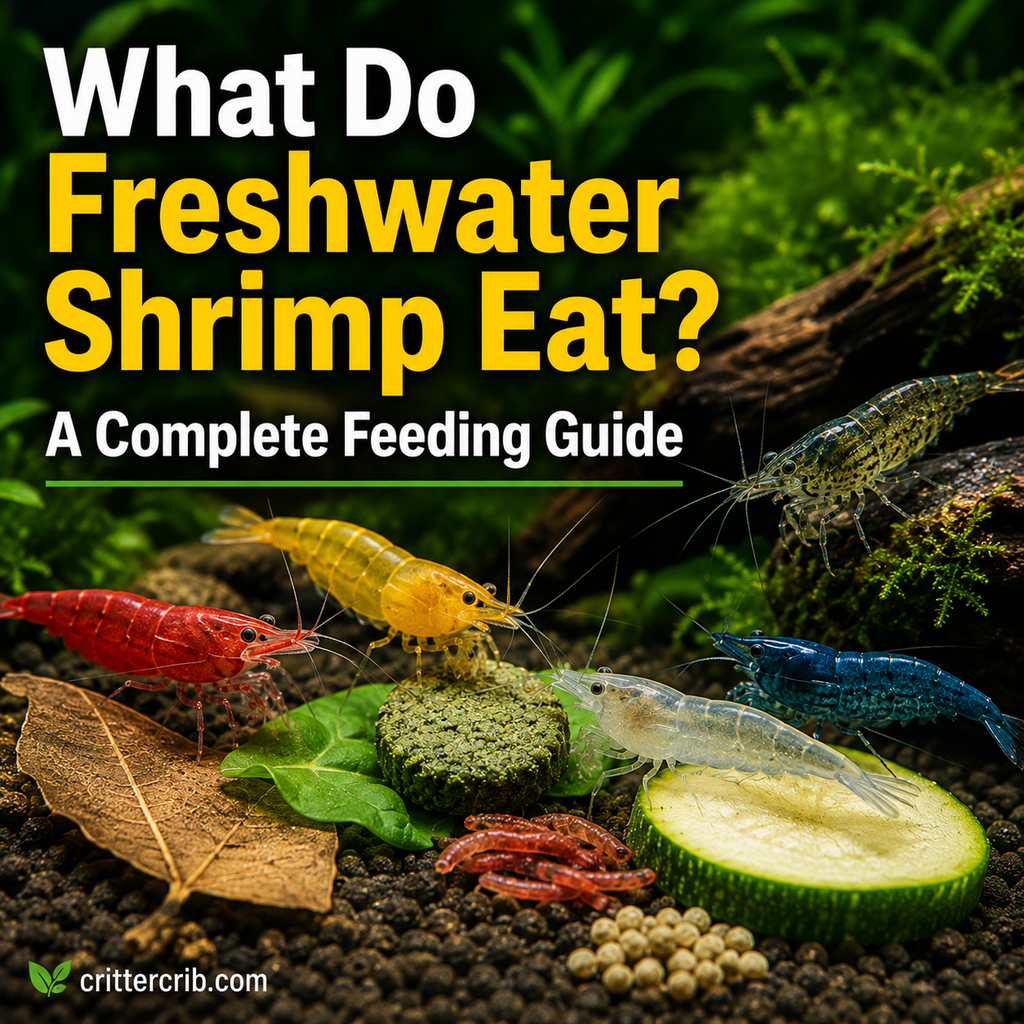
Most commonly kept freshwater aquarium shrimp are omnivorous scavengers that eat biofilm, algae, decaying plant material, microorganisms, and small bits of organic matter. In an aquarium, they can also be fed quality shrimp foods, algae-based foods, appropriate vegetables, and occasional protein-rich foods.
The tricky part isn’t convincing shrimp to eat. It’s figuring out how much additional food they actually need.
Because shrimp are small and constantly forage, overfeeding can cause more problems than underfeeding in an established aquarium.
Here’s how to build a balanced feeding routine.
What Do Freshwater Shrimp Eat Naturally?
Freshwater shrimp spend much of their day grazing.
Rather than waiting for one large meal, they continually pick at surfaces looking for tiny edible material.
Depending on the species and environment, their natural diet may include:
- Biofilm
- Algae
- Microorganisms
- Decaying leaves
- Dead plant material
- Tiny pieces of animal matter
- Other organic debris
This constant grazing behavior is why mature planted aquariums can work so well for shrimp.
Every leaf, rock, piece of driftwood, and aquarium wall provides additional surface area where microorganisms and biofilm can develop.
To us, a piece of old driftwood may look like decoration.
To a shrimp, it can be an all-day buffet.
Biofilm Is an Important Shrimp Food
Biofilm is one of the most valuable naturally occurring foods in a shrimp aquarium.
It’s a thin community of microorganisms and organic material that develops on submerged surfaces.
You’ll find biofilm on:
- Plants
- Rocks
- Driftwood
- Aquarium glass
- Filter surfaces
- Decorations
- Leaf litter
- Substrate
Shrimp continuously graze these surfaces.
Biofilm is particularly useful for baby shrimp because newly hatched shrimplets need access to tiny foods they can eat while remaining relatively close to cover.
This is one reason an established aquarium is generally better for shrimp than a completely sterile-looking new setup.
Do Freshwater Shrimp Eat Algae?
Yes, many freshwater shrimp eat some types of algae.
Cherry shrimp and Amano shrimp are well known for grazing on algae and other organic material throughout the aquarium.
However, shrimp aren’t guaranteed to eliminate every algae problem.
Different types of algae vary in texture and palatability. Shrimp may enthusiastically graze one type while mostly ignoring another.
Their algae consumption also depends on what other food is available.
Think of shrimp as helpful grazers rather than a replacement for proper aquarium maintenance.
If algae is growing excessively, investigate the underlying cause instead of simply adding more shrimp.
Do Shrimp Need Additional Food?
Usually, yes—but the amount varies enormously between aquariums.
A mature planted tank with abundant biofilm, algae, leaf litter, and a relatively small shrimp population may provide a significant amount of natural food.
A newer or very clean aquarium may provide much less.
Additional feeding becomes more important when:
- You have a large shrimp colony
- The aquarium is relatively new
- Natural algae is limited
- Biofilm is scarce
- Shrimp quickly consume everything you offer
- You’re keeping shrimp with other animals competing for food
Observe the aquarium rather than following a rigid feeding schedule.
The shrimp themselves can tell you quite a bit about how much food is available.
Best Foods for Freshwater Shrimp
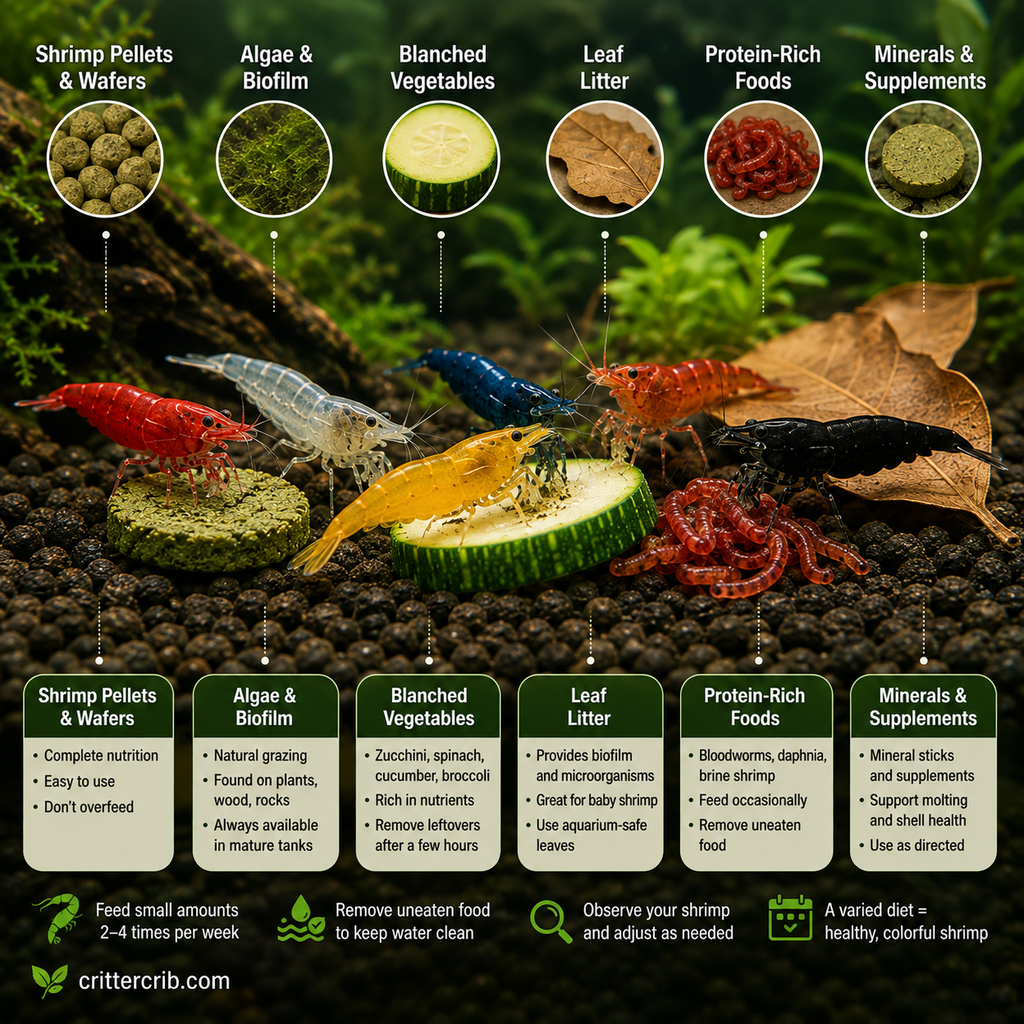
There’s no need to rely on one food exclusively.
A combination of natural grazing and several appropriate prepared foods can provide variety.
Shrimp Pellets and Wafers
Commercial foods formulated specifically for freshwater shrimp are one of the easiest options.
These foods are often designed to sink quickly so shrimp can reach them.
Depending on the formula, they may contain combinations of:
- Algae
- Spirulina
- Plant ingredients
- Aquatic proteins
- Minerals
- Other nutrients
Choose a reputable food intended for the shrimp you’re keeping.
A single pellet can feed more shrimp than you might expect, so start small.
Algae Wafers
Shrimp may readily eat algae wafers.
They’re convenient because they sink and allow several shrimp to graze together.
However, not every algae wafer has the same ingredients.
Check the label and treat wafers as one part of the diet rather than assuming they’re nutritionally complete simply because “algae” appears in the name.
Break larger wafers into smaller pieces when feeding a small colony.
Blanched Vegetables
Freshwater shrimp may also enjoy certain vegetables.
Common options include:
- Zucchini
- Spinach
- Cucumber
- Broccoli
- Green beans
- Carrot
Blanching harder vegetables briefly can soften them enough for shrimp to graze more easily.
Let the food cool completely before placing it in the aquarium.
Vegetables should supplement the diet rather than become the entire feeding plan.
Leaf Litter
Dried leaves can provide both food and habitat.
As aquarium-safe leaves break down, microorganisms and biofilm colonize their surfaces. Shrimp graze on this material over an extended period.
Depending on your setup, aquarists commonly use suitable dried leaves such as Indian almond leaves.
Leaf litter also creates additional hiding areas for young shrimp.
Only use leaves known to be aquarium safe and free from pesticides or other contaminants.
Avoid collecting random leaves from areas that may have been sprayed with chemicals.
Protein-Rich Foods
Shrimp need protein as part of a balanced diet.
Many commercial shrimp foods already contain appropriate protein, so you don’t necessarily need to add separate high-protein meals frequently.
Occasional options may include appropriately sized portions of:
- Quality shrimp food with animal protein
- Brine shrimp
- Daphnia
- Bloodworms
- Other suitable aquarium foods
Protein-rich foods can be very appealing to shrimp.
That doesn’t mean they should receive unlimited amounts.
Feed sparingly and remove significant leftovers.
How Often Should You Feed Freshwater Shrimp?
There’s no universal schedule.
For many established shrimp aquariums, supplemental feeding a few times per week may be enough.
Other colonies may require small daily feedings.
It depends on:
- Number of shrimp
- Shrimp species
- Aquarium maturity
- Amount of biofilm
- Algae availability
- Presence of live plants
- Other tank inhabitants
- Type of food
A small colony in a mature planted aquarium may need surprisingly little supplemental food.
A large breeding colony may consume considerably more.
Start conservatively and adjust based on what you observe.
How Much Should You Feed Shrimp?
One of the easiest shrimp-keeping mistakes is feeding based on the size of the aquarium rather than the number of shrimp.
A 20-gallon aquarium containing 10 shrimp doesn’t need the same amount of food as a 20-gallon aquarium containing 200 shrimp.
Offer a small portion and watch what happens.
Ideally, shrimp should gather around the food and gradually consume it without large quantities remaining for many hours.
If substantial amounts of food are repeatedly left behind, reduce the portion.
If the colony swarms the food and consumes it rapidly, you may need to increase the amount slightly or feed more frequently.
Small adjustments are better than suddenly doubling the food.
Why Overfeeding Shrimp Can Be Dangerous
The biggest concern with excessive feeding isn’t that an individual shrimp will simply eat too much.
It’s what uneaten food does to the aquarium.
Excess food decomposes and contributes additional organic waste.
That can lead to:
- Deteriorating water quality
- Increased ammonia risk
- Higher nitrate
- Bacterial blooms
- Excessive detritus
- Pest snail population increases
- Other unwanted organisms
Shrimp can be sensitive to sudden changes in water conditions.
Maintaining stability is more important than making sure food is constantly visible.
When in doubt, feed a little less and observe.
Should You Remove Uneaten Shrimp Food?
For foods that break down quickly, yes.
Vegetables and protein-rich foods shouldn’t sit in the aquarium indefinitely.
A practical approach is to check the food after a few hours. If a substantial amount remains and the shrimp are no longer interested, remove it.
Some foods are intended to remain longer.
Aquarium-safe leaf litter, for example, decomposes slowly and supports biofilm development over time. It doesn’t need to be treated like a slice of zucchini.
Use common sense based on the food you’re offering.
What Do Cherry Shrimp Eat?
Cherry shrimp, including the many color varieties of Neocaridina davidi, are opportunistic omnivorous grazers.
Their diet can include:
- Biofilm
- Soft algae
- Microorganisms
- Decaying plant material
- Commercial shrimp food
- Algae wafers
- Appropriate vegetables
- Small amounts of protein-rich foods
Cherry shrimp are constantly searching for food.
In a mature planted aquarium, natural grazing can make up a substantial part of their daily diet.
Supplement with small amounts of appropriate food based on colony size and how much natural food is available.
What Do Amano Shrimp Eat?
Amano shrimp are famous for their appetite for certain algae.
They’re active grazers and can be useful members of a planted aquarium.
Their diet can include:
- Algae
- Biofilm
- Detritus
- Commercial shrimp foods
- Algae wafers
- Appropriate vegetables
- Leftover fish foods
Don’t assume Amano shrimp can survive indefinitely on whatever algae happens to grow in the tank.
If natural food is limited, provide supplemental nutrition.
Amano shrimp are larger than many dwarf shrimp and may also be more assertive at feeding time.
What Do Ghost Shrimp Eat?
Ghost shrimp are also opportunistic omnivores and scavengers.
Depending on the species sold under the “ghost shrimp” name, they may eat:
- Biofilm
- Algae
- Detritus
- Fish food
- Shrimp pellets
- Small animal matter
- Decaying plant material
One complication is that several different shrimp species may be sold under the general name “ghost shrimp.”
Try to identify what you actually have because adult size, behavior, and care requirements may differ.
What Do Baby Shrimp Eat?
Baby shrimp, often called shrimplets, spend much of their early lives grazing.
Biofilm and microorganisms are particularly valuable because they’re available across surfaces throughout the aquarium.
This is why a mature shrimp tank with plants, mosses, wood, and other textured surfaces can be such a good nursery.
Shrimplets can graze without traveling far from shelter.
Some keepers also use powdered foods designed for baby shrimp.
These can distribute tiny food particles throughout the aquarium, but they should be used carefully.
Powdered food is extremely easy to overfeed because you can’t always see where it ends up.
Use very small amounts.
Should You Feed Shrimp Every Day?
Not necessarily.
If your aquarium contains plenty of natural food, skipping supplemental feeding occasionally is generally different from leaving an animal without access to food.
Shrimp may continue grazing on biofilm, algae, and organic material throughout the tank.
In fact, occasional days without prepared food can encourage natural foraging and reduce the amount of excess nutrients entering the aquarium.
The important question isn’t, “Did I drop food in today?”
It’s, “Does this aquarium provide enough appropriate nutrition overall?”
Do Shrimp Eat Dead Fish?
Shrimp are scavengers and may feed on dead animals.
If a fish or shrimp dies in the aquarium, you may see other shrimp gathering around it.
That doesn’t necessarily mean they killed it.
However, you should generally remove dead fish or unexplained shrimp deaths rather than leaving a large carcass to decompose.
A death can also be a warning sign.
If an animal dies unexpectedly, check:
- Ammonia
- Nitrite
- Nitrate
- Temperature
- Recent water changes
- Possible contamination
- Other unusual symptoms
Shrimp cleaning up a carcass doesn’t address whatever caused the death.
Do Shrimp Eat Fish Waste?
This is a common misconception.
Shrimp may pick through detritus and organic material around the aquarium, but they shouldn’t be viewed as animals that make fish waste disappear.
Keeping shrimp doesn’t eliminate the need for:
- Filtration
- Water changes
- Appropriate stocking
- Water testing
- Aquarium maintenance
Shrimp produce their own waste too.
They’re part of the aquarium ecosystem, not a substitute for maintaining it.
Can Freshwater Shrimp Eat Fish Food?
Yes, many freshwater shrimp will eat suitable fish food.
They may happily consume:
- Sinking pellets
- Flakes that reach the bottom
- Frozen foods
- Other appropriately sized foods
The issue is nutrition.
A food formulated for another animal may not provide the ideal balance as a shrimp’s only prepared food.
If shrimp are a major part of your aquarium, it’s worth providing food designed with their nutritional needs in mind.
Feeding Shrimp in a Community Aquarium
Feeding becomes more complicated when shrimp live with fish.
Fast-moving fish may consume most of the food before it reaches the shrimp.
You can help by:
- Using sinking shrimp foods
- Feeding in areas where shrimp gather
- Placing food near plants or cover
- Feeding small amounts in more than one location
- Observing whether shrimp actually reach the food
Don’t compensate by dramatically overfeeding the entire aquarium.
The goal is to make food accessible, not bury the tank in leftovers.
Using a Shrimp Feeding Dish
A small feeding dish can make shrimp feeding easier.
Place pellets, powdered food, or other appropriate foods in the dish rather than directly on the substrate.
Benefits can include:
- Easier observation
- Less food disappearing into substrate
- Easier cleanup
- Better portion control
You’ll also get an excellent view when half the colony decides one tiny pellet is suddenly the most important object in the aquarium.
A feeding dish isn’t necessary, but it can be useful.
Foods to Avoid Feeding Freshwater Shrimp
Not everything from your kitchen belongs in a shrimp aquarium.
Avoid:
- Seasoned foods
- Salty foods
- Foods cooked with oil
- Processed human snacks
- Sugary foods
- Moldy or spoiled foods
- Vegetables exposed to unsafe pesticides
- Random plants you haven’t identified as aquarium safe
- Large quantities of high-protein food
Be especially cautious with anything that could introduce contaminants.
Shrimp can be sensitive to substances that fish might tolerate differently.
When you’re unsure whether something is safe, don’t experiment with your colony.
Copper and Shrimp Food
Copper deserves some context.
Shrimp require trace amounts of copper as a nutrient, and properly formulated commercial shrimp foods may contain it.
The concern is excessive copper exposure.
Certain medications and other aquarium products can contain copper at concentrations that may be dangerous to invertebrates.
Don’t reject a properly formulated shrimp food simply because copper appears among its trace nutrients.
Instead, be cautious with medications, fertilizers, and other products that aren’t specifically intended for use around shrimp.
Always follow manufacturer instructions.
How to Create a Simple Shrimp Feeding Routine
A good routine doesn’t need to be complicated.
Try this approach:
- Allow shrimp to graze naturally throughout the aquarium.
- Offer a small amount of quality shrimp food several times per week.
- Add occasional vegetable or protein-based variety.
- Observe how quickly the colony consumes the food.
- Remove significant leftovers that can spoil.
- Adjust portions as the colony grows.
- Monitor water quality regularly.
Your routine will probably change over time.
Ten shrimp and 150 shrimp have very different appetites.
Signs Your Shrimp May Be Eating Well
Healthy feeding behavior often involves frequent grazing.
You may see shrimp:
- Picking continuously at surfaces
- Gathering around supplemental food
- Moving between plants and decorations
- Grazing on driftwood and leaf litter
- Exploring the substrate
Don’t judge nutrition solely by how aggressively shrimp attack prepared food.
Shrimp surrounded by abundant natural food may show less urgency because they’ve already been grazing all day.
Frequently Asked Questions About Feeding Freshwater Shrimp
What is the best food for freshwater shrimp?
A quality commercial shrimp food combined with natural biofilm, algae, and appropriate supplemental foods provides a practical, varied diet for many commonly kept freshwater shrimp.
How often should I feed my shrimp?
Many established shrimp colonies can be supplemented several times per week, although feeding frequency depends on colony size and the amount of natural food available.
Can shrimp survive on algae alone?
Some shrimp consume algae readily, but relying exclusively on algae may not provide consistent, balanced nutrition. Natural grazing should generally be supplemented when necessary.
Do shrimp eat vegetables?
Many freshwater shrimp will graze on suitable vegetables such as blanched zucchini, spinach, green beans, and broccoli. Feed small portions and remove leftovers before they spoil.
Do freshwater shrimp eat bloodworms?
Many omnivorous freshwater shrimp will eat bloodworms. Treat them as an occasional protein-rich food rather than the main diet.
What do baby freshwater shrimp eat?
Baby shrimp rely heavily on biofilm, microorganisms, and other tiny foods growing throughout a mature aquarium. Appropriately formulated powdered baby-shrimp foods can also be used sparingly.
How do I know if I’m overfeeding my shrimp?
Repeatedly finding substantial uneaten food, deteriorating water quality, excessive detritus, or rapidly increasing pest snail populations can indicate that too much food is entering the aquarium.
Final Thoughts
So, what do freshwater shrimp eat?
Quite a lot—just in very small portions.
Biofilm, algae, microorganisms, decaying plant material, and other organic matter provide much of the natural grazing that makes shrimp so interesting to watch. Quality shrimp pellets, algae-based foods, vegetables, and occasional protein-rich foods can fill in the nutritional gaps.
The key is moderation.
A healthy shrimp aquarium doesn’t need food raining down every day. Build a mature environment with plenty of surfaces for natural grazing, feed according to the size of your colony, and pay attention to what gets eaten.
Once you start watching closely, you’ll realize your shrimp probably spend far more time thinking about food than you spend feeding them.