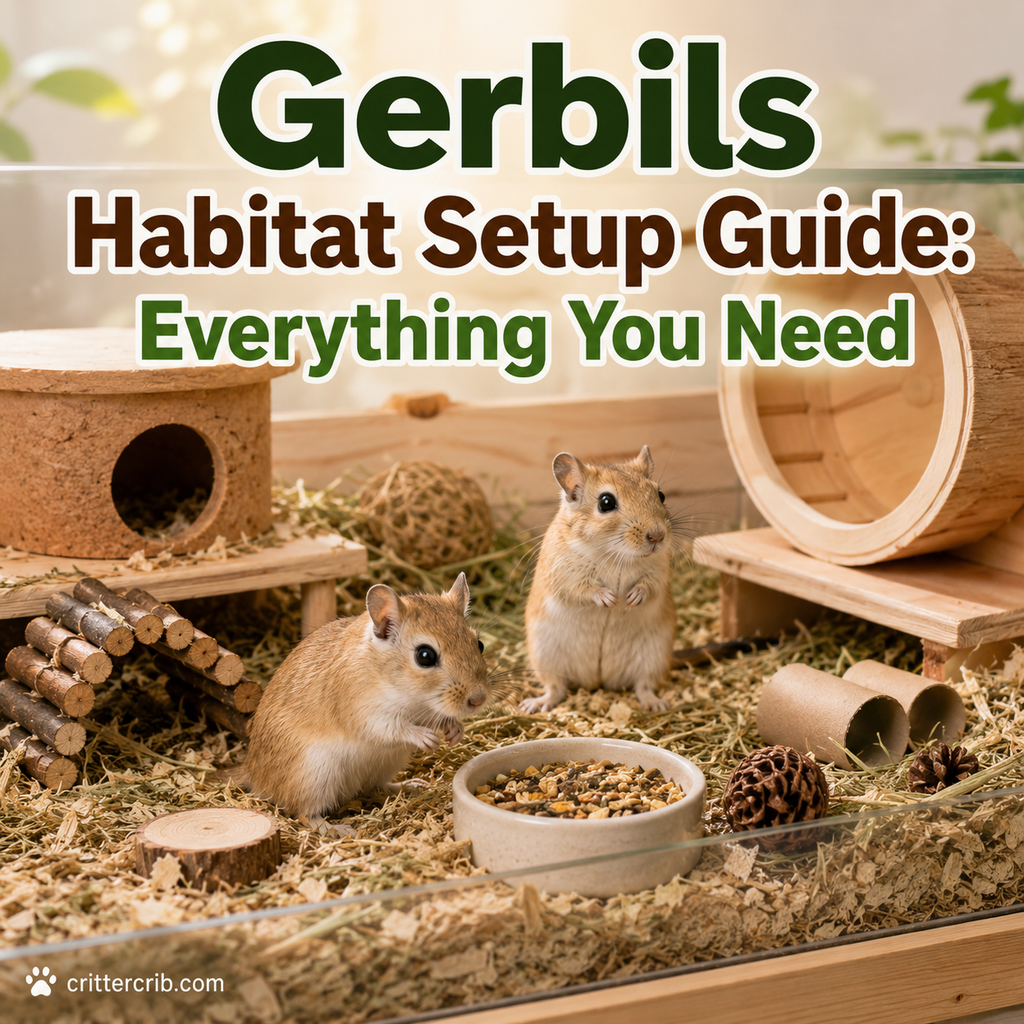
Gerbil Habitat Setup Guide: Everything You Need

Two gerbils in a spacious habitat with deep bedding, wooden hides, an exercise wheel, food, and enrichment
A good gerbil habitat provides deep bedding for burrowing along with a suitable wheel, hides, chew toys, food, water, and plenty of enrichment.

Setting up a gerbil habitat can look pretty simple at first. Add some bedding, a food bowl, a water bottle, maybe a wheel, and you’re done—right?

Not quite.

Gerbils are active little animals with a serious instinct to dig. Given enough substrate, they’ll create tunnels, sleeping chambers, food storage areas, and entire underground networks. A good gerbil habitat should give them the space and materials to do those things naturally.

That means the typical small pet-store cage with a thin layer of bedding usually isn’t the best setup.

Fortunately, creating a comfortable gerbil habitat doesn’t have to be complicated. Once you understand what gerbils actually need, you can build an enclosure that’s easier to maintain and much more interesting for your pets.

Here’s everything you need to set up a gerbil habitat properly.

Continue reading “Gerbil Habitat Setup Guide: Everything You Need”


How to Tell if Your Chinchilla Is Happy and Comfortable

Happy chinchilla sitting comfortably in an enriched enclosure with hay and chew toys
A comfortable chinchilla will typically show normal eating, exploring, resting, grooming, and other relaxed behaviors.

Chinchillas aren’t always as obvious about their feelings as dogs or cats. They won’t wag their tails when you walk into the room, and many aren’t interested in sitting still for long cuddling sessions.

Instead, a happy chinchilla tends to show it through everyday behavior.

You might notice your chinchilla exploring its enclosure, jumping between platforms, eating normally, taking enthusiastic dust baths, or relaxing comfortably in a favorite hiding spot. As you become familiar with your pet’s personality, these little behaviors become much easier to recognize.

The important thing is knowing what’s normal for your individual chinchilla. A sudden change in appetite, activity, posture, grooming, or social behavior can sometimes be more meaningful than any single “happy” behavior.

So, how can you tell if your chinchilla is happy and comfortable? Here are the signs to look for, along with behaviors that may indicate stress or discomfort.

Continue reading “How to Tell if Your Chinchilla Is Happy and Comfortable”

How to Handle Rabbits Safely and Build Trust

Person gently holding and supporting a rabbit to demonstrate safe rabbit handling
Proper rabbit handling means gently supporting the body and hindquarters while keeping your rabbit secure and comfortable.

Rabbits can be affectionate, curious pets, but they don’t always enjoy being handled the way a dog or cat might. Many rabbits prefer sitting beside their people, accepting gentle pets, or climbing onto a lap rather than being picked up and carried around.

That makes sense when you consider how rabbits experience the world. As prey animals, they’re naturally cautious about being restrained or lifted off the ground. A hand suddenly reaching down from above can be frightening, even when the person attached to that hand has the best intentions.

Safe rabbit handling is therefore about more than learning how to pick up a rabbit correctly. It’s also about knowing when not to pick one up, recognizing signs of stress, and gradually showing your rabbit that you’re someone they can trust.

Whether you’ve just brought home your first rabbit or you’re trying to bond with a shy one, patience makes a huge difference.

Continue reading “How to Handle Rabbits Safely and Build Trust”

Ideal Temperature and Humidity for Guinea Pigs

Guinea pig in an indoor habitat showing the ideal temperature and humidity for guinea pigs
Guinea pigs are most comfortable in a stable indoor environment with moderate temperatures and humidity.

Guinea pigs may have thick little coats, but they’re surprisingly sensitive to changes in temperature. A room that feels only slightly warm or chilly to you can become uncomfortable for a guinea pig, especially when conditions stay that way for hours.

Heat is a particular concern. Guinea pigs don’t sweat like humans do, and they aren’t especially good at cooling themselves down. High humidity can make hot weather even harder for them to tolerate.

Cold conditions aren’t ideal either. Drafts, damp bedding, and prolonged exposure to low temperatures can leave guinea pigs uncomfortable and potentially contribute to health problems.

Fortunately, you don’t need to create a perfectly controlled environment. Keeping your guinea pigs indoors in a comfortable, relatively stable room is usually the easiest approach.

Here’s what you should know about maintaining a comfortable temperature and humidity level for guinea pigs throughout the year.

Continue reading “Ideal Temperature and Humidity for Guinea Pigs”

Are Hamsters Good Pets? What Beginners Should Know

Hamster in a comfortable enclosure with the title Are Hamsters Good Pets? What Beginners Should Know
Hamsters can make great pets for beginners, but understanding their housing, behavior, handling, and care needs is important.

Hamsters are small, cute, and relatively easy to fit into a home, which makes them an appealing choice for first-time pet owners. They don’t need daily walks, they take up far less space than a dog or cat, and watching them stuff their cheeks with food never really gets old.

But are hamsters actually good pets for beginners?

For many people, yes. Hamsters can make wonderful pets when their needs and natural behavior match what you’re looking for. They’re generally independent, don’t require constant attention, and can be fascinating to watch and interact with.

They’re not quite as effortless as their reputation sometimes suggests, though. Hamsters need more space than many pet-store cages provide, they’re usually most active when people are winding down for the night, and some need patience before they’re comfortable being handled.

Before bringing one home, here’s what beginners should know about living with and caring for a hamster.

Continue reading “Are Hamsters Good Pets? What Beginners Should Know”

Essential Supplies for Hedgehogs: Beginner Checklist

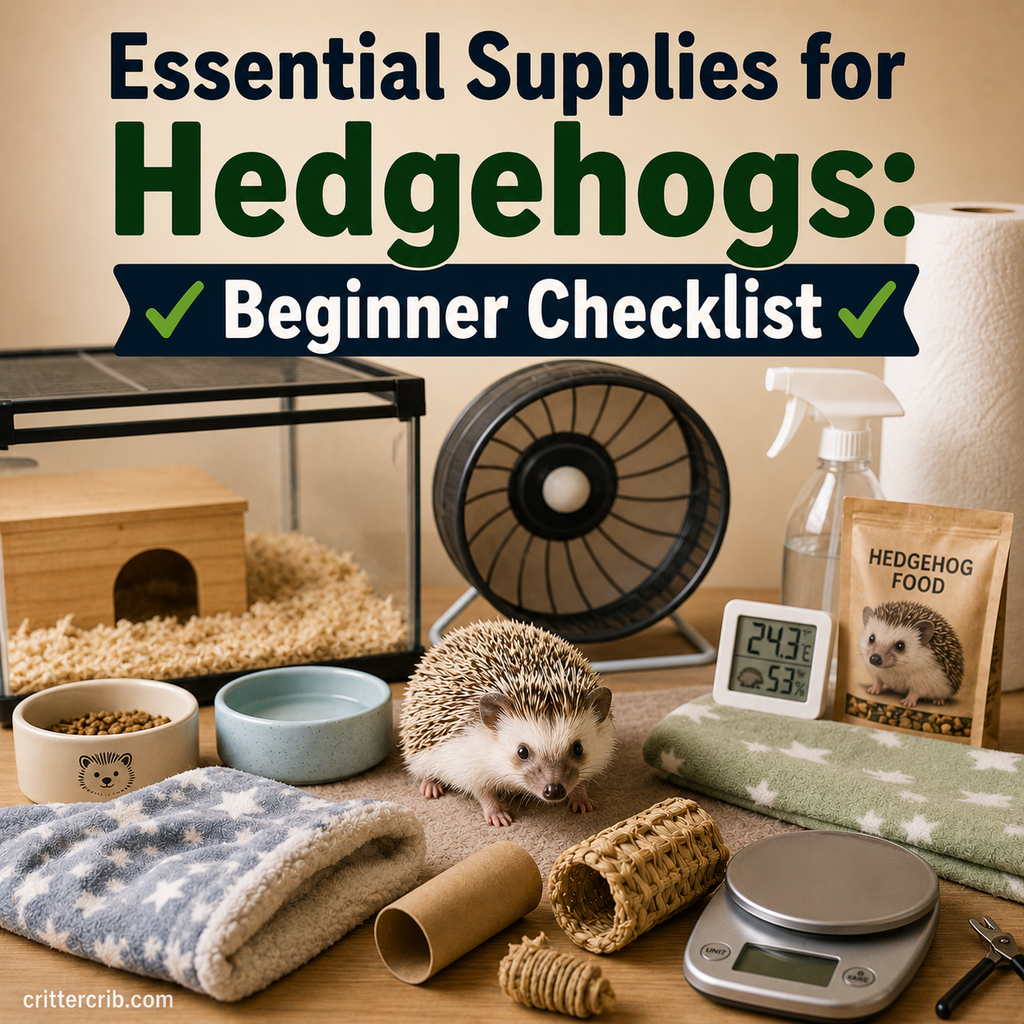
Hedgehog with essential supplies including habitat, exercise wheel, food, water, bedding, thermometer, and grooming tools
Having the right supplies before your hedgehog comes home helps create a safe, comfortable, and enriching environment.

Getting a hedgehog means buying more than a cage, food bowl, and bag of bedding.

Hedgehogs have some fairly specific needs, especially when it comes to temperature, exercise, hiding places, and habitat setup. A product labeled for “small animals” isn’t automatically appropriate for a hedgehog, either. Some accessories are too small, difficult to clean, or simply don’t match the way hedgehogs behave.

The easiest approach is to get the essentials ready before your new pet comes home.

This beginner hedgehog supplies checklist covers what you’ll need for housing, feeding, temperature control, exercise, enrichment, cleaning, transportation, and basic health monitoring. We’ll also look at a few things you can probably leave on the pet-store shelf.

Continue reading “Essential Supplies for Hedgehogs: Beginner Checklist”

How to Clean a Mouse Habitat: A Safe Routine

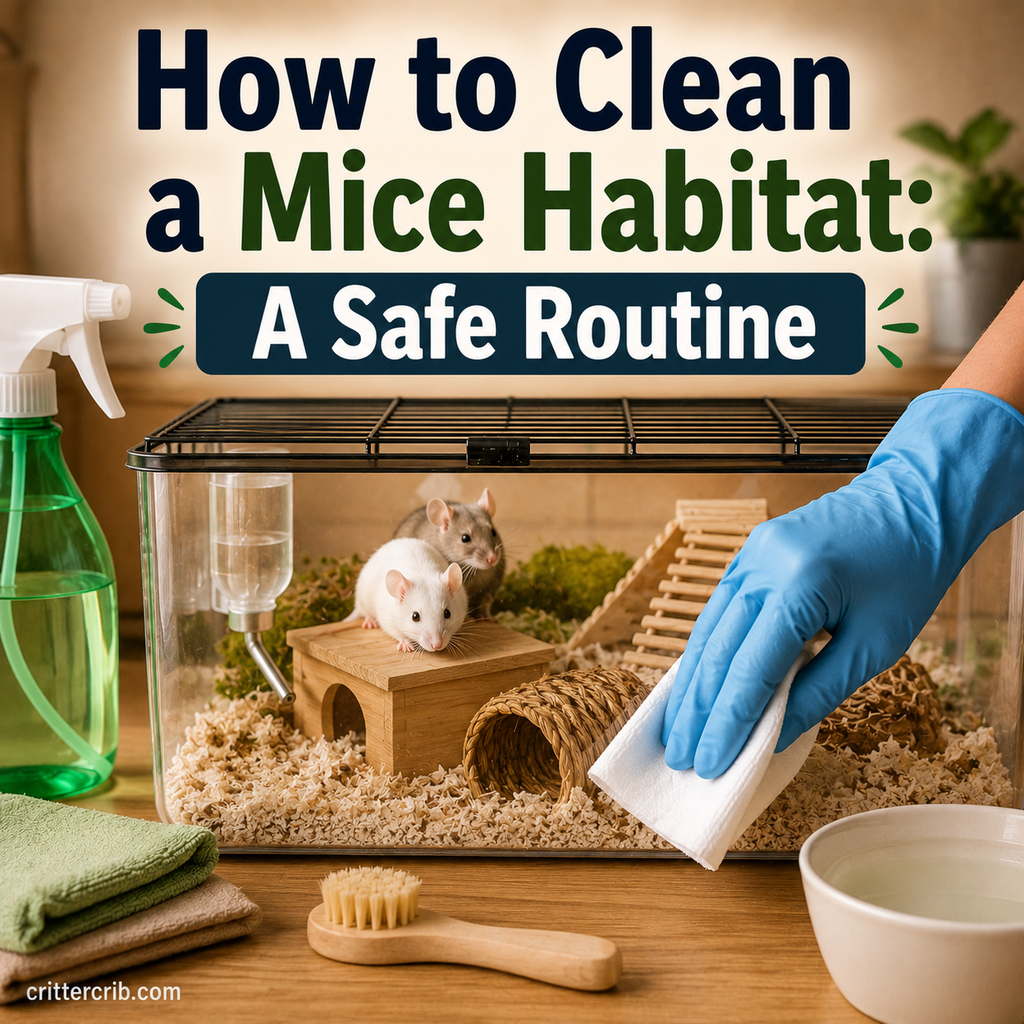
Pet mice in a habitat with safe cage cleaning supplies and fresh bedding
Regular spot cleaning and deeper cleaning when needed help keep a mouse habitat dry and sanitary while preserving familiar scents.

Cleaning a mouse habitat seems simple enough: remove the old bedding, wipe everything down, add fresh bedding, and you’re finished.

But there’s a little more to it than that.

Mice rely heavily on scent to understand their surroundings. Completely stripping away every familiar smell too often can be stressful, while not cleaning enough allows urine, waste, spoiled food, and moisture to build up.

The goal is to find a comfortable middle ground.

A good mouse habitat cleaning routine combines frequent spot cleaning with deeper cleaning when the enclosure actually needs it. You want the habitat to stay dry and sanitary without constantly turning your mice’s home into a completely unfamiliar place.

Here’s how to clean a mouse habitat safely, what supplies to use, how often to change bedding, and what to do about odor.

Continue reading “How to Clean a Mouse Habitat: A Safe Routine”

How Much Space Do Rats Need? Housing Size Guide

Three pet rats in a spacious multi-level cage with platforms, hammocks, tunnels, bedding, food, and water
Pet rats need a spacious, well-ventilated enclosure with enough room for climbing, sleeping, exploring, foraging, and interacting with their companions.

Pet rats may be small, but their housing shouldn’t be.

Rats are active, intelligent, social animals. They climb, explore, wrestle, forage, sleep together, hide food, investigate new objects, and sometimes decide the entire cage needs rearranging at three in the morning.

All of that takes space.

As a general starting point, many rat owners plan for roughly 2 to 2.5 cubic feet of cage space per rat, but cage volume alone doesn’t tell the whole story. The shape of the enclosure, bar spacing, ventilation, number of rats, usable floor area, climbing opportunities, and interior layout all matter.

A tall empty cage isn’t automatically a good rat cage, and neither is a wide enclosure packed so tightly with accessories that the rats can barely move.

Here’s how to figure out how much space your rats need and create a habitat that actually works for them.

Continue reading “How Much Space Do Rats Need? Housing Size Guide”

Ferret Behavior Explained: What Common Behaviors Mean

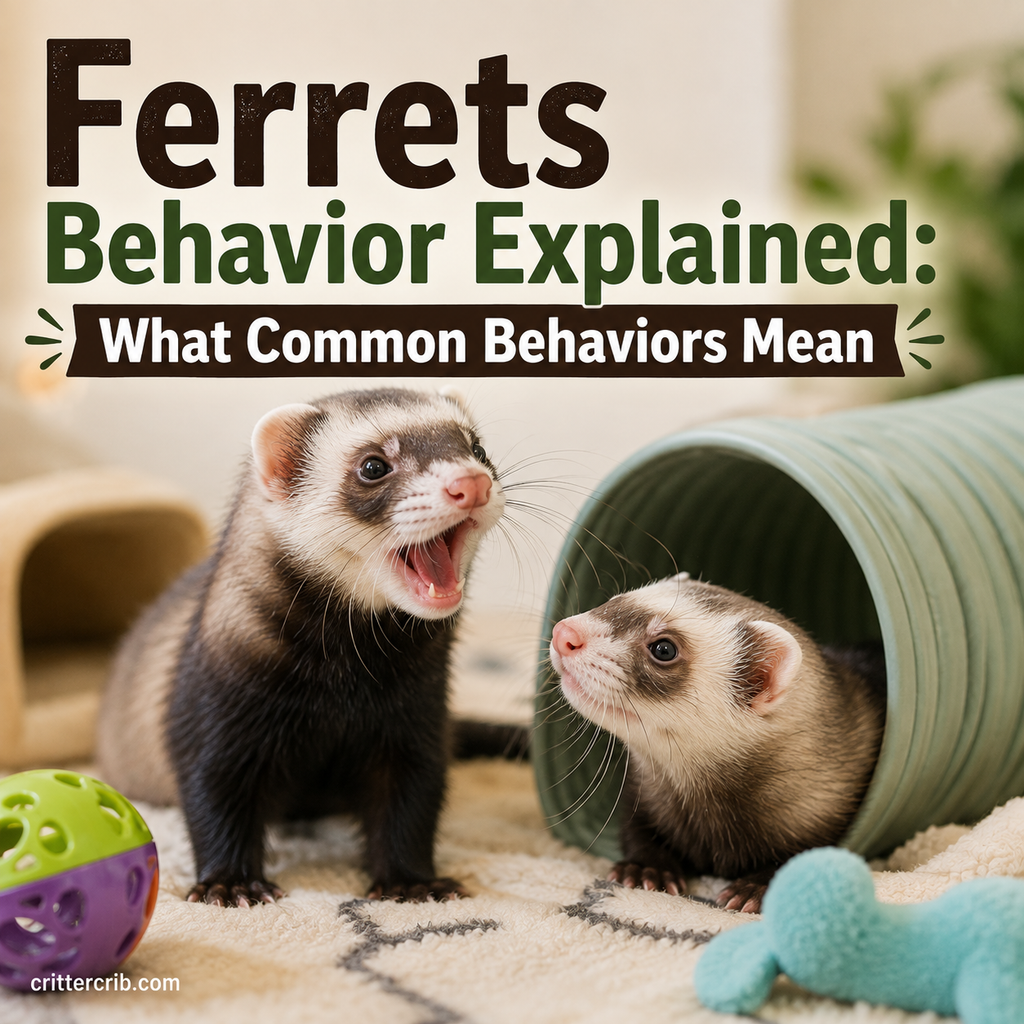
Two playful ferrets near a tunnel and toys showing common ferret behavior
Understanding common ferret behaviors can help you recognize play, excitement, curiosity, stress, and potential signs that something is wrong.

Ferrets have a talent for making perfectly normal behavior look completely ridiculous.

They bounce sideways with their mouths open. They stash toys under furniture. They dig at doors, crawl into places that seem physically impossible to reach, sleep so deeply you may briefly wonder whether they’re okay, and occasionally race through the house as if something invisible is chasing them.

Most of the time, these behaviors are simply part of being a ferret.

Learning how to read ferret behavior can help you understand when your pet is playful, curious, excited, frightened, frustrated, tired, or trying to communicate with you. Just as importantly, knowing what’s normal makes it easier to notice when something has changed.

Here’s what some of the most common ferret behaviors mean.

Continue reading “Ferret Behavior Explained: What Common Behaviors Mean”

Complete Gerbil Care Guide: Habitat, Diet, and Daily Care

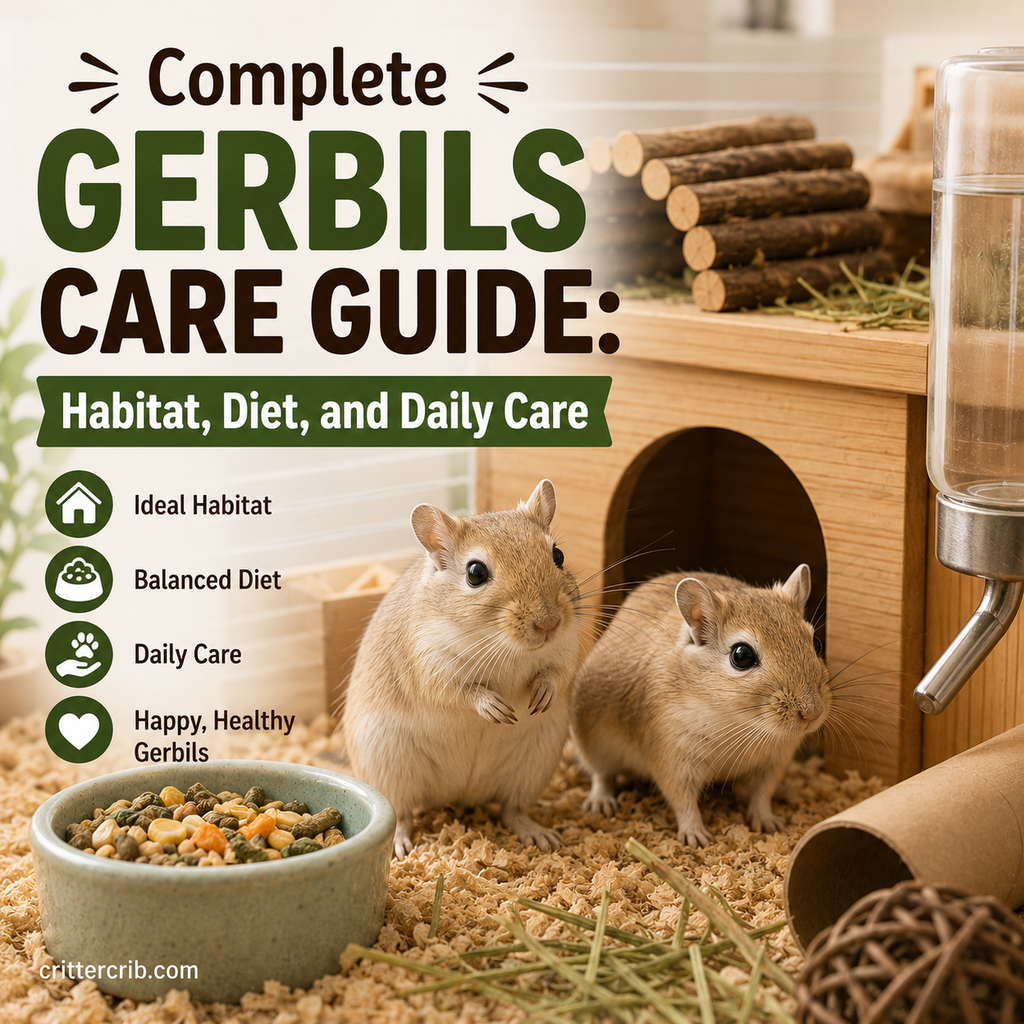
Two gerbils in a natural habitat with bedding, food, water, hideout, and enrichment for proper daily care
Proper gerbil care includes a spacious burrowing habitat, balanced diet, fresh water, companionship, enrichment, and regular daily monitoring.

Gerbils are small, curious, energetic pets with personalities that can make them surprisingly entertaining to live with. They’re constantly digging, rearranging bedding, chewing cardboard, storing food, and investigating whatever you’ve changed in their habitat.

They’re also sometimes mistaken for being especially easy pets simply because they’re small.

Gerbils don’t need walks or a huge room to themselves, but they do have specific needs. Deep bedding, companionship, safe chewing materials, a suitable diet, and enough room to create tunnels all play a major role in their well-being.

If you’re thinking about getting gerbils—or you’ve recently brought some home—this complete gerbil care guide covers the essentials, from setting up their habitat to feeding, cleaning, handling, enrichment, and everyday health monitoring.

Continue reading “Complete Gerbil Care Guide: Habitat, Diet, and Daily Care”