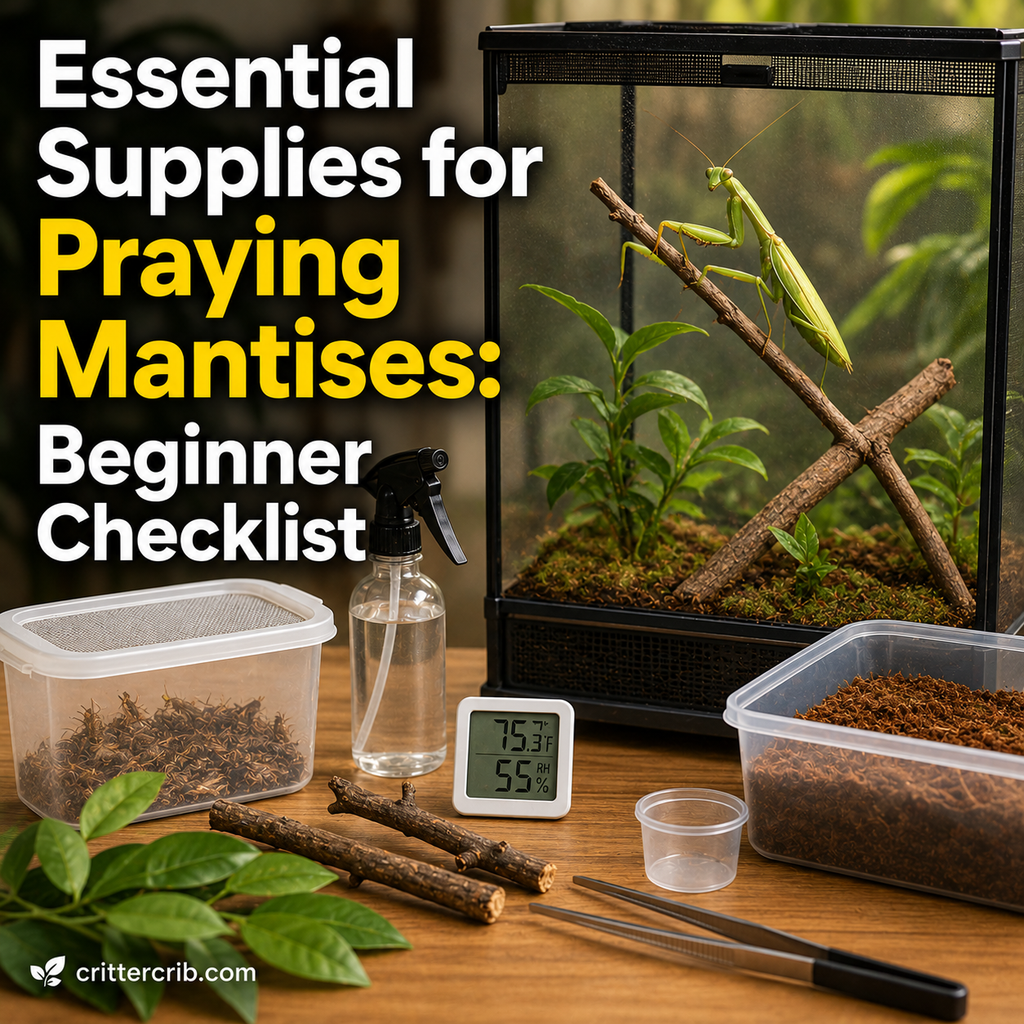
Essential Supplies for Praying Mantises: Beginner Checklist

Essential supplies for a praying mantis including enclosure, climbing branches, live feeders, misting bottle, and thermometer
Essential praying mantis supplies include a properly sized enclosure, climbing and molting surfaces, live feeders, a mister, and temperature-monitoring equipment.

Bringing home a praying mantis doesn’t require a shopping cart full of expensive equipment. Compared with many exotic pets, mantises have fairly simple setups.

Simple doesn’t mean you can put one in a jar and call it a day, though.

The right enclosure, ventilation, climbing surfaces, appropriate humidity, and correctly sized live prey all matter. Molting makes enclosure setup especially important because a mantis needs enough vertical space to hang upside down and shed its old exoskeleton safely.

If you’re getting your first mantis, this checklist covers the essential praying mantis supplies you’ll want before your new pet arrives, along with a few optional items that can make care easier.

Continue reading “Essential Supplies for Praying Mantises: Beginner Checklist”
How to Clean a Millipede Habitat: A Safe Routine

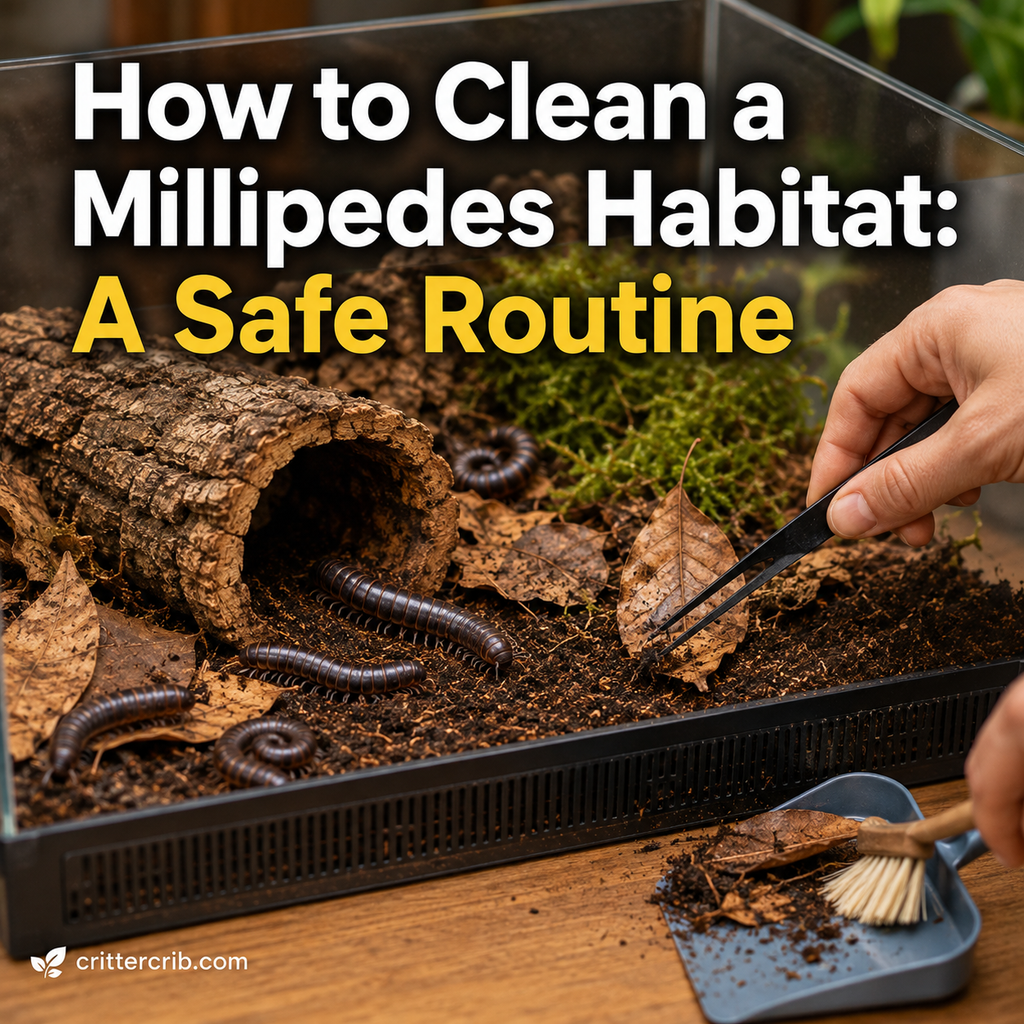
Cleaning a millipede habitat by removing old food and debris while leaving healthy substrate undisturbed
Safe millipede habitat cleaning focuses on removing spoiled food and debris while preserving healthy substrate, leaf litter, and hiding areas.

Cleaning a millipede habitat is a little different from cleaning a hamster cage or reptile enclosure. You don’t want to strip everything out, scrub the tank until it smells sterile, and replace all the substrate every week.

In fact, doing too much cleaning can be worse than doing too little.

A millipede enclosure is meant to function like a miniature forest floor. The substrate, decaying leaves, wood, moisture, and microorganisms are all part of that environment. Many millipedes also eat material directly from the substrate, so replacing it constantly removes an important part of their habitat and food supply.

The better approach is simple: clean small problems regularly, remove spoiled food before it becomes a mess, and disturb the deeper habitat only when necessary.

Here’s how to clean a millipede habitat safely without turning routine maintenance into a major disruption.

Continue reading “How to Clean a Millipede Habitat: A Safe Routine”

How Much Space Do Isopods Need? Housing Size Guide

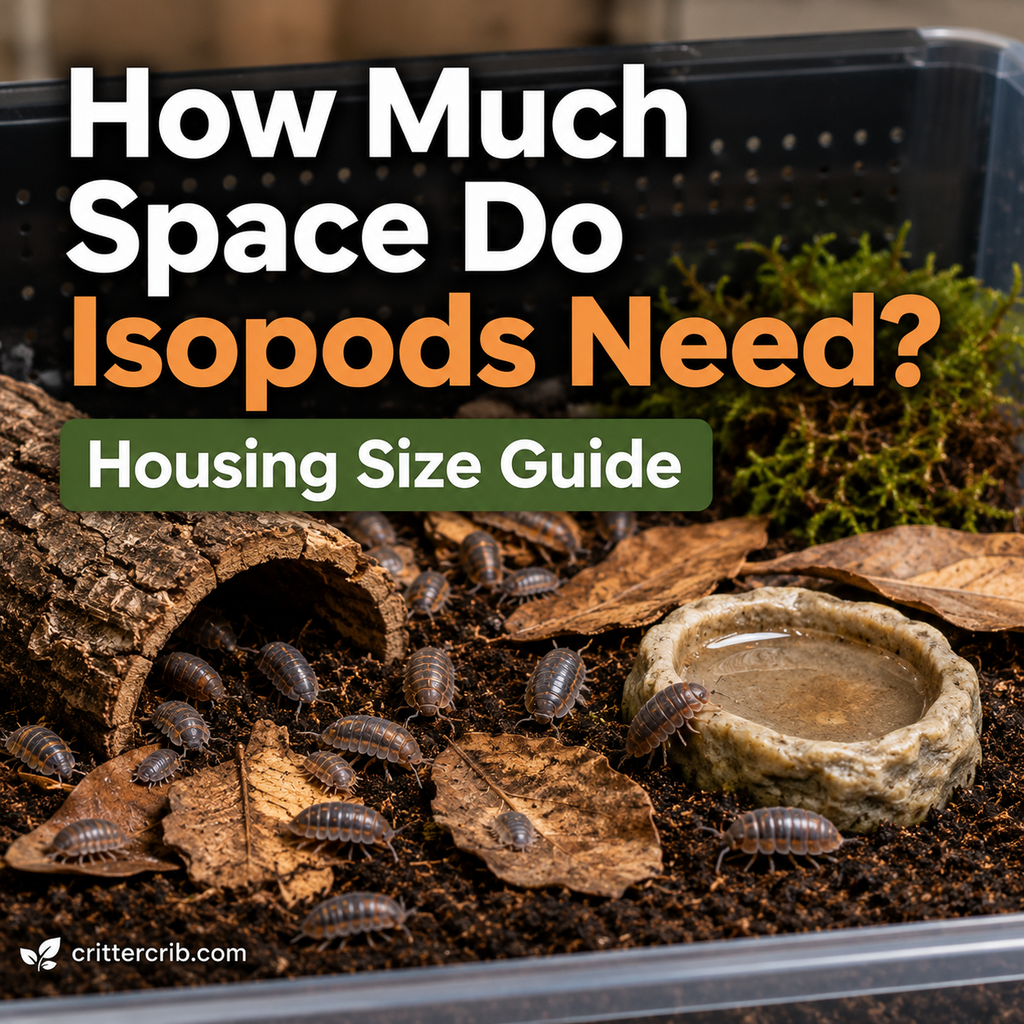
Isopod enclosure with substrate, leaf litter, cork bark, and hiding areas for a healthy colony
Isopods don’t need huge enclosures, but they need enough space for substrate, leaf litter, hides, a moisture gradient, and colony growth.

Isopods are tiny, so it’s easy to assume they barely need any space. A small plastic container can certainly hold quite a few of them, but enclosure size isn’t just about fitting the animals inside.

A good isopod enclosure needs enough room for substrate, leaf litter, hides, ventilation, and—most importantly—a moisture gradient. You also need to think about what happens when a starter colony begins reproducing.

Fortunately, you don’t need a giant terrarium to keep isopods successfully. Even a modest enclosure can support a healthy colony when it’s set up correctly.

So, how much space do isopods actually need? Let’s look at practical enclosure sizes for starter cultures, growing colonies, display setups, and bioactive terrariums.

Continue reading “How Much Space Do Isopods Need? Housing Size Guide”

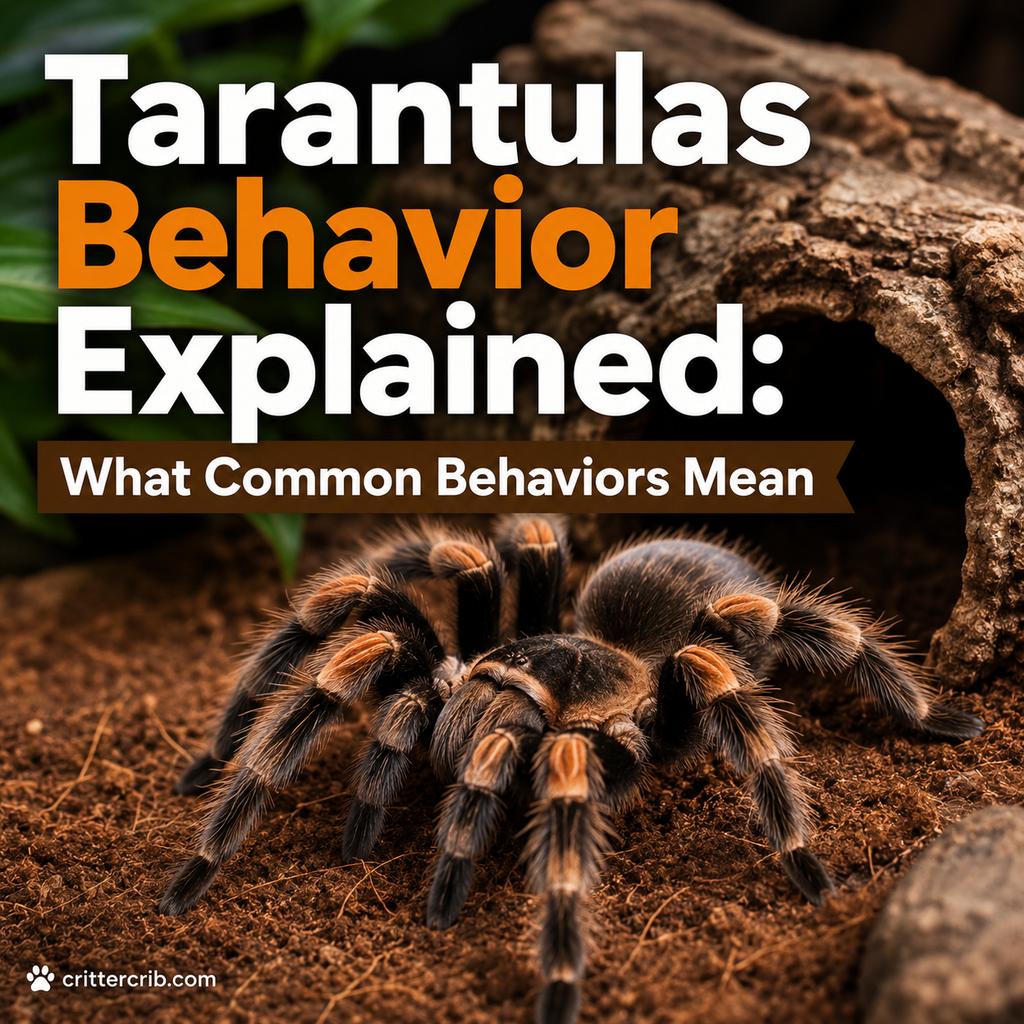
Tarantula Behavior Explained: What Common Behaviors Mean

Tarantula in a natural enclosure illustrating common tarantula behaviors and what they mean
Learn what common tarantula behaviors can mean, from hiding and burrowing to webbing, feeding, molting, and defensive displays.

Tarantulas aren’t exactly expressive pets. They don’t wag their tails, chirp for attention, or come running when you enter the room. Much of the time, a perfectly healthy tarantula may appear to be doing almost nothing.

Then one day it’s climbing the enclosure walls. Another day it has buried the entrance to its hide. Maybe it suddenly refuses food, spends hours rearranging substrate, or flips completely onto its back.

If you’re new to keeping tarantulas, some of these behaviors can look strange or even alarming.

The good news is that many seemingly unusual tarantula behaviors are completely normal. Understanding what your spider is doing—and why—makes it much easier to tell the difference between everyday tarantula behavior and something that deserves closer attention.

Here’s what some of the most common tarantula behaviors mean.

Continue reading “Tarantula Behavior Explained: What Common Behaviors Mean”

Complete Hermit Crabs Care Guide: Habitat, Diet, and Daily Care

Hermit crabs in a natural habitat for a complete hermit crab care guide
A complete guide to hermit crab habitat, diet, molting, and daily care.

Hermit crabs may be tiny, but caring for them properly takes more planning than their size suggests. They’re often sold as easy, low-maintenance pets, yet a healthy hermit crab needs much more than a small plastic enclosure, a food dish, and a spare shell.

The hermit crabs commonly kept as pets are land-dwelling animals that depend on warm temperatures, high humidity, deep substrate, access to both fresh and salt water, and plenty of places to climb and hide. They’re also social creatures, and with good care, they can live far longer than many new owners expect.

If you’re thinking about bringing hermit crabs home—or you already have a few—this guide covers the essentials, from setting up their habitat and choosing food to understanding molting and establishing a simple daily care routine.

Continue reading “Complete Hermit Crabs Care Guide: Habitat, Diet, and Daily Care”