Hermit crabs may be tiny, but caring for them properly takes more planning than their size suggests. They’re often sold as easy, low-maintenance pets, yet a healthy hermit crab needs much more than a small plastic enclosure, a food dish, and a spare shell.
The hermit crabs commonly kept as pets are land-dwelling animals that depend on warm temperatures, high humidity, deep substrate, access to both fresh and salt water, and plenty of places to climb and hide. They’re also social creatures, and with good care, they can live far longer than many new owners expect.
If you’re thinking about bringing hermit crabs home—or you already have a few—this guide covers the essentials, from setting up their habitat and choosing food to understanding molting and establishing a simple daily care routine.
Hermit Crab Care at a Glance
Here are the basics to know before getting into the details:
- Habitat: Warm, humid, secure enclosure with deep substrate
- Temperature: Generally around 75–85°F
- Humidity: Usually 70–80% or higher, depending on species and conditions
- Diet: Varied omnivorous diet with protein, plant foods, calcium, and other nutrients
- Water: Separate pools of dechlorinated fresh water and properly prepared marine salt water
- Substrate: Deep enough for complete underground molting
- Social needs: Most commonly kept land hermit crabs do best with compatible companions
- Activity: Primarily nocturnal
- Special requirement: Multiple appropriately sized natural shells
- Handling: Best kept to a minimum
The exact needs of a hermit crab can vary by species, so identifying which type you have is helpful whenever possible.
Understanding Pet Hermit Crabs
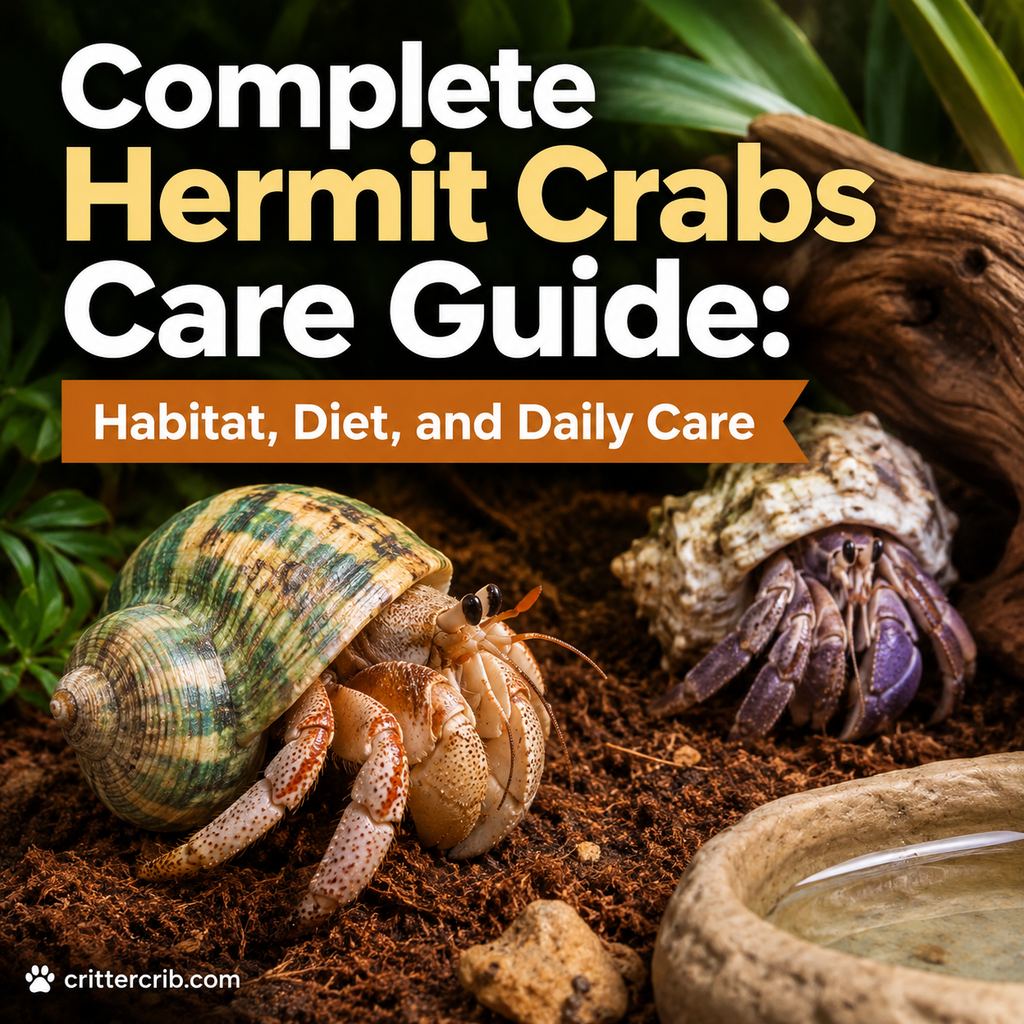
Hermit crabs don’t grow their own protective shell. Instead, they occupy empty gastropod shells and move into larger ones as they grow.
That shell is much more than a portable home. It protects the crab’s soft abdomen and helps maintain the moisture it needs to breathe properly.
One of the most common pet species is the Caribbean hermit crab (Coenobita clypeatus), sometimes called the purple pincher. Other Coenobita species are also kept as pets.
Despite spending most of their lives on land, these crabs are closely tied to humid coastal environments. Recreating the important parts of that environment is one of the keys to successful long-term care.
How Long Do Hermit Crabs Live?
Hermit crabs are frequently treated as short-lived pets, but that reputation has more to do with inadequate captive conditions than their natural lifespan.
With proper care, some land hermit crabs can live for decades.
This is important to consider before getting them. A hermit crab shouldn’t be viewed as a temporary novelty pet. Providing a stable habitat, appropriate nutrition, and enough room for natural behaviors can turn hermit crab ownership into a surprisingly long commitment.
Choosing the Right Hermit Crab Habitat
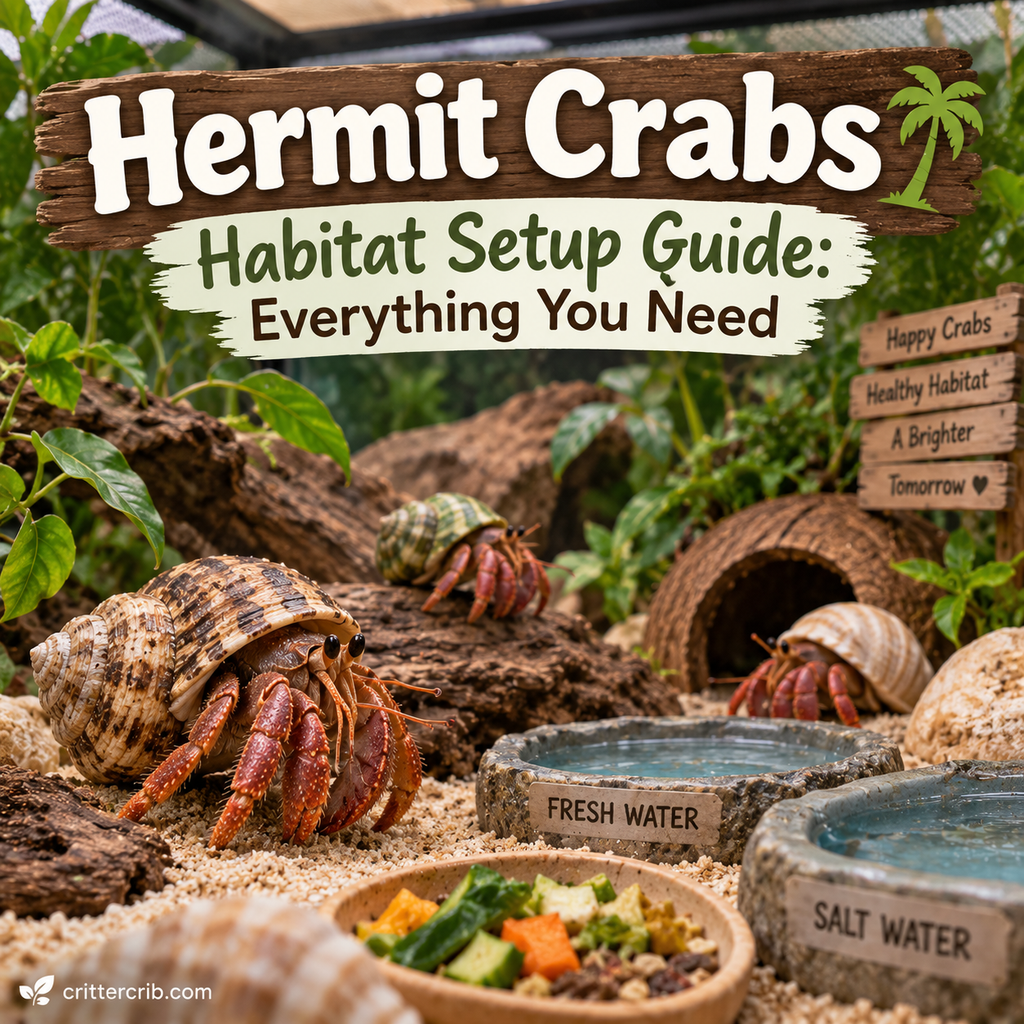
A proper enclosure is often called a “crabitat.”
Glass aquariums are popular because they retain humidity well and allow you to create a deep substrate layer. The enclosure should have a secure lid that helps maintain humidity while preventing escapes.
Hermit crabs are surprisingly capable climbers. If they can reach an opening, they may find a way out.
Avoid keeping hermit crabs permanently in tiny plastic carriers or wire cages. These setups usually make maintaining appropriate humidity and temperature difficult.
How Big Should a Hermit Crab Tank Be?
Bigger is generally better.
The enclosure needs room for:
- Multiple crabs
- Deep substrate
- Freshwater and saltwater pools
- Spare shells
- Food dishes
- Hides
- Climbing structures
- Open areas for exploring
A small aquarium can become crowded quickly once all of these essentials are added.
A 20-gallon long aquarium or larger is a much more practical starting point for a small group than the tiny enclosures commonly marketed for hermit crabs. Larger crabs and larger colonies need considerably more space.
Don’t judge enclosure size solely by how small the animals look. Hermit crabs use three-dimensional space and can be surprisingly active, especially after dark.
Creating the Right Temperature
Land hermit crabs are tropical animals and need consistent warmth.
For commonly kept species such as Caribbean hermit crabs, aiming for roughly 75–85°F provides a useful general range. Avoid prolonged exposure to temperatures that are too cold or excessive heat that can overheat or dry the enclosure.
Use a digital thermometer rather than guessing based on how the room feels.
If supplemental heating is needed, a thermostat-controlled heat source positioned appropriately for the enclosure can help maintain stable conditions. Heating equipment should be arranged so the crabs cannot come into direct contact with dangerously hot surfaces.
Avoid heating the substrate from underneath. Hermit crabs burrow deeply when molting, and heating the bottom of the enclosure can create unsafe conditions underground.
Maintaining Proper Humidity
Humidity is one of the most important parts of hermit crab care.
Hermit crabs breathe through modified gills, which must remain moist to function properly. Air that is consistently too dry can cause serious problems.
For many commonly kept land hermit crabs, around 70–80% relative humidity or somewhat higher is a practical target.
Use a reliable digital hygrometer inside the enclosure.
Instead of constantly spraying the tank to chase a humidity number, create an environment that naturally retains moisture. A secure lid, deep moist substrate, water pools, and appropriate heating can all help stabilize humidity.
At the same time, the habitat shouldn’t be waterlogged. Persistent condensation, flooding, or soaked substrate may indicate that adjustments are needed.
Choosing the Best Substrate
Hermit crab substrate isn’t simply bedding. It’s a critical part of their biology because crabs bury themselves underground to molt.
A popular substrate combines:
- Play sand
- Coconut fiber
The mixture should be moist enough to hold its shape when compressed but not dripping wet.
Think of the consistency of sand that’s suitable for building a sandcastle.
How Deep Should Hermit Crab Substrate Be?
The substrate needs to be deep enough for your largest crab to completely bury itself and create a stable underground molting chamber.
A useful minimum is approximately six inches, but larger crabs may require considerably deeper substrate.
More depth is usually preferable when the enclosure allows it.
Avoid regularly digging through or replacing the entire substrate unless there’s a genuine reason to do so. A molting crab may be hidden underneath, and disturbing it can be dangerous.
Fresh Water and Salt Water Are Both Essential
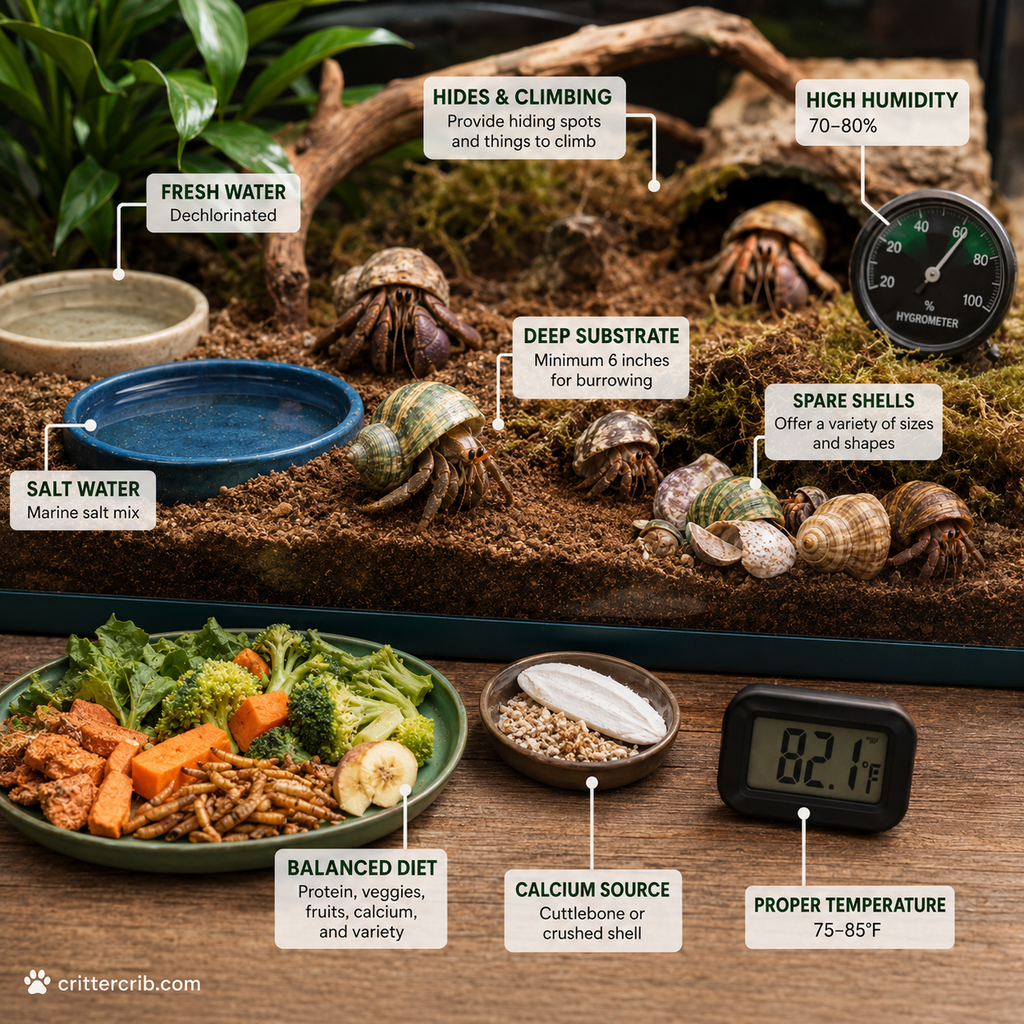
Land hermit crabs should have access to two separate water sources:
- Dechlorinated fresh water
- Properly mixed marine salt water
Don’t substitute ordinary table salt for marine aquarium salt mix.
Tap water may contain chlorine or chloramine, so water should be treated with a conditioner appropriate for making it safe before being offered to the crabs.
How Deep Should the Water Pools Be?
Ideally, the pools should allow the crabs to submerge themselves if they choose.
However, they must also be able to climb out easily.
Adding textured ramps, plastic mesh, rocks, or other safe climbing surfaces can prevent a crab from becoming trapped in a smooth-sided container.
Smaller crabs especially need easy exit routes.
Keep the pools clean and replace the water as needed.
What Do Hermit Crabs Eat?
Hermit crabs are omnivorous scavengers and naturally encounter a wide range of foods.
Variety is one of the most important principles when feeding them.
For a deeper look at protein, fruits, vegetables, seeds, calcium sources, feeding frequency, and creating a balanced diet, see our complete hermit crab feeding guide.
A balanced captive diet can include combinations of:
- Animal protein
- Vegetables
- Fruits
- Seeds and nuts
- Sea vegetables
- Calcium sources
- Natural plant materials
- Nutrient-rich whole foods
Instead of feeding exactly the same meal every day, rotate foods to provide a broader nutritional profile.
Protein for Hermit Crabs
Protein is an important part of the diet.
Suitable options can include small amounts of:
- Unseasoned cooked egg
- Plain cooked fish
- Plain cooked shrimp
- Plain cooked chicken
- Freeze-dried insects
- Mealworms
- Other appropriately prepared animal proteins
Foods should be free of sauces, heavy seasoning, and potentially harmful additives.
Fruits and Vegetables
Hermit crabs can enjoy many different plant foods.
Examples include:
- Carrots
- Sweet potato
- Leafy greens
- Bell pepper
- Broccoli
- Apple
- Banana
- Mango
- Berries
- Coconut
You don’t need to serve huge portions. Hermit crabs are small animals, and leftover fresh food can spoil quickly in a warm, humid enclosure.
Calcium Sources
Calcium is especially important for maintaining a strong exoskeleton.
Common sources include:
- Cuttlebone
- Crushed clean eggshell
- Oyster shell intended for appropriate animal use
- Other safe calcium-rich foods
Keeping a calcium source available regularly gives the crabs an opportunity to consume it when needed.
Foods to Avoid
A natural-looking food isn’t automatically safe.
Avoid foods containing questionable additives, pesticides, or ingredients known to be unsafe for the animals.
It’s also sensible to avoid:
- Heavily salted foods
- Sugary processed foods
- Fried foods
- Heavily seasoned foods
- Moldy or spoiled food
- Foods contaminated with household chemicals
- Plants or wood that may have been treated with pesticides
When you’re unsure about a particular food, check whether it is considered safe for your specific hermit crab species before adding it to the enclosure.
How Often Should You Feed Hermit Crabs?
Hermit crabs should have food available regularly, and offering a fresh selection each day works well for many keepers.
Because they’re often most active at night, food can be added or refreshed in the evening.
Remove foods that spoil easily before they begin growing mold or attracting unwanted pests.
Dry foods may remain usable longer, but they should still be inspected regularly.
You may notice that your crabs suddenly become interested in a food they’ve ignored before. That’s another reason variety is useful.
Hermit Crabs Need Spare Shells
Shell selection is a major part of hermit crab behavior.
As a crab grows, it periodically searches for a shell that better fits its body. Even when it isn’t actively changing shells, it may inspect available options.
Keep several natural shells available for each crab.
Offer shells:
- Slightly smaller than the current shell
- Similar in size
- Slightly larger
- In shapes preferred by your species
Shell opening size is particularly important.
Avoid Painted Shells
Natural, unpainted shells are the safest choice.
Painted decorative shells may chip, and coatings or glues can introduce unnecessary risks. Hermit crabs also modify their shells by scraping and picking at them.
A collection of clean natural shells gives them safer options and allows them to display normal shell-selection behavior.
Hiding Places and Enrichment
A good crabitat shouldn’t be empty.
Hermit crabs explore, climb, hide, dig, and forage. Giving them ways to perform these behaviors makes the enclosure much more stimulating.
Useful enrichment can include:
- Cork bark
- Safe branches
- Cholla wood
- Coconut hides
- Artificial plants
- Leaf litter from safe sources
- Climbing nets
- Platforms
- Natural hiding areas
Arrange decorations securely. Hermit crabs are stronger than they look and may move lightweight objects around.
Also remember that everything in the enclosure must tolerate high humidity.
Hermit Crabs Are Social
Many commonly kept land hermit crab species naturally interact with other hermit crabs and generally benefit from being housed with compatible members of their own species.
That doesn’t mean you should simply crowd many crabs into a small aquarium.
Social housing works best when there are enough resources to reduce competition, including:
- Plenty of floor space
- Multiple hiding places
- Several food areas
- Adequate access to water
- Numerous spare shells
- Deep molting substrate
Shell competition is particularly important to prevent. Providing many appropriately sized shells gives each crab more choices.
Understanding Hermit Crab Molting
Molting is one of the most important—and sometimes alarming—parts of hermit crab ownership.
A crab cannot grow inside a rigid exoskeleton forever. Periodically, it must shed the old exoskeleton and form a new one.
Before molting, a hermit crab may:
- Eat more than usual
- Become less active
- Dig frequently
- Spend more time near water
- Change behavior
- Disappear underground
A crab may remain buried for weeks or even longer depending on its size and individual circumstances.
Never Dig Up a Molting Hermit Crab
One of the most important rules of hermit crab care is to leave buried crabs alone.
Underground, the crab creates a protected molting space. Digging it up can collapse that chamber or expose the crab while its new exoskeleton is still soft and vulnerable.
It may be tempting to check whether a crab is alive after it disappears, but patience is usually the safest approach.
Don’t Remove the Shed Exoskeleton
After molting, hermit crabs commonly eat their old exoskeleton.
This helps them recover nutrients, including minerals needed as the new exoskeleton hardens.
What looks like the remains of a dead crab may sometimes be a shed exoskeleton, so inspect carefully before assuming the worst.
Should You Handle Hermit Crabs?
Hermit crabs are better suited to observation than frequent handling.
Being repeatedly picked up can cause stress, and falls can seriously injure them.
They can also pinch.
If handling is necessary, keep the crab close to a safe surface and allow it to move naturally rather than forcing it out of its shell.
Never try to pull a hermit crab from its shell. A crab holds onto the inside extremely tightly, and forcing it out can cause severe injury or death.
Daily Hermit Crab Care Routine
Once the enclosure is established correctly, everyday maintenance doesn’t have to be complicated.
A basic daily routine might look like this:
- Check temperature.
- Check humidity.
- Make sure fresh and salt water are available.
- Inspect water pools for contamination.
- Offer fresh or varied food.
- Remove spoiled leftovers.
- Look for obvious enclosure problems.
- Observe any visible crabs without disturbing buried ones.
This takes only a few minutes in a well-designed habitat.
Weekly and Periodic Maintenance
Some maintenance doesn’t need to happen every day.
Periodically:
- Clean food dishes
- Clean water containers
- Check climbing structures
- Inspect shells
- Remove obvious waste from the surface
- Check heating equipment
- Verify thermometer and hygrometer readings
- Inspect the lid for escape routes
- Look for mold or pest problems
Avoid aggressive deep cleaning simply because the enclosure looks “dirty” by human standards.
A crabitat is a humid, naturalistic environment, and constantly tearing it apart can cause more disruption than benefit—especially if a crab is molting underground.
Common Hermit Crab Care Mistakes
Many hermit crab problems begin with setups that look convenient but don’t meet the animals’ biological needs.
Keeping Them in a Tiny Plastic Cage
Small plastic carriers may work for temporary transportation, but they aren’t suitable permanent homes.
They provide too little space and can make stable humidity difficult to maintain.
Using Gravel Instead of Deep Substrate
Hermit crabs need to dig.
A thin layer of gravel doesn’t allow normal burrowing or safe underground molting.
Providing Only Fresh Water
Land hermit crabs need access to both appropriate fresh water and marine salt water.
One bowl of untreated tap water isn’t enough.
Keeping the Habitat Too Dry
Low humidity can interfere with the crab’s ability to keep its modified gills moist.
Measure humidity instead of relying on guesswork.
Offering Only Commercial Pellets
A monotonous diet isn’t ideal.
Even if you use a prepared hermit crab food, providing safe whole-food variety can create a much more diverse diet.
Not Providing Enough Shells
One spare shell isn’t much of a choice.
Give each crab multiple suitable natural shells so they can compare sizes and shapes.
Digging Up a Missing Crab
A crab that hasn’t appeared for several weeks may be molting.
Don’t assume it needs to be rescued.
Overhandling
Hermit crabs aren’t toys and don’t require human handling to thrive.
Watching them climb, forage, dig, interact, and select shells is often far more interesting than repeatedly picking them up.
Signs Your Hermit Crab Habitat May Need Attention
Behavior alone doesn’t always tell you exactly what’s wrong, but certain patterns should encourage you to check the environment carefully.
Pay attention if you notice:
- Persistent inactivity outside expected resting or molting periods
- Difficulty moving
- Repeated escape attempts
- Strong unusual odors
- Flooded substrate
- Very low humidity
- Extreme temperatures
- Lack of access to food or water
- Aggressive competition over shells
Start by checking the basics: temperature, humidity, water quality, substrate, food, available shells, and enclosure security.
If a crab appears injured or seriously unwell, seek advice from a veterinarian experienced with exotic invertebrates when possible.
Setting Up a Hermit Crab Tank: Simple Checklist
Before adding hermit crabs, make sure you have:
- Appropriately sized glass enclosure
- Secure lid
- Deep sand and coconut-fiber substrate
- Digital thermometer
- Digital hygrometer
- Safe heating equipment if required
- Thermostat for heating equipment
- Freshwater pool
- Saltwater pool
- Water conditioner
- Marine aquarium salt mix
- Easy exits from both pools
- Food dishes
- Calcium source
- Multiple natural shells per crab
- Hides
- Safe climbing structures
- Varied foods
Setting up the enclosure correctly before bringing the animals home is much easier than trying to fix major habitat problems afterward.
Are Hermit Crabs Good Pets for Beginners?
Hermit crabs can be fascinating pets for beginners, but they’re not quite as simple as their reputation suggests.
If you’re still deciding whether they’re the right pet for you, our guide to hermit crabs as pets for beginners covers the costs, setup requirements, handling expectations, social needs, lifespan, and what ownership is really like.
They’re a particularly good fit for someone who enjoys creating naturalistic habitats and observing animal behavior. Once the enclosure is established, daily care is relatively manageable.
The challenge is getting that environment right in the first place.
Temperature, humidity, substrate depth, water, nutrition, shells, and social needs all matter. Cutting corners on those basics can dramatically affect a crab’s quality of life.
For children, hermit crabs should be considered a family pet rather than an animal a young child is expected to care for completely independently. An adult should supervise habitat maintenance and make sure environmental conditions remain appropriate.
Frequently Asked Questions About Hermit Crab Care
Do Hermit Crabs Need a Heat Lamp?
Not necessarily.
Whether supplemental heating is required depends on the temperature of the room and enclosure. The goal is to maintain the appropriate temperature range rather than automatically adding a lamp.
If additional heat is necessary, use equipment appropriate for the enclosure and control it with a thermostat. Avoid overheating or drying the habitat.
Do Hermit Crabs Need Light at Night?
Hermit crabs don’t need bright light at night.
They’re often most active after dark, so maintaining a normal day-night cycle is preferable to illuminating the enclosure continuously.
Do Hermit Crabs Need Salt Water?
Yes. Land hermit crabs should have access to both fresh water and appropriately prepared marine salt water.
Use marine aquarium salt mix rather than ordinary table salt.
Can Hermit Crabs Drown?
Hermit crabs can enter relatively deep water, but their pools should always provide safe, easy ways to climb out.
Ramps or textured surfaces are especially important for smaller crabs.
How Often Do Hermit Crabs Change Shells?
There’s no fixed schedule.
A crab may change shells as it grows, try several shells in a short period, switch back to an old one, or remain in the same shell for a long time.
That’s why keeping multiple suitable shells available is important.
Why Is My Hermit Crab Digging?
Digging is normal behavior.
Hermit crabs may dig to explore, regulate moisture, hide, or prepare for a molt. A crab that buries itself shouldn’t automatically be disturbed.
Why Did My Hermit Crab Disappear?
It may simply be underground.
Hermit crabs commonly bury themselves while molting and can remain out of sight for an extended period. Unless there’s an immediate enclosure emergency, avoid digging through the substrate looking for it.
Can Hermit Crabs Live Alone?
Many commonly kept land hermit crabs are social and are generally better kept with compatible companions when enough space and resources are available.
The enclosure should be sized for the group, with plenty of shells, food, hiding areas, and access to water to minimize competition.
How Often Should I Clean a Hermit Crab Tank?
Spot-clean regularly rather than automatically performing frequent complete substrate changes.
Remove spoiled food and obvious waste, clean dishes and pools as necessary, and monitor the habitat for mold or other problems. Avoid disturbing deep substrate because a molting crab may be buried beneath the surface.
Final Thoughts on Hermit Crab Care
Hermit crabs have a reputation as simple starter pets, but their natural behavior tells a different story. These tiny crustaceans dig elaborate molting chambers, climb surprisingly well, investigate different foods, interact with other crabs, and carefully choose the shells that protect their bodies.
The best hermit crab care starts with the habitat.
Provide deep, moist substrate, tropical warmth, high humidity, fresh and marine salt water, plenty of natural shells, hiding places, climbing opportunities, and a varied diet. Then give your crabs the freedom to behave like crabs—including disappearing underground when it’s time to molt.
Once those fundamentals are in place, daily care becomes much simpler. A few quick environmental checks, fresh food and water, and regular observation can go a long way toward maintaining a healthy crabitat.
For such small animals, hermit crabs offer an impressive amount of interesting behavior. Giving them an environment built around their actual needs makes them far more rewarding pets to observe and care for.