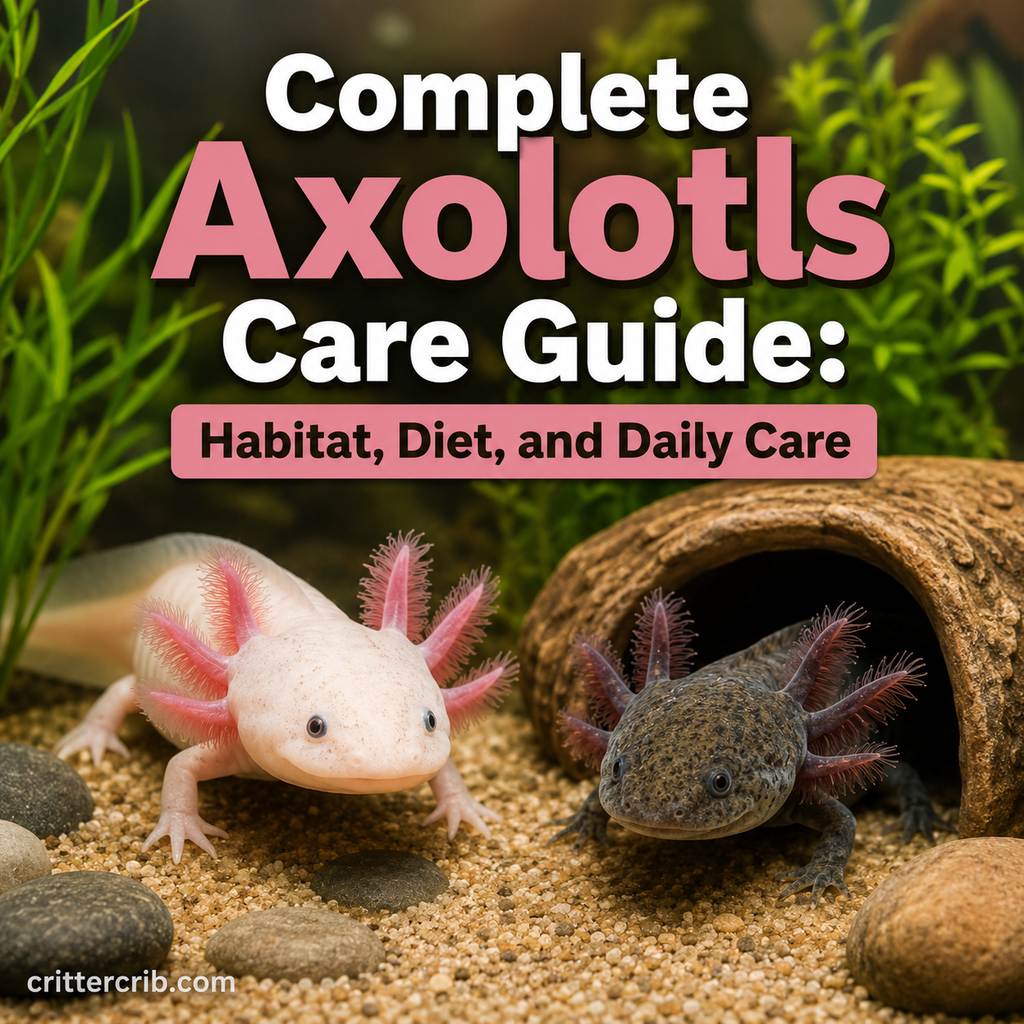
Axolotls are unlike almost any other amphibian you can keep at home. With their feathery external gills, wide mouths, and permanently aquatic lifestyle, they almost look like something from another planet.
But their unusual appearance can also give people the wrong impression about their care. Axolotls aren’t especially difficult once their aquarium is established correctly, but they do have specific requirements. Cool water, excellent water quality, appropriate food, and a carefully designed tank are all essential.
This complete axolotl care guide covers the basics of setting up a healthy habitat, choosing the right foods, maintaining the aquarium, and handling everyday care.
Axolotl Care at a Glance
Before getting into the details, here’s a quick overview of what an axolotl needs.
- Scientific name: Ambystoma mexicanum
- Animal type: Aquatic salamander
- Adult size: Commonly around 9–12 inches
- Lifespan: Often 10–15 years with proper care
- Minimum tank size: Around 20 gallons for one adult, although a larger aquarium is preferable
- Water temperature: Roughly 60–68°F (16–20°C)
- Diet: Carnivorous
- Primary foods: Earthworms, quality sinking carnivore pellets, and other appropriate animal-based foods
- Activity: Often most active during lower-light periods
- Handling: Best avoided except when necessary
- Difficulty level: Moderate
Axolotls are generally better suited to owners who are willing to learn basic aquarium maintenance rather than someone looking for a pet that requires almost no setup.
What Is an Axolotl?
An axolotl is an aquatic salamander native to the waterways around Mexico City, particularly the Xochimilco lake and canal system.
Unlike most salamanders, axolotls normally remain aquatic throughout their lives. They retain juvenile characteristics into adulthood, including their distinctive external gills.
Those branching gills extending from either side of the head aren’t decorative. They’re an important part of the axolotl’s respiratory system.
Axolotls can also absorb oxygen through their skin and may occasionally swim to the surface for air.
Their permanently aquatic lifestyle means their care has more in common with keeping an aquarium animal than maintaining a typical terrestrial salamander enclosure.
How Long Do Axolotls Live?
Our guide to how long axolotls live and the factors that affect their lifespan takes a closer look at how water quality, temperature, diet, genetics, stress, and long-term care can influence longevity.
That makes getting one a significant commitment.
Before bringing an axolotl home, consider whether you’re prepared to maintain an aquarium and care for the animal for potentially more than a decade.
How Big Do Axolotls Get?
Adult axolotls commonly reach approximately 9–12 inches in length, although individual size varies.
Juveniles sold in pet stores or by breeders may look tiny, but they shouldn’t be housed permanently in a small aquarium.
Planning the tank around the axolotl’s adult size from the beginning saves you from having to replace the entire setup later.
Choosing the Right Axolotl Tank
Floor space is particularly important when selecting an axolotl aquarium.
Axolotls spend much of their time walking or resting along the bottom rather than constantly swimming through the upper levels of the tank.
If you’re preparing an aquarium from scratch, our axolotl habitat setup guide goes deeper into tank size, cooling, filtration, substrate, hides, lighting, water quality, and cycling the aquarium before your axolotl arrives.
What Size Tank Does an Axolotl Need?
A tank around 20 gallons is commonly considered a practical minimum starting point for one adult axolotl, but going larger is usually beneficial.
A 29- or 40-gallon aquarium can provide additional water volume and floor space.
More water also tends to make aquarium conditions easier to keep stable.
Axolotls produce a noticeable amount of waste, so additional water volume can help reduce rapid fluctuations in water quality between maintenance sessions.
When choosing between a tall aquarium and a longer aquarium of similar volume, the longer tank is often more useful because it provides additional bottom space.
Axolotl Water Temperature
Temperature is one of the most important parts of axolotl care.
Axolotls are cold-water amphibians and should not be kept at typical tropical aquarium temperatures.
Aim to keep the water approximately 60–68°F (16–20°C).
Temperatures toward the cooler end of this range are generally preferable.
Why Warm Water Is a Problem
Consistently warm water can stress an axolotl.
Higher temperatures can also create aquarium conditions that are less favorable for long-term health.
This becomes particularly important during summer. A room that feels comfortable to you may still allow an aquarium to become warmer than ideal.
How to Keep an Axolotl Tank Cool
Depending on your climate and home temperature, you may be able to maintain suitable water temperatures naturally.
If the aquarium gets too warm, options include:
- Keeping the tank away from windows
- Avoiding direct sunlight
- Using an aquarium fan
- Improving airflow around the tank
- Keeping the aquarium in a cooler room
- Using an aquarium chiller when necessary
An aquarium thermometer should remain in the tank so you can monitor the temperature instead of guessing.
If your home becomes hot for extended periods every summer, plan your cooling method before getting an axolotl.
Water Quality and the Aquarium Nitrogen Cycle
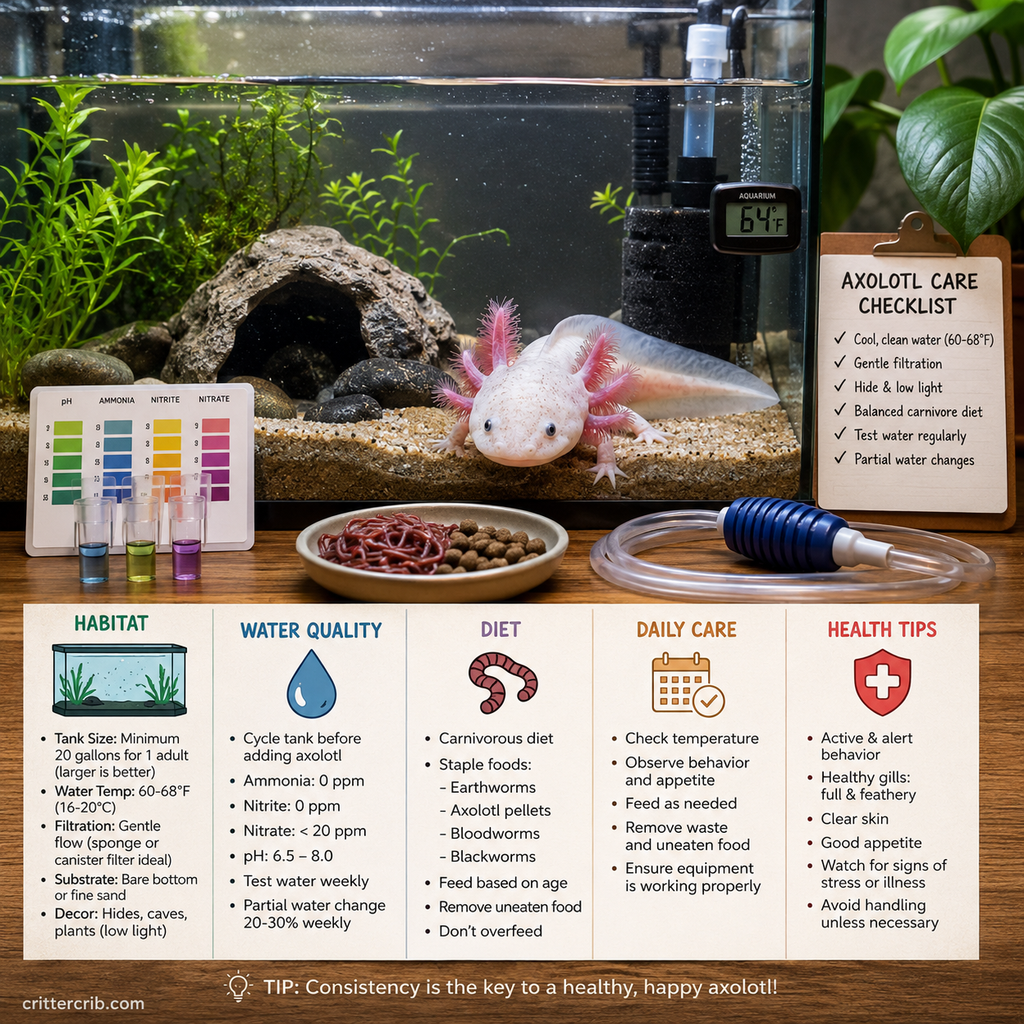
Clean-looking water isn’t necessarily safe water.
Axolotls produce waste that releases ammonia into the aquarium. Ammonia is toxic, and an improperly established tank can expose an axolotl to harmful concentrations.
This is why the aquarium should ideally be fully cycled before the animal is introduced.
Understanding the Nitrogen Cycle
Beneficial bacteria living primarily on surfaces and inside the aquarium filter process waste.
In simplified terms, the cycle works like this:
- Waste produces ammonia.
- Beneficial bacteria convert ammonia into nitrite.
- Other bacteria convert nitrite into nitrate.
- Nitrate is controlled primarily through water changes and other aquarium maintenance.
Both ammonia and nitrite should remain at 0 ppm in an established aquarium.
Nitrate should be kept at a reasonable level through routine maintenance.
Cycling an aquarium can take several weeks, so this isn’t something that should be started the night before bringing an axolotl home.
Testing Axolotl Water
Owning a reliable aquarium water test kit is one of the best investments you can make for an axolotl.
Regularly test for:
- Ammonia
- Nitrite
- Nitrate
- pH
Liquid test kits are often useful because they allow you to monitor several important water parameters accurately.
Testing is particularly important when the aquarium is new or whenever something seems wrong.
If your axolotl suddenly stops eating, behaves unusually, or shows changes in its gills, checking the water should be one of your first steps.
Axolotl Tank Filtration
Axolotls need effective filtration, but there’s a catch: they generally don’t appreciate strong water movement.
A powerful filter blasting water across the aquarium can create unnecessary stress.
The goal is good biological and mechanical filtration with relatively gentle flow.
Good Filter Options
Common options include:
- Sponge filters
- Canister filters with controlled output
- Hang-on-back filters with reduced or diffused flow
Sponge filters are popular because they provide biological filtration while creating relatively gentle water movement.
Regardless of the filter type, it should be appropriately sized for the aquarium’s waste load.
Remember that replacing all filter media at once can remove a significant amount of beneficial bacteria.
When reusable filter media needs cleaning, gently rinsing it in removed aquarium water is often preferable to washing it thoroughly under untreated tap water.
Does an Axolotl Tank Need a Heater?
Usually, no.
In fact, axolotl keepers are much more likely to worry about keeping the aquarium cool than heating it.
A heater may only be necessary in unusual situations where the room becomes excessively cold.
Always base the decision on the actual water temperature rather than the season or how the room feels.
The Best Substrate for Axolotls
Substrate selection is especially important because axolotls can accidentally swallow material from the bottom while eating.
Large pieces of gravel can become dangerous if swallowed.
For this reason, gravel is generally avoided.
Bare-Bottom Tanks
A bare-bottom aquarium is simple to clean and makes uneaten food and waste easy to spot.
This can be particularly useful for juveniles.
The downside is that a completely smooth bottom may provide less traction.
Fine Sand
Fine aquarium sand is another popular option for appropriately sized axolotls.
It creates a more natural appearance and allows the animal to move around the bottom comfortably.
If using sand, choose a very fine product rather than coarse gravel or small stones.
Young axolotls may be better kept without loose substrate until they’re larger.
Hides and Tank Decorations
Axolotls don’t need elaborate decorations, but they do benefit from having places where they can retreat.
Provide at least one comfortable hide.
Possible options include:
- Aquarium caves
- Smooth ceramic hides
- PVC pipe sections
- Driftwood arranged safely
- Aquarium-safe decorations with large openings
Inspect everything carefully before adding it.
Avoid sharp edges, rough surfaces, tiny openings, or decorations where an axolotl could become trapped.
An axolotl’s skin and gills are delicate.
Lighting an Axolotl Aquarium
Axolotls don’t require intense aquarium lighting.
In fact, bright lighting can make them uncomfortable, particularly when there aren’t enough shaded areas.
If you use aquarium lights for plants or viewing, keep the intensity moderate and provide plenty of cover.
Floating plants, caves, and shaded sections can give the axolotl somewhere darker to rest.
A normal day-and-night cycle is sufficient. Aquarium lighting doesn’t need to stay on late into the evening.
Can You Keep Live Plants With Axolotls?
Yes, live plants can work well in an axolotl aquarium.
The challenge is finding plants that tolerate cool water and relatively low lighting.
Possible choices include hardy aquarium plants such as:
- Java fern
- Anubias
- Java moss
- Hornwort
Plants attached to rocks or decorations can be particularly convenient because axolotls sometimes uproot plants while walking around.
Always make sure anything introduced to the aquarium is safe and free from harmful chemicals.
What Do Axolotls Eat?
Axolotls are carnivores.
Their diet should consist primarily of nutritionally appropriate animal-based foods rather than generic fish flakes or plant-based foods.
For a deeper look at earthworms, pellets, occasional foods, portion sizes, feeding frequency, and foods to avoid, see our complete axolotl feeding guide.
Earthworms are one of the most useful staple foods for many adult axolotls.
Other options can include:
- Earthworms or nightcrawlers
- High-quality sinking axolotl or carnivore pellets
- Appropriate aquatic worms
- Occasional suitable frozen foods
The ideal food should provide balanced nutrition and be appropriately sized for the axolotl.
Earthworms as a Staple Food
Earthworms are widely used because they’re nutritious, readily available, and easy for axolotls to eat.
Large worms can be cut into smaller pieces when necessary.
Make sure worms come from a safe source. Avoid collecting them from areas that may have been treated with pesticides, herbicides, fertilizers, or other chemicals.
Axolotl Pellets
Quality sinking pellets can also be convenient.
Look for pellets formulated for axolotls, salamanders, or carnivorous aquatic animals with an appropriate nutritional profile.
Sinking food is preferable because axolotls naturally feed near the bottom.
How Often Should You Feed an Axolotl?
Feeding frequency depends heavily on age.
Young axolotls are growing quickly and generally need to eat more frequently than adults.
Juveniles may require daily feeding, while healthy adults can often be fed every other day or several times per week.
Rather than following an inflexible schedule, pay attention to:
- Age
- Body condition
- Appetite
- Food size
- Overall health
Remove uneaten food so it doesn’t decay and affect water quality.
Foods to Avoid
Not everything an axolotl is willing to swallow is appropriate food.
Avoid making the following regular parts of the diet:
- Feeder fish
- Wild-caught insects from potentially contaminated areas
- Processed human foods
- Mammal or poultry meat
- Foods containing seasoning
- Large, hard foods that could cause choking
- Foods that spoil quickly and contaminate the aquarium
Feeder fish can also introduce parasites or disease into the tank.
Stick with known, nutritionally appropriate foods from reliable sources.
Daily Axolotl Care
Once the aquarium is properly established, daily axolotl care is fairly straightforward.
A quick daily inspection can prevent small problems from becoming serious ones.
Daily Care Checklist
Each day:
- Check the water temperature.
- Observe your axolotl’s appearance and behavior.
- Feed according to its normal schedule.
- Remove uneaten food.
- Look for visible waste.
- Make sure the filter is operating normally.
- Check equipment for leaks or other problems.
You don’t need to constantly disturb the animal.
Simply observing it for a few minutes can tell you a lot.
Weekly Axolotl Tank Maintenance
Regular aquarium maintenance keeps waste and nitrate from gradually accumulating.
A typical routine may involve partial water changes every week, although the exact frequency depends on the aquarium size, filtration, feeding, and water test results.
Performing a Water Change
A basic water change looks like this:
- Test the aquarium water.
- Remove a portion of the old water with an aquarium siphon.
- Remove visible waste and debris from the bottom.
- Prepare replacement water.
- Treat tap water with an appropriate aquarium water conditioner.
- Make sure the new water is close to the tank’s temperature.
- Slowly add the replacement water.
Avoid routinely replacing all of the aquarium water.
Large, unnecessary changes can disrupt stable conditions.
Why Water Conditioner Matters
Municipal tap water is commonly treated with chlorine or chloramine.
These substances can be harmful to aquatic animals and beneficial bacteria.
Use an aquarium water conditioner designed to neutralize the disinfectants present in your tap water.
Don’t assume water is safe simply because it looks clear.
Cleaning the Axolotl Tank
Axolotls are messy eaters and produce noticeable waste.
Spot cleaning between water changes can make maintaining the aquarium much easier.
A turkey baster dedicated exclusively to aquarium use can be surprisingly useful for removing individual pieces of waste.
You can also use a siphon during regular water changes to clean debris from the bottom.
Avoid completely sterilizing the aquarium during routine cleaning. Beneficial bacteria are an important part of the biological filtration system.
Can You Handle an Axolotl?
Axolotls are pets to observe rather than regularly handle.
Their skin is delicate and covered with a protective mucus layer. Handling can damage this layer and cause unnecessary stress.
Whenever possible, leave the axolotl in the water.
If you need to move one, using an appropriate container can sometimes be safer than grabbing it with your hands.
Handling should generally be limited to situations where it’s genuinely necessary.
Can Axolotls Live Together?
Keeping multiple axolotls together is possible in some circumstances, but it adds complications.
Tankmates should be similar in size, and the aquarium needs enough space and hiding areas for each animal.
Axolotls may nip at each other’s limbs or gills, particularly when they’re young, hungry, or significantly different in size.
Keeping a single axolotl is often simpler for a new owner.
Can Axolotls Live With Fish?
A species-only aquarium is generally the safer choice.
Fish may nip at an axolotl’s exposed gills, while small fish may become food.
Fish can also introduce parasites and other pathogens.
Even species that tolerate similar water temperatures aren’t automatically suitable tankmates.
Signs of a Healthy Axolotl
Learning your axolotl’s normal appearance and behavior makes it easier to recognize changes.
A healthy axolotl will generally have:
- A normal appetite
- Clear skin without obvious injuries
- Intact gills
- Normal body condition
- Regular movement
- Typical resting behavior
- No persistent floating or obvious difficulty maintaining position
Individual axolotls behave differently, so establishing what’s normal for your animal is useful.
Signs Something May Be Wrong
Possible warning signs include:
- Sudden loss of appetite
- Significant weight loss
- Persistent abnormal floating
- Skin lesions
- Unusual swelling
- Rapid or unusual gill deterioration
- Repeated frantic movement
- Severe lethargy
- Visible fungal-looking growth
- Difficulty swimming normally
Some behavior that appears unusual can occasionally be harmless, so avoid diagnosing an illness based on a single symptom.
Start by testing the water temperature, ammonia, nitrite, nitrate, and other relevant parameters.
If symptoms persist or the axolotl appears seriously unwell, contact a veterinarian experienced with amphibians or exotic animals.
Axolotl Gills and What They Can Tell You
The feathery gills are one of the first things owners tend to watch.
Gill appearance can vary naturally between individuals and even throughout the day.
However, substantial changes can sometimes indicate environmental stress.
Poor water quality, excessive current, inappropriate temperature, injury, or illness may affect the gills.
Rather than assuming that every curled or altered gill means disease, examine the entire situation.
Check the water and observe the animal’s behavior before drawing conclusions.
Axolotl Regeneration
Axolotls are famous for their remarkable regenerative abilities.
They can regenerate certain damaged tissues and body structures, including portions of limbs.
However, this doesn’t mean injuries are harmless.
An injured axolotl can still experience stress, infection, and other complications. Regenerative ability should never be treated as a substitute for safe housing and proper care.
Preventing injuries is always preferable.
Common Axolotl Care Mistakes
Many axolotl problems begin with the aquarium rather than the animal itself. Our guide to common axolotl care mistakes and how to avoid them goes deeper into problems involving warm water, uncycled tanks, poor water quality, unsafe substrate, excessive current, overfeeding, and unnecessary handling.
Keeping the Water Too Warm
This is one of the biggest challenges for owners living in warm climates.
Monitor water temperature throughout the year and have a cooling plan ready before summer.
Putting an Axolotl in an Uncycled Tank
A new aquarium may look perfectly clean while containing dangerous ammonia or nitrite.
Cycle the aquarium before introducing the axolotl whenever possible.
Using Gravel
Small stones can be swallowed during feeding.
Choose a safer bottom such as fine sand when appropriate or maintain a bare-bottom setup.
Creating Too Much Water Flow
Axolotls don’t need a powerful current.
Adjust or diffuse the filter output if water movement is excessive.
Overfeeding
Extra food doesn’t simply disappear.
It decomposes and contributes to poor water quality.
Feed an appropriate amount and remove leftovers.
Handling Too Often
An axolotl isn’t a pet that needs physical interaction.
Most of the enjoyment comes from observing its behavior and maintaining an interesting, healthy aquarium.
Setting Up an Axolotl Tank Step by Step
It’s much easier to prepare the aquarium before bringing your axolotl home.
A basic setup process looks like this:
- Choose an appropriately sized aquarium.
- Position it away from direct sunlight and major heat sources.
- Add a suitable filter with gentle flow.
- Choose bare bottom or an appropriate fine substrate.
- Add safe hides and decorations.
- Fill the aquarium with conditioned water.
- Install a thermometer.
- Begin cycling the aquarium.
- Test ammonia, nitrite, nitrate, and pH throughout the cycling process.
- Confirm that the aquarium can consistently maintain an appropriate temperature.
- Introduce the axolotl only after stable, safe conditions have been established.
Preparing everything in advance dramatically reduces the chances of scrambling to solve water-quality or temperature problems after the animal arrives.
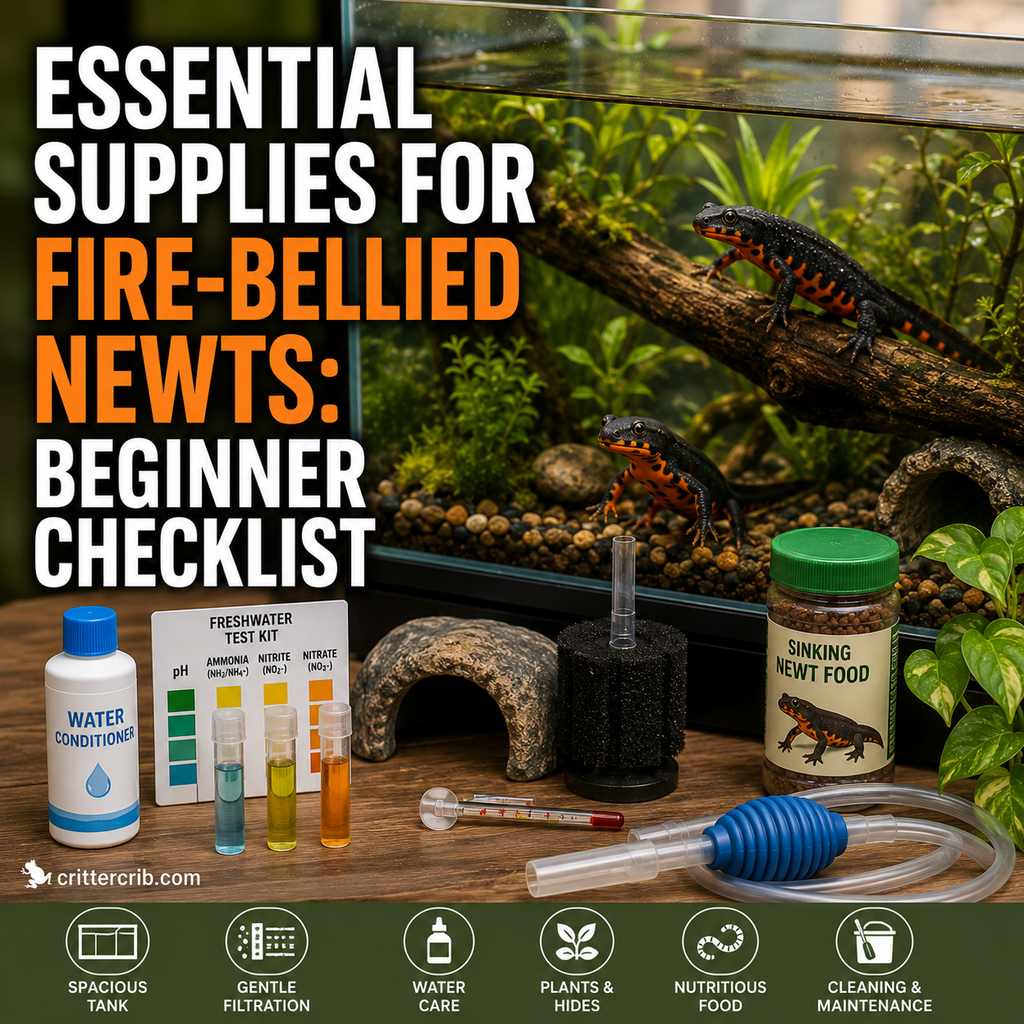
Axolotl Supplies Checklist
Before getting an axolotl, gather the basic equipment.
You’ll typically need:
- Appropriately sized aquarium
- Aquarium lid
- Gentle filtration system
- Thermometer
- Water conditioner
- Liquid water test kit
- Aquarium siphon
- Bucket dedicated to aquarium use
- Safe hide
- Appropriate substrate or bare-bottom setup
- Quality axolotl food
- Feeding tongs if desired
- Turkey baster or similar tool for spot cleaning
- Cooling equipment if your room becomes too warm
An aquarium chiller isn’t necessary in every home, but owners in warmer climates should consider how they’ll control temperatures during hot weather.
Are Axolotls Good Pets for Beginners?
Axolotls can be good pets for responsible beginners, but they’re not necessarily ideal as someone’s first experience with aquarium care.
The animal itself doesn’t require constant attention.
The aquarium does require consistency.
You’ll need to understand:
- The nitrogen cycle
- Water testing
- Temperature management
- Filtration
- Water changes
- Appropriate feeding
Once those fundamentals become routine, daily care is manageable.
The biggest mistake is assuming that because axolotls are relatively inactive, they’re low-maintenance pets that can simply be placed in a tank of tap water.
Frequently Asked Questions About Axolotl Care
Do Axolotls Need Land?
No. Axolotls normally remain aquatic throughout their lives and should be housed in an aquatic setup rather than a half-land, half-water salamander enclosure.
Do Axolotls Need a Filter?
Yes, appropriate filtration is strongly recommended.
Axolotls produce enough waste that maintaining stable water quality without filtration can become much more difficult.
Choose filtration that provides sufficient biological capacity without creating excessive water movement.
Do Axolotls Need a Light?
They don’t require powerful aquarium lighting.
Normal ambient lighting and a regular day-night cycle are generally sufficient. If aquarium lights are used, provide shaded areas and hides.
Can Axolotls Eat Every Day?
Young, growing axolotls may eat daily.
Adults generally don’t require the same feeding frequency and can often be fed every other day or several times per week depending on their condition and diet.
How Often Should an Axolotl Tank Be Cleaned?
Spot cleaning can be performed whenever waste or uneaten food is visible.
Partial water changes are commonly performed weekly, but your water test results should ultimately guide the schedule.
Can I Use Tap Water for an Axolotl?
Tap water can often be used if it’s appropriately treated with an aquarium water conditioner and the source water is otherwise suitable.
Untreated chlorinated or chloraminated tap water shouldn’t be added directly to the aquarium.
Why Is My Axolotl Floating?
Axolotls may occasionally float, and brief floating isn’t automatically an emergency.
Persistent or unusual floating can have several possible causes, however, including digestive issues, stress, or environmental problems.
Check the aquarium’s water parameters and temperature first. If the behavior continues or is accompanied by other symptoms, consult an experienced exotic veterinarian.
Do Axolotls Recognize Their Owners?
Axolotls can learn to associate movement near their aquarium with feeding and may approach the front of the tank when someone appears.
That doesn’t necessarily mean they recognize people in the same way a dog or other highly social animal might.
They’re best appreciated for their natural behavior rather than expected to provide traditional pet interaction.
Final Thoughts on Axolotl Care
Axolotls are fascinating animals, but successful care starts with understanding that you’re maintaining both the animal and its aquatic environment.
A spacious aquarium, cool water, gentle filtration, safe substrate, appropriate food, and consistent water quality form the foundation of good axolotl care.
Once the aquarium is properly cycled and stable, the everyday routine becomes much simpler. Check the temperature, observe your axolotl, feed appropriately, remove waste, test the water regularly, and perform routine partial water changes.
Most importantly, prepare the habitat before bringing the animal home.
Getting the setup right from the beginning makes axolotl ownership considerably easier and gives your pet the stable environment it needs for a long, healthy life.