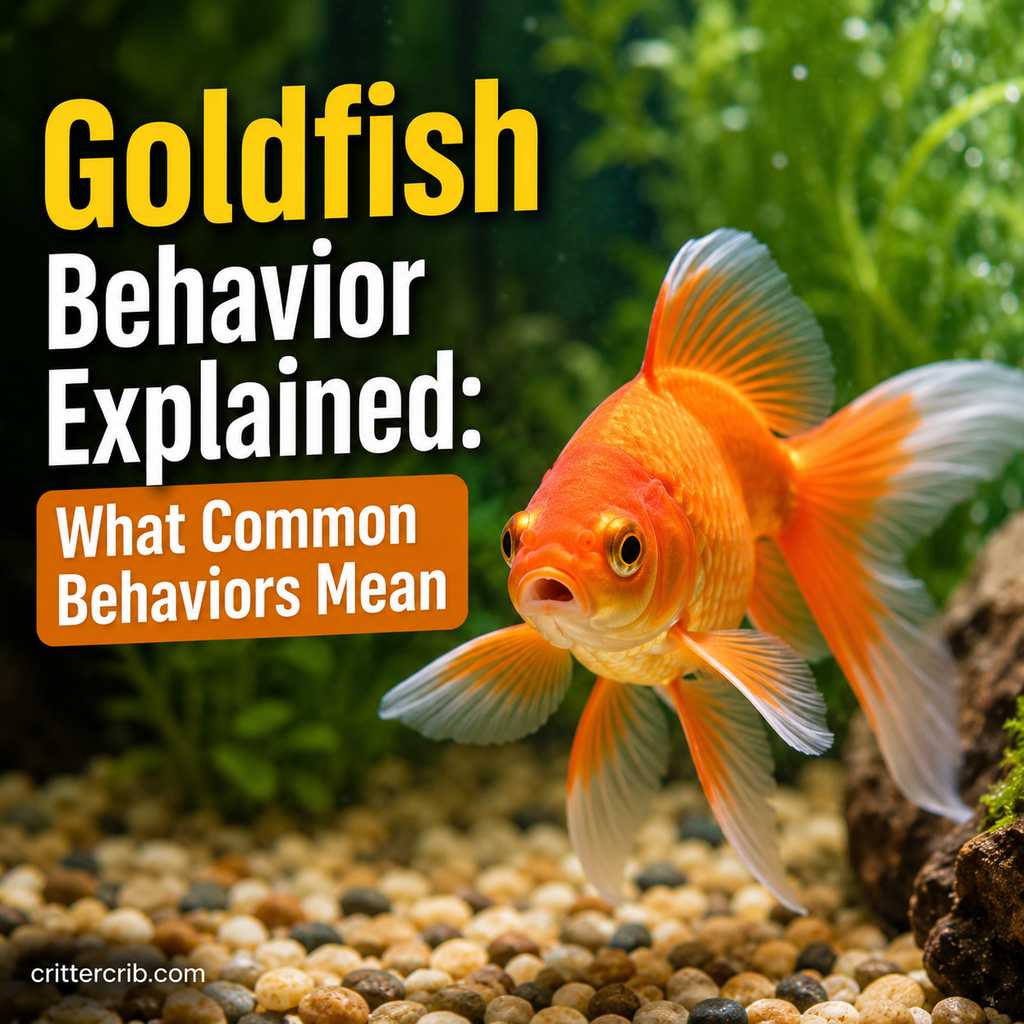
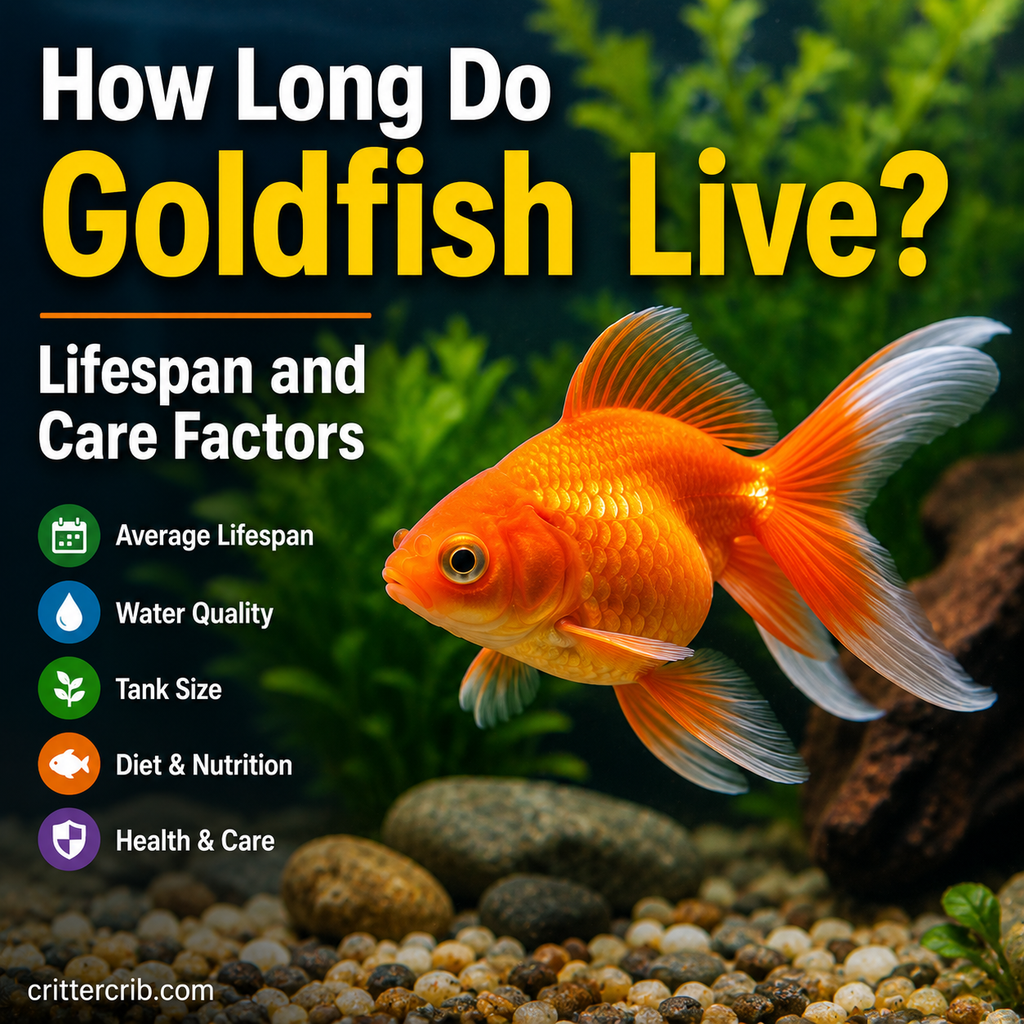
Goldfish have a reputation for being short-lived pets. Many people remember having one as a child that survived for a few months or perhaps a couple of years.
But that’s not a normal limit for a healthy goldfish.
With proper care, goldfish can live for many years, and some reach well into their teens or beyond. Their potential lifespan is one of the biggest reasons goldfish shouldn’t be treated as temporary pets or kept indefinitely in tiny bowls.
How long a particular goldfish lives depends on several factors, including genetics, variety, aquarium size, water quality, diet, temperature, and overall care.
If you’re considering a goldfish—or already have one—understanding these factors can help give your fish the best chance at a long, healthy life.
How Long Do Goldfish Live?
A well-cared-for goldfish can commonly live around 10 to 15 years, and some live considerably longer.
That may come as a surprise if you’re used to seeing goldfish sold as inexpensive beginner pets.
Goldfish are members of the carp family and can be remarkably hardy when their basic needs are met. Unfortunately, their ability to tolerate less-than-ideal conditions sometimes works against them. Surviving poor conditions isn’t the same as thriving in them.
A goldfish kept in clean, appropriately sized, well-filtered water and given a balanced diet has a much better chance of reaching its natural lifespan than one kept in a small, poorly maintained container.
Can Goldfish Live for 20 Years?
Yes, it’s possible.
Some goldfish live for 20 years or longer under excellent conditions. Exceptional individuals have reportedly lived for several decades.
Those cases shouldn’t necessarily be treated as the expected lifespan of every pet goldfish, but they demonstrate just how long-lived these fish can be.
When bringing home a goldfish, it’s reasonable to think of the commitment in terms of years or potentially decades rather than months.
What Is the Oldest Goldfish Ever Recorded?
One of the most frequently cited longevity records belongs to a goldfish named Tish in the United Kingdom.
Tish reportedly lived for 43 years, eventually earning recognition from Guinness World Records as the world’s oldest goldfish.
An extreme record doesn’t tell us how long the average pet goldfish will live, but it does challenge the idea that goldfish are naturally short-lived animals.
A goldfish living only a year or two shouldn’t automatically be considered normal simply because it’s common.
How Long Do Goldfish Live in a Tank?
Goldfish can live for 10 years or longer in an aquarium when their environment meets their needs.
The important distinction is that simply putting a goldfish in a tank isn’t enough. Tank size, filtration, stocking levels, water quality, and maintenance all influence the environment.
Goldfish produce a substantial amount of waste. In a small or overcrowded aquarium, waste can accumulate quickly and lead to unhealthy water conditions.
A properly maintained aquarium gives you much greater control over:
- Water quality
- Filtration
- Temperature
- Feeding
- Tank mates
- Disease observation
- Waste removal
Those advantages can contribute significantly to a goldfish’s long-term health.
How Long Do Goldfish Live in a Bowl?
A traditional goldfish bowl is not an appropriate long-term home for a goldfish.
The problem isn’t that a fish placed in a bowl immediately dies. Some goldfish can survive surprisingly poor conditions for a period of time.
The problem is that bowls make it much harder to provide the stable, healthy environment a goldfish needs throughout its life.
Common problems with bowls include:
- Very limited swimming space
- Small water volume
- Rapid waste buildup
- Difficulty providing adequate filtration
- Unstable water temperature
- Limited room for enrichment
- Faster changes in water chemistry
A larger aquarium isn’t just about giving the fish more room to swim. More water volume also makes environmental conditions easier to keep stable.
If your goal is a long-lived goldfish, a bowl shouldn’t be considered its permanent home.
How Long Do Goldfish Live in a Pond?
Goldfish can live exceptionally long lives in properly maintained outdoor ponds.
A good pond can provide abundant swimming space, natural enrichment, seasonal changes, and a large volume of water. Some pond goldfish live for well over a decade.
However, outdoor life introduces risks that indoor aquarium fish don’t necessarily face.
These can include:
- Predators
- Extreme temperatures
- Poor water quality
- Parasites
- Disease
- Inadequate oxygen
- Overcrowding
- Unsafe winter conditions
A pond needs to be designed for fish rather than simply being a decorative container filled with water.
Depth, filtration, aeration, climate, stocking levels, and winter care should all be considered.
Do Different Types of Goldfish Have Different Lifespans?
Goldfish come in many varieties, and body shape can influence overall health and longevity.
The two broad groups you’ll encounter are single-tailed goldfish and fancy goldfish.
Common and Comet Goldfish
Common and comet goldfish have relatively streamlined bodies and are strong swimmers.
These fish can become surprisingly large and are often excellent candidates for spacious aquariums or properly designed ponds.
With good care, they can live well over 10 years, and some survive for decades.
Their potential adult size is one reason the tiny goldfish sold at fairs, pet stores, and feeder-fish displays shouldn’t be viewed as permanently small animals.
Fancy Goldfish
Fancy goldfish include varieties such as:
- Fantails
- Orandas
- Ranchus
- Ryukins
- Black moors
- Telescope-eye goldfish
- Pearlscales
Many fancy varieties have compact bodies, elaborate fins, unusual eye shapes, or other selectively bred characteristics.
These traits can make certain fancy goldfish more susceptible to swimming difficulties, injuries, or other health concerns.
Fancy goldfish can still live for many years with appropriate care, but their particular needs should be considered when setting up the aquarium.
What Determines a Goldfish’s Lifespan?
There isn’t one secret trick that makes a goldfish live longer.
Longevity is usually the result of many basic things being done consistently well.
The most important factors include:
- Genetics
- Aquarium or pond size
- Water quality
- Filtration
- Diet
- Stocking levels
- Temperature stability
- Disease prevention
- Stress levels
- Routine maintenance
Let’s look at the biggest factors more closely.
Aquarium Size and Goldfish Lifespan
One of the most important decisions you’ll make is where your goldfish lives.
Goldfish need considerably more space than their small size at the pet store might suggest.
A juvenile goldfish may only be a couple of inches long, but healthy goldfish can grow significantly as they mature. Single-tailed varieties can become especially large.
An appropriately sized aquarium provides:
- More swimming room
- Greater water volume
- Better dilution of waste
- More stable water chemistry
- Space for effective filtration
- Room for the fish to grow
Rather than choosing a tank based solely on the goldfish’s current size, plan for its adult size and the number of fish you intend to keep.
Starting with a larger aquarium can also save you from repeatedly upgrading as your fish grows.
Water Quality May Be the Most Important Care Factor
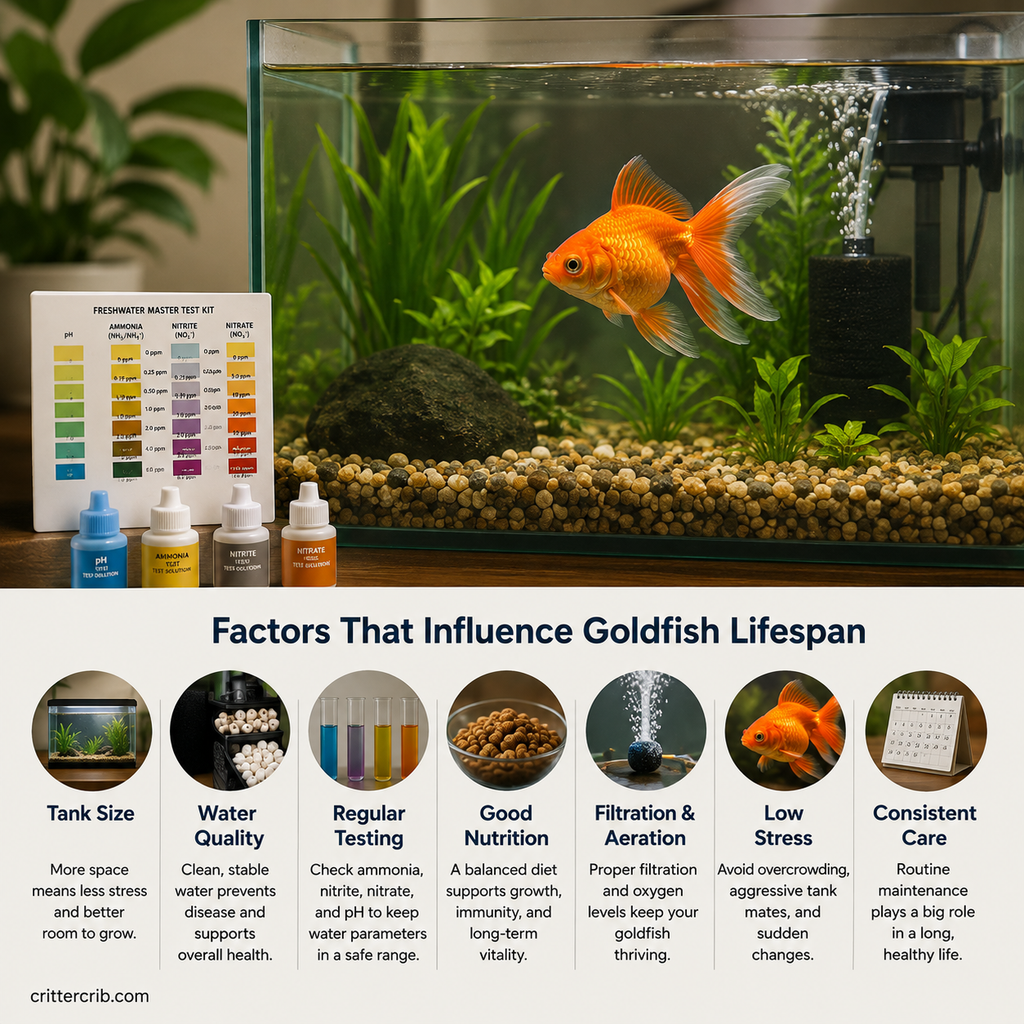
Goldfish live in the same water where they eat, breathe, and produce waste.
That makes water quality fundamental to their health.
Fish waste and decomposing organic material can produce ammonia, which is toxic to fish. In a properly cycled aquarium, beneficial bacteria convert ammonia into nitrite and then nitrate.
Ammonia and nitrite should remain at zero in an established aquarium.
Nitrate is less immediately toxic but still needs to be controlled through appropriate maintenance, including regular water changes.
Test Your Aquarium Water
A reliable aquarium test kit can help you monitor:
- Ammonia
- Nitrite
- Nitrate
- pH
Testing is especially important when establishing a new aquarium, adding fish, or investigating unusual behavior.
Clear water isn’t necessarily safe water. Ammonia and nitrite can be present even when the aquarium looks perfectly clean.
The Importance of Cycling a Goldfish Tank
A new aquarium isn’t automatically ready for fish just because it contains clean-looking water.
Aquarium cycling establishes colonies of beneficial bacteria that process the waste produced by your goldfish.
This biological filtration is essential.
Without an established nitrogen cycle, toxic ammonia and nitrite can rise quickly.
Understanding aquarium cycling is one of the most useful things a new goldfish owner can learn. It can prevent many of the problems mistakenly blamed on fish being fragile or “just not living very long.”
Goldfish Need Good Filtration
Goldfish have a reputation for producing a lot of waste, and it’s well deserved.
Effective filtration helps manage that waste and keeps the aquarium environment more stable.
Aquarium filtration typically provides some combination of:
Mechanical Filtration
Captures particles and debris suspended in the water.
Biological Filtration
Provides surface area where beneficial bacteria can live and process harmful waste compounds.
Chemical Filtration
Uses materials such as activated carbon or specialized media to remove certain substances from the water when appropriate.
Biological filtration is especially important for a healthy, established aquarium.
When cleaning filter media, avoid unnecessarily destroying the beneficial bacterial colonies you’ve worked to establish. Follow appropriate maintenance procedures for your particular filter.
Regular Water Changes Matter
Even a good filter doesn’t eliminate the need for water changes.
Over time, nitrate and dissolved waste can accumulate in an aquarium. Regular partial water changes help keep these substances under control and replenish minerals in the water.
How often you need to perform water changes depends on factors such as:
- Aquarium size
- Number and size of fish
- Filtration
- Feeding
- Plant growth
- Nitrate levels
Testing your water gives you much better information than relying on a calendar alone.
When adding tap water to an aquarium, use an appropriate water conditioner if your municipal supply contains chlorine or chloramine.
Temperature and Goldfish Lifespan
Goldfish are cool-water fish and generally don’t require the tropical temperatures associated with species such as bettas.
What matters greatly is stability.
Sudden temperature changes can stress fish, even when the final temperature falls within a tolerable range.
Keep the aquarium away from locations where temperatures fluctuate dramatically, such as:
- Direct sunlight
- Heating vents
- Air-conditioning vents
- Exterior doors
- Drafty windows
A simple aquarium thermometer makes it much easier to monitor conditions.
Fancy goldfish and certain varieties may have somewhat different temperature preferences, so research the specific type you’re keeping.
Diet Can Affect Long-Term Health
Goldfish are omnivores.
A quality goldfish food can provide the foundation of their diet, supplemented appropriately with other suitable foods.
Depending on your setup and the fish you’re keeping, a varied diet may include:
- High-quality goldfish pellets
- Appropriate flakes
- Vegetables
- Certain aquatic plants
- Small amounts of suitable protein-rich foods
The goal isn’t to feed as much variety as possible. It’s to provide balanced nutrition without overfeeding.
Avoid Overfeeding
Goldfish often behave as though they’re hungry.
They may swim toward you, gather near the feeding area, or enthusiastically search for food whenever you approach.
That doesn’t mean they need to be fed every time.
Overfeeding can cause two problems at once: the fish consumes more food than necessary, and uneaten food creates additional waste in the aquarium.
Feed sensible portions and remove obvious leftovers.
Overcrowding Can Shorten a Goldfish’s Life
A tank that works for one small juvenile goldfish may become unsuitable as the fish grows or as additional fish are added.
Overcrowding increases:
- Waste production
- Competition for food
- Stress
- Oxygen demand
- Risk of disease transmission
- Pressure on the aquarium’s filtration system
It can also make maintaining stable water parameters much more difficult.
When planning your aquarium, think about the adult size of every fish rather than how small they are when purchased.
Oxygen and Water Movement Matter
Goldfish need adequately oxygenated water.
Oxygen enters aquarium water primarily through gas exchange at the surface. Filters and air-driven equipment can increase surface movement and improve circulation.
Warning signs of inadequate oxygen can include fish repeatedly gathering near the surface and appearing to gasp.
However, surface gasping can have multiple causes, including poor water quality. Test the water rather than immediately assuming oxygen is the only issue.
Warmer water generally holds less dissolved oxygen than cooler water, making aeration particularly important during unusually warm conditions.
Choosing Compatible Tank Mates
Goldfish aren’t automatically compatible with every peaceful-looking fish in a pet store.
Different species may have different requirements for:
- Temperature
- Water chemistry
- Food
- Swimming space
- Current
- Social behavior
Size matters too. Very small fish may be viewed as food, while aggressive species can injure slow-moving fancy goldfish.
Even mixing goldfish varieties requires some thought.
A fast common or comet goldfish may outcompete a slow fancy goldfish at feeding time. Fancy varieties with delicate fins or protruding eyes can also be more vulnerable to injury.
Choose tank mates based on compatible care requirements rather than appearance alone.
Stress Can Affect Goldfish Health
Chronic stress can weaken a fish and make it more vulnerable to health problems.
Potential sources of stress include:
- Poor water quality
- Overcrowding
- Aggressive tank mates
- Sudden temperature changes
- Inadequate swimming space
- Constant environmental disturbance
- Improper handling
- Frequent changes in water chemistry
A stable environment is generally better than constantly trying to adjust conditions in pursuit of “perfect” numbers.
Watch for Signs of Illness
Recognizing problems early can improve the chances of successful treatment.
Pay attention to your goldfish’s normal appearance and behavior so changes are easier to notice.
Potential warning signs include:
- Loss of appetite
- Unusual lethargy
- Gasping at the surface
- Clamped fins
- White spots
- Red or irritated areas
- Frayed fins
- Abnormal swelling
- Difficulty swimming
- Rubbing against objects
- Spending unusual amounts of time at the bottom or surface
These symptoms don’t point to one specific disease.
If something looks wrong, start by checking water quality. Poor environmental conditions can cause symptoms directly and make fish more vulnerable to disease.
Does a Goldfish Grow to the Size of Its Tank?
You’ve probably heard that goldfish only grow as large as their tank allows.
This is a misleading way to think about goldfish growth.
A goldfish kept in poor or cramped conditions may experience stunted growth, but that doesn’t mean a tiny container is healthy or appropriate.
The goal shouldn’t be to prevent a goldfish from growing.
Instead, provide enough space, clean water, proper nutrition, and suitable conditions for normal development.
Goldfish can become much larger than many first-time owners expect, particularly common and comet varieties.
Why Do Some Goldfish Die So Quickly?
If goldfish can live for more than a decade, why do so many die within a year or two?
The answer often comes down to husbandry rather than the natural lifespan of the species.
Common problems include:
- Keeping goldfish in bowls
- Using aquariums that are too small
- Not cycling the tank
- Ammonia or nitrite exposure
- Inadequate filtration
- Overfeeding
- Overcrowding
- Sudden water changes
- Poor acclimation
- Incompatible tank mates
- Failure to test water
Goldfish are often marketed as extremely easy beginner pets, which can give new owners the impression that they require little more than a bowl, tap water, and fish flakes.
In reality, their long lifespan and substantial adult size make them a significant commitment.
How to Help Your Goldfish Live Longer
There’s no way to guarantee how long an individual fish will live, but good husbandry can dramatically improve its chances.
Focus on the fundamentals:
- Provide an appropriately sized aquarium or pond.
- Cycle the aquarium before relying on it to process fish waste.
- Use effective biological and mechanical filtration.
- Test water regularly.
- Keep ammonia and nitrite at zero.
- Perform regular partial water changes.
- Avoid overcrowding.
- Feed a balanced diet in sensible portions.
- Maintain stable temperatures.
- Choose compatible tank mates.
- Watch for changes in appetite and behavior.
- Address water-quality problems quickly.
You don’t need an elaborate aquarium full of expensive equipment.
What goldfish need most is enough space and a clean, stable environment that’s maintained consistently.
Frequently Asked Questions About Goldfish Lifespan
What is the average lifespan of a goldfish?
With good care, goldfish commonly live around 10 to 15 years. Some individuals live for 20 years or longer.
Can goldfish live for 30 years?
Yes, although it’s unusual. Exceptional goldfish have survived for several decades. Tish, one of the most famous examples, reportedly lived for 43 years.
How long do carnival goldfish live?
Carnival goldfish are generally common or comet-type goldfish, so receiving one from a fair doesn’t inherently give it a shorter natural lifespan. With appropriate housing and care, these fish have the potential to live for many years.
How long do fancy goldfish live?
Many fancy goldfish can live for around 10 years or longer with proper care. Lifespan varies depending on genetics, variety, environment, and health.
Do goldfish live longer in tanks or ponds?
Both environments can support long-lived goldfish when properly maintained. A spacious aquarium provides greater environmental control, while a well-designed pond can provide extensive swimming space. Poorly maintained versions of either can cause health problems.
Do goldfish need a filter to live a long time?
Effective filtration is extremely important in most goldfish aquariums because these fish produce substantial waste. Biological filtration helps convert toxic waste products into less harmful compounds.
How long can a goldfish live without a filter?
There’s no useful universal lifespan for an unfiltered aquarium because conditions vary tremendously. Rather than focusing on how long a goldfish can survive without filtration, focus on providing stable water quality and adequate biological filtration.
Can goldfish live alone?
Yes. A goldfish can be kept without another goldfish when provided with an appropriate environment and care. If you keep multiple goldfish, make sure the aquarium or pond has enough space and filtration for the increased biological load.
Are goldfish easy pets?
Goldfish can be rewarding pets, but “easy” can be misleading. They require appropriate housing, filtration, water testing, regular maintenance, and a long-term commitment.
Final Thoughts
So, how long do goldfish live?
A properly cared-for goldfish can live for 10 to 15 years, and some make it to 20 years or beyond. Exceptional goldfish have survived for several decades.
That’s a very different picture from the short-lived bowl fish many people remember from childhood.
The biggest difference often isn’t a special food, supplement, or piece of aquarium equipment. It’s the environment as a whole.
Give your goldfish enough space, establish proper filtration, keep the water clean and stable, provide a balanced diet, avoid overcrowding, and pay attention when its normal behavior changes.
A tiny goldfish from a pet store may look like a small commitment today, but with good care, it could be part of your home for many years.