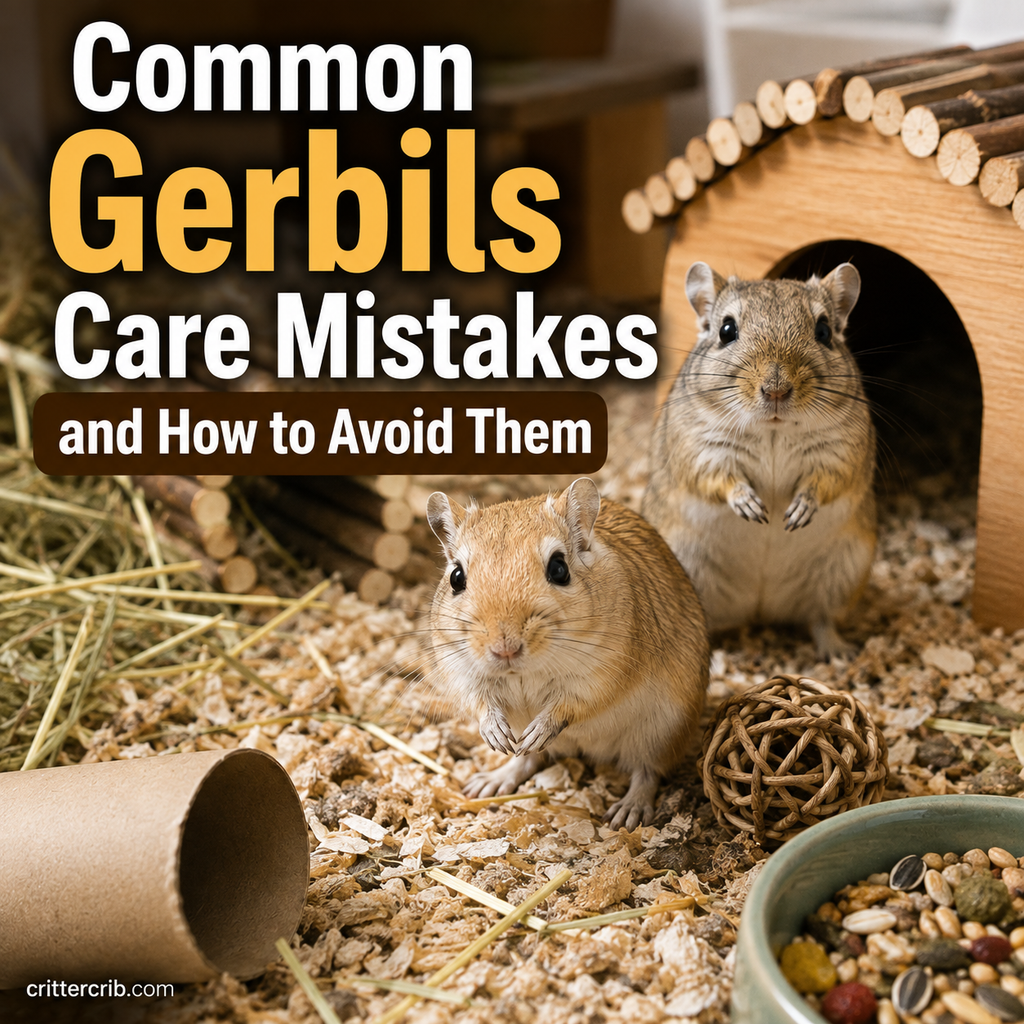
Common Gerbil Care Mistakes and How to Avoid Them

Two gerbils in a habitat with deep bedding, hay, chew toys, and a wooden hideout
Avoiding common gerbil care mistakes starts with proper housing, deep bedding, enrichment, nutrition, companionship, and safe handling.

Gerbils have a reputation for being fairly easy pets to care for. They’re small, don’t need walks, and can live comfortably indoors in a relatively compact habitat.

But “easy” doesn’t mean maintenance-free.

Some of the most common gerbil care mistakes happen because their needs are compared with those of hamsters, mice, or other small pets. Gerbils have their own natural behaviors and housing requirements, particularly when it comes to digging, companionship, chewing, and creating burrows.

The good news is that many mistakes are easy to correct once you understand what your gerbils actually need.

Here are some of the most common gerbil care mistakes and practical ways to avoid them.

Continue reading “Common Gerbil Care Mistakes and How to Avoid Them”


How Much Do Chinchillas Cost? Setup and Ongoing Expenses

Two chinchillas with cage, food, dust bath supplies, and a budget checklist
Chinchilla ownership includes the initial setup plus ongoing costs for food, hay, dust, enrichment, and veterinary care.

Chinchillas are small pets, but bringing one home can be a surprisingly significant financial commitment.

The chinchilla itself is only part of the cost. A proper cage, cooling equipment, food, hay, dust baths, chew toys, bedding, and veterinary care all need to be considered before deciding whether a chinchilla fits your budget.

So, how much does a chinchilla cost?

The exact amount varies depending on where you live, whether you adopt or buy, the type of enclosure you choose, and the veterinary care available in your area. As a general planning estimate, expect to spend several hundred dollars on the initial setup, with higher-end setups potentially reaching $1,000 or more. After that, you’ll have recurring expenses for food, supplies, enrichment, and veterinary care.

Here’s a closer look at where that money goes.

Continue reading “How Much Do Chinchillas Cost? Setup and Ongoing Expenses”

Best Enrichment Ideas for Happy, Active Rabbits

Rabbits enjoying enrichment toys, tunnels, hay, and foraging activities
Simple enrichment activities can encourage rabbits to forage, explore, chew, dig, and stay active.

Rabbits may look perfectly content lounging in a cozy corner, but they need much more than food, water, and a comfortable place to sleep. They are curious, intelligent animals with natural instincts to dig, forage, explore, chew, run, and investigate their surroundings.

That is where enrichment comes in.

Rabbit enrichment gives your bunny safe and interesting ways to express these natural behaviors. It can encourage exercise, provide mental stimulation, and make everyday life more interesting. You also do not need to constantly buy expensive rabbit toys. Some of the best enrichment ideas are surprisingly simple.

Whether you have a newly adopted rabbit or simply want to make your current setup more engaging, here are some practical enrichment ideas for keeping rabbits happy and active.

Continue reading “Best Enrichment Ideas for Happy, Active Rabbits”

How Long Do Guinea Pigs Live? Lifespan and Care Factors

Two healthy guinea pigs with hay and fresh vegetables in a comfortable habitat
Guinea pigs commonly live around 5 to 7 years, with nutrition, housing, companionship, genetics, and veterinary care all influencing their health and longevity.

Bringing home a guinea pig is a bigger commitment than many first-time owners realize.

Despite their small size, guinea pigs can be part of the family for quite a few years. They’re not typically a short-term pet, and good daily care can make a meaningful difference in both how long they live and how healthy those years are.

So, how long do guinea pigs live?

Most pet guinea pigs live for roughly 5 to 7 years, although some live longer. Individual lifespan varies considerably based on genetics, diet, housing, veterinary care, underlying health conditions, and plain old luck.

Rather than focusing only on reaching a certain age, it’s more useful to think about healthy lifespan. A guinea pig that receives appropriate nutrition, plenty of space, companionship, exercise, and prompt medical attention has a better chance of enjoying a comfortable life from youngster to senior.

Here’s what affects guinea pig lifespan and what you can do to support your guinea pig through every stage of life.

Continue reading “How Long Do Guinea Pigs Live? Lifespan and Care Factors”

What Do Hamsters Eat? A Complete Feeding Guide

Hamster eating broccoli beside a bowl of hamster food with fresh vegetables and fruit
A balanced hamster diet starts with a complete hamster food, supplemented with appropriate fresh vegetables and small amounts of other safe foods.

Hamsters may be tiny, but figuring out what to put in their food bowl can be surprisingly confusing.

Walk through a pet store and you’ll find seed mixes, pellets, colorful treats, dried fruit, chew sticks, and packages promising to be complete hamster diets. Then there’s fresh food. Can hamsters eat carrots? What about bananas? Eggs? Broccoli?

A healthy hamster diet doesn’t need to be complicated.

The foundation should be a nutritionally balanced food formulated for hamsters, with appropriate fresh foods and occasional treats adding variety. The exact amount and type of food can vary depending on your hamster’s species, age, size, health, and the diet you’re using.

There’s another wrinkle: hamsters store food.

An empty bowl doesn’t necessarily mean your hamster ate everything. There’s a good chance some of dinner has been transported into a carefully guarded underground pantry.

Here’s what hamsters eat, which foods can be offered safely, what to avoid, and how to build a practical feeding routine.

Continue reading “What Do Hamsters Eat? A Complete Feeding Guide”

How to Handle Hedgehogs Safely and Build Trust

Hedgehog being gently supported in both hands during safe handling
Supporting a hedgehog gently with both hands and allowing it to relax at its own pace can help make handling safer and build trust.

Bringing home a hedgehog can come with an unexpected question: how exactly are you supposed to pick up an animal covered in quills?

Fortunately, handling a hedgehog is usually much easier once you understand how its body works.

Hedgehog quills aren’t like porcupine quills. They don’t shoot out or detach simply because you touch them. When a hedgehog is relaxed, its quills generally lie flatter against its body. When it’s frightened or defensive, it can raise those quills, curl into a tight ball, huff, and make itself considerably less inviting to hold.

That’s why successful handling isn’t really about finding a trick for avoiding the quills.

It’s about building trust.

Some hedgehogs become comfortable with their owners relatively quickly. Others need weeks or longer before they stop treating every approaching hand like a potential predator.

If you’re patient and consistent, you can help your hedgehog learn that being picked up doesn’t mean something bad is about to happen.

Here’s how to handle a hedgehog safely, recognize its body language, and gradually build a trusting relationship.

Continue reading “How to Handle Hedgehogs Safely and Build Trust”

Ideal Temperature and Humidity for Mice

Two pet mice beside a thermometer and humidity monitor showing comfortable habitat conditions
Pet mice are generally comfortable around 65°F to 75°F with moderate relative humidity of approximately 40% to 60%.

Pet mice may be small, but their environment can have a big effect on their comfort.

Temperature, humidity, ventilation, bedding, and cage placement all work together to create a healthy living space. A room that feels comfortable to you may still be too warm, too cold, drafty, or humid for a mouse depending on where the enclosure is located.

Fortunately, you don’t need to turn your home into a climate-controlled laboratory.

For most pet owners, maintaining a stable household temperature, avoiding extremes, providing plenty of appropriate nesting material, and monitoring the enclosure with a simple thermometer and hygrometer will go a long way.

Here’s what you should know about ideal temperature and humidity for mice, including signs that your mice may be too hot or cold and how to keep their habitat comfortable throughout the year.

Continue reading “Ideal Temperature and Humidity for Mice”

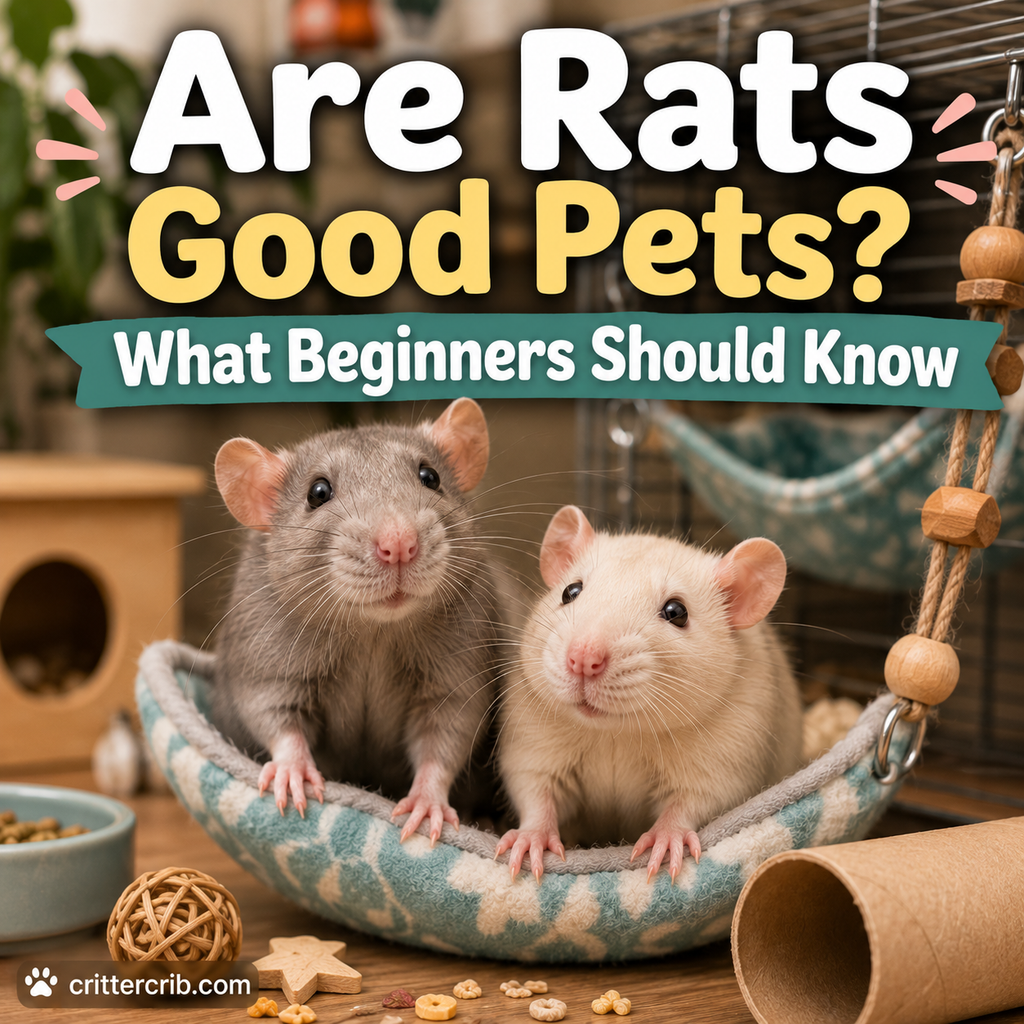
Are Rats Good Pets? What Beginners Should Know

Two pet rats relaxing together in a hammock inside a comfortable enriched habitat
Pet rats can be intelligent, social, playful companions, but they need compatible rat companions, enrichment, proper housing, and regular care.

Pet rats have an image problem.

Mention rats and some people immediately picture wild rodents running through alleys. Domestic rats are very different. Well-socialized pet rats can be intelligent, curious, playful, clean, and surprisingly affectionate companions.

They can learn routines, recognize familiar people, solve simple puzzles, and develop distinct personalities. Some happily climb onto their owners and settle down for attention. Others would rather spend their free time investigating every object within reach.

But rats aren’t effortless pets.

They need compatible companions, a spacious enclosure, daily interaction, enrichment, appropriate nutrition, regular cleaning, and access to veterinary care. Their relatively short lifespan can also be difficult for owners who become deeply attached to them.

If you’re considering rats for the first time, here’s what you should know before bringing them home.

Continue reading “Are Rats Good Pets? What Beginners Should Know”

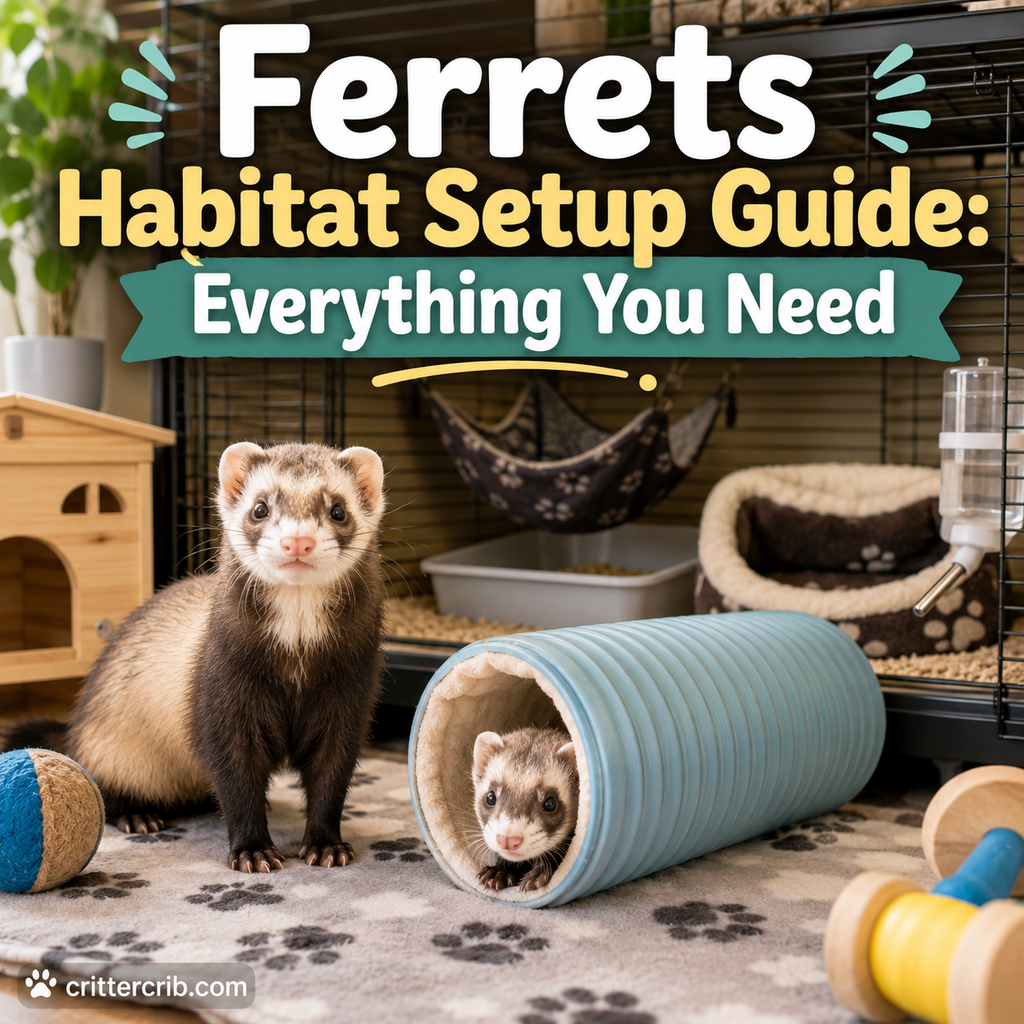
Ferret Habitat Setup Guide: Everything You Need

Two ferrets in a complete habitat with tunnels, bedding, sleeping areas, water, litter box, and enrichment
A good ferret habitat provides secure housing, comfortable sleeping areas, litter boxes, fresh water, enrichment, and plenty of opportunities for exercise.

Ferrets have a talent for turning ordinary household objects into entertainment.

A cardboard box becomes a tunnel. A blanket becomes a sleeping cave. A gap behind the furniture becomes the most interesting place in the entire house—especially if you don’t want them going there.

That curiosity is part of what makes ferrets such entertaining pets, but it also means their habitat needs more thought than simply buying a cage and adding food and water.

Ferrets need a secure home base with comfortable sleeping areas, litter boxes, food, fresh water, and enrichment. They also need regular opportunities to exercise and explore outside their enclosure in a properly ferret-proofed space.

Whether you’re preparing for your first ferrets or improving an existing setup, here’s what you need to create a safe, comfortable, and engaging ferret habitat.

Continue reading “Ferret Habitat Setup Guide: Everything You Need”

How to Tell if Your Gerbils Are Happy and Comfortable

Two happy gerbils exploring a comfortable habitat with bedding, tunnels, food, and enrichment
Curiosity, digging, chewing, grooming, normal eating, and healthy social interaction can all be signs of comfortable gerbils.

Gerbils can’t tell you they’re happy, but they communicate quite a bit through their behavior.

A comfortable gerbil will usually explore, dig, chew, groom, eat normally, interact with compatible companions, and show curiosity about what’s happening around its habitat. Once you become familiar with your gerbils’ normal routine, you’ll probably notice that they have individual personalities too.

One may immediately investigate anything new. Another might watch cautiously from a tunnel before deciding it’s safe.

The key isn’t looking for one specific “happy gerbil” behavior. It’s looking at the overall pattern.

Are your gerbils active during their normal waking periods? Are they eating? Digging? Grooming? Interacting normally? Do they seem comfortable enough to sleep, explore, and behave naturally?

Here’s how to recognize the signs that your gerbils are happy and comfortable—and some behaviors that may indicate stress, boredom, conflict, or illness.

Continue reading “How to Tell if Your Gerbils Are Happy and Comfortable”